
Before Memmo my notes were scattered across PDFs. Now a workspace pulls everything into one place — I see exactly what's still left to study.
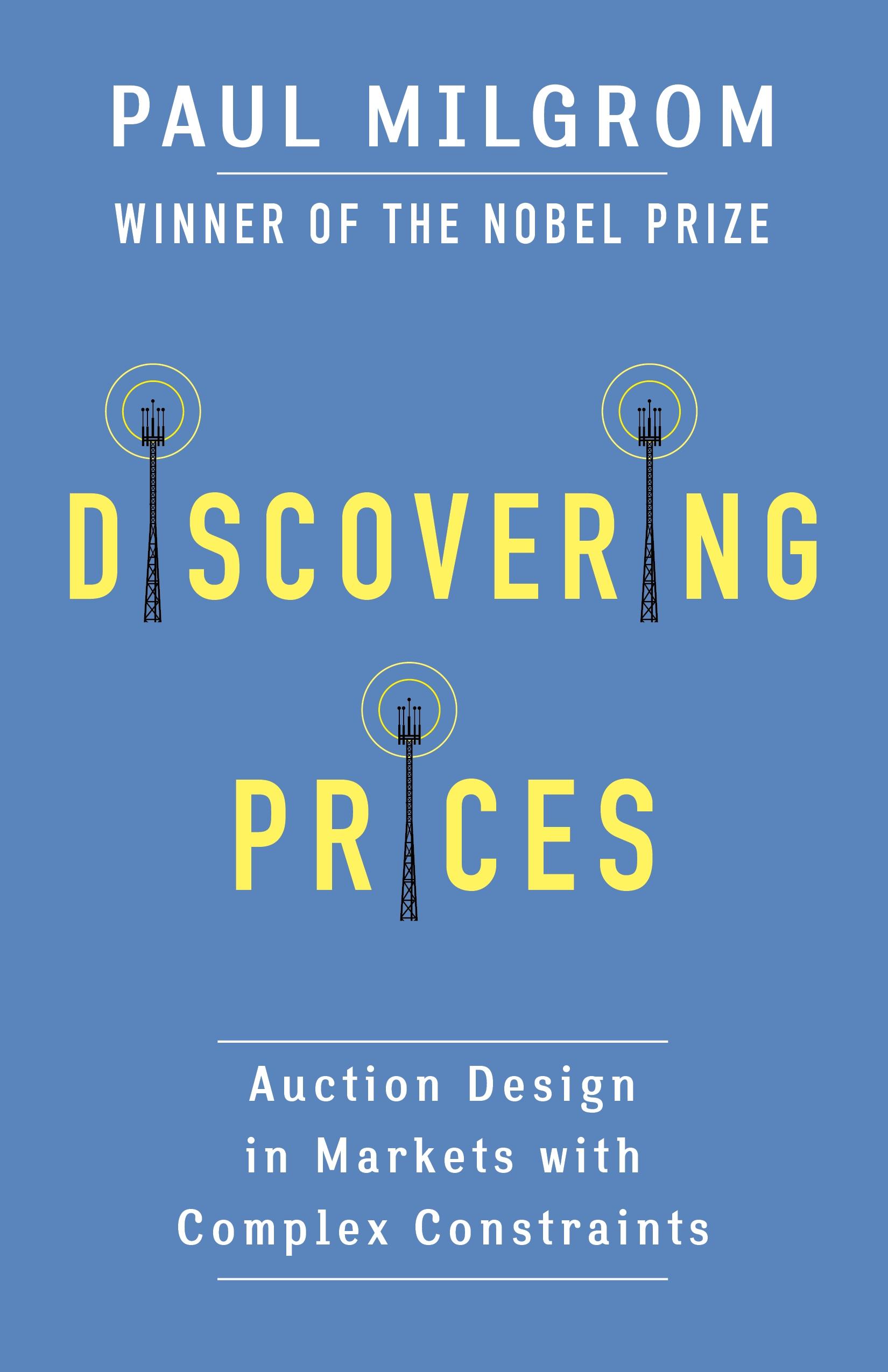
Traditional economic theory studies idealized markets in which prices alone can guide efficient allocation, with no need for central organization. Such models build from Adam Smith’s famous concept of an invisible hand, which guides markets and renders regulation or interference largely unnecessary. Yet for many markets, prices alone are not enough to guide feasible and efficient outcomes, and regulation alone is not enough, either. Consider air traffic control at major airports. While prices could encourage airlines to take off and land at less congested times, prices alone do just part of the job; an air traffic control system is still indispensable to avoid disastrous consequences. With just an air traffic controller, however, limited resources can be wasted or poorly used. What’s needed in this and many other real-world cases is an auction system that can effectively reveal prices while still maintaining enough direct control to ensure that complex constraints are satisfied.
In Discovering Prices, Paul Milgrom—the world’s most frequently cited academic expert on auction design—describes how auctions can be used to discover prices and guide efficient resource allocations, even when resources are diverse, constraints are critical, and market-clearing prices may not even exist. Economists have long understood that externalities and market power both necessitate market organization. In this book, Milgrom introduces complex constraints as another reason for market design. Both lively and technical, Milgrom roots his new theories in real-world examples (including the ambitious U.S. incentive auction of radio frequencies, whose design he led) and provides economists with crucial new tools for dealing with the world’s growing complex resource-allocation problems.
Before Memmo my notes were scattered across PDFs. Now a workspace pulls everything into one place — I see exactly what's still left to study.
Memmo's summaries are gold before exams. I don't have to re-read 800 pages two weeks before — just the important parts.
The AI chat has saved me the night before an exam more than once. I just keep asking until I get it — no waiting on a study group to reply.
The quizzes hit exactly what I need to know. Memmo tracks what I get stuck on — so I only practice what's worth it.
Flashcards with spaced repetition are magic. Memmo knows when I'm about to forget something and brings it back.
The AI podcasts are my favorite. I listen on my way to school and get a recap without sitting at a computer.

Handbok i kvalitativa metoder
281 kr

Hållbar utveckling: en introduktion för ingenjörer och andra problemlösare
334 kr

Brymans Samhällsvetenskapliga metoder
390 kr

Projektledning
491 kr

Den orättvisa hälsan: om socioekonomiska skillnader i hälsa och livslängd
326 kr

Organizational Leadership
429 kr

Vetenskapsteori för nybörjare
196 kr

På väg mot läraryrket
172 kr

Det sociala livet i skolan: Socialpsykologiska perspektiv
253 kr

Betygsättningens didaktik
151 kr

Personality
402 kr

Studying Leadership
404 kr

Managing Innovation
477 kr

Introduktion till samhällsvetenskaplig metod
347 kr

The Psychology of Sex and Gender
698 kr

Evidens och kunskap för socialt arbete
207 kr

Introduction to Leadership
605 kr