
Before Memmo my notes were scattered across PDFs. Now a workspace pulls everything into one place — I see exactly what's still left to study.
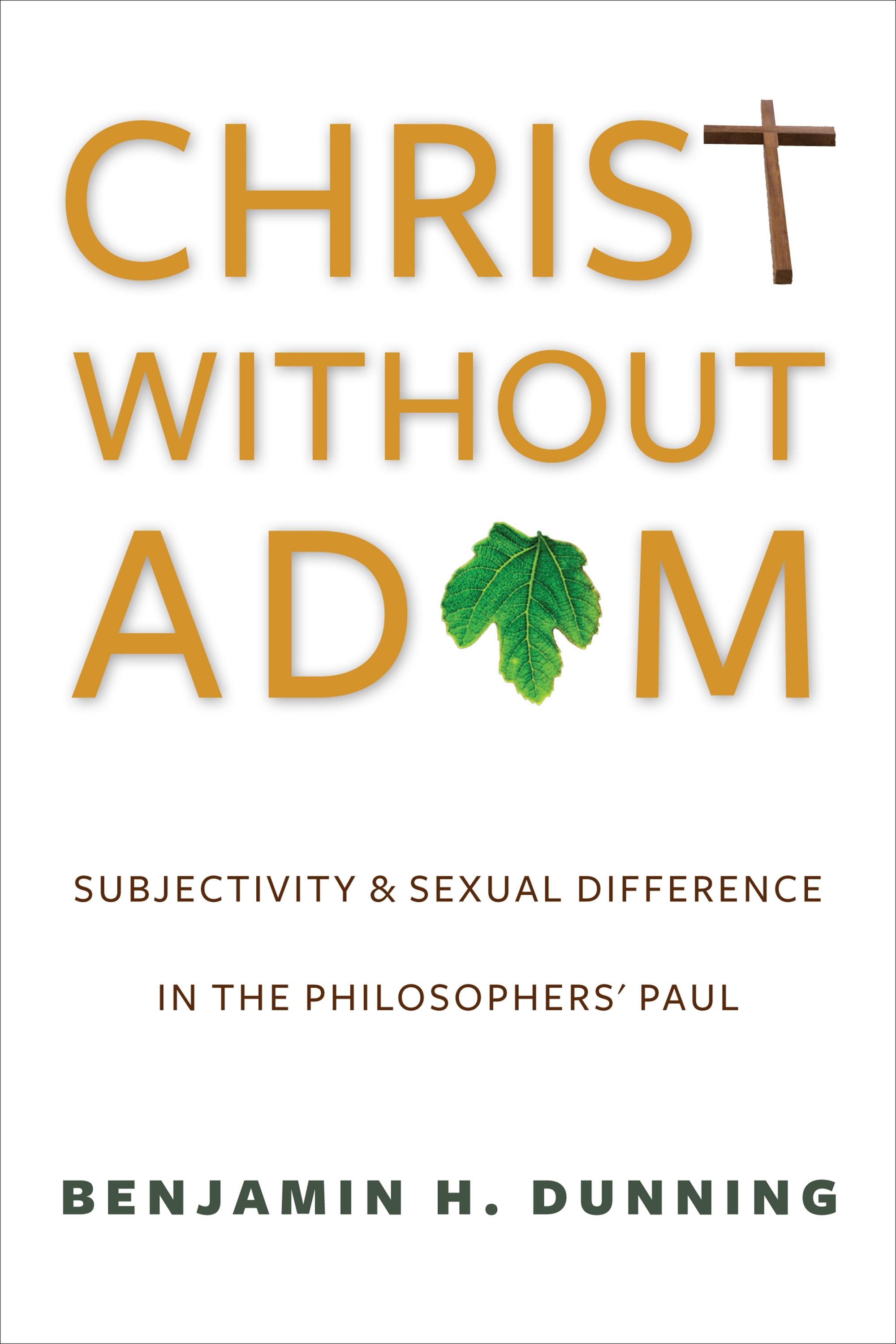
The apostle Paul deals extensively with gender, embodiment, and desire in his authentic letters, yet many of the contemporary philosophers interested in his work downplay these aspects of his thought. Christ Without Adam is the first book to examine the role of gender and sexuality in the turn to the apostle Paul in recent Continental philosophy. It builds a constructive proposal for embodied Christian theological anthropology in conversation with—and in contrast to—the "Paulinisms" of Stanislas Breton, Alain Badiou, and Slavoj iek.
Paul's letters bequeathed a crucial anthropological aporia to the history of Christian thought, insofar as the apostle sought to situate embodied human beings typologically with reference to Adam and Christ, but failed to work out the place of sexual difference within this classification. As a result, the space between Adam and Christ has functioned historically as a conceptual and temporal interval in which Christian anthropology poses and re-poses theological dilemmas of embodied difference. This study follows the ways in which the appropriations of Paul by Breton, Badiou, and iek have either sidestepped or collapsed this interval, a crucial component in their articulations of a universal Pauline subject. As a result, sexual difference fails to materialize in their readings as a problem with any explicit force. Against these readings, Dunning asserts the importance of the Pauline Adam–Christ typology, not as a straightforward resource but as a witness to a certain necessary failure—the failure of the Christian tradition to resolve embodied difference without remainder. This failure, he argues, is constructive in that it reveals the instability of sexual difference, both masculine and feminine, within an anthropological paradigm that claims to be universal yet is still predicated on male bodies.
Before Memmo my notes were scattered across PDFs. Now a workspace pulls everything into one place — I see exactly what's still left to study.
Memmo's summaries are gold before exams. I don't have to re-read 800 pages two weeks before — just the important parts.
The AI chat has saved me the night before an exam more than once. I just keep asking until I get it — no waiting on a study group to reply.
The quizzes hit exactly what I need to know. Memmo tracks what I get stuck on — so I only practice what's worth it.
Flashcards with spaced repetition are magic. Memmo knows when I'm about to forget something and brings it back.
The AI podcasts are my favorite. I listen on my way to school and get a recap without sitting at a computer.

Handbok i kvalitativa metoder
281 kr

Hållbar utveckling: en introduktion för ingenjörer och andra problemlösare
334 kr

Brymans Samhällsvetenskapliga metoder
390 kr

Projektledning
491 kr

Den orättvisa hälsan: om socioekonomiska skillnader i hälsa och livslängd
326 kr

Vetenskapsteori för nybörjare
196 kr

Organizational Leadership
429 kr

På väg mot läraryrket
172 kr

Det sociala livet i skolan: Socialpsykologiska perspektiv
253 kr

Betygsättningens didaktik
151 kr

Personality
402 kr

Studying Leadership
404 kr

Managing Innovation
477 kr

Introduktion till samhällsvetenskaplig metod
347 kr

The Psychology of Sex and Gender
698 kr

Evidens och kunskap för socialt arbete
207 kr

Introduction to Leadership
605 kr