
Before Memmo my notes were scattered across PDFs. Now a workspace pulls everything into one place — I see exactly what's still left to study.
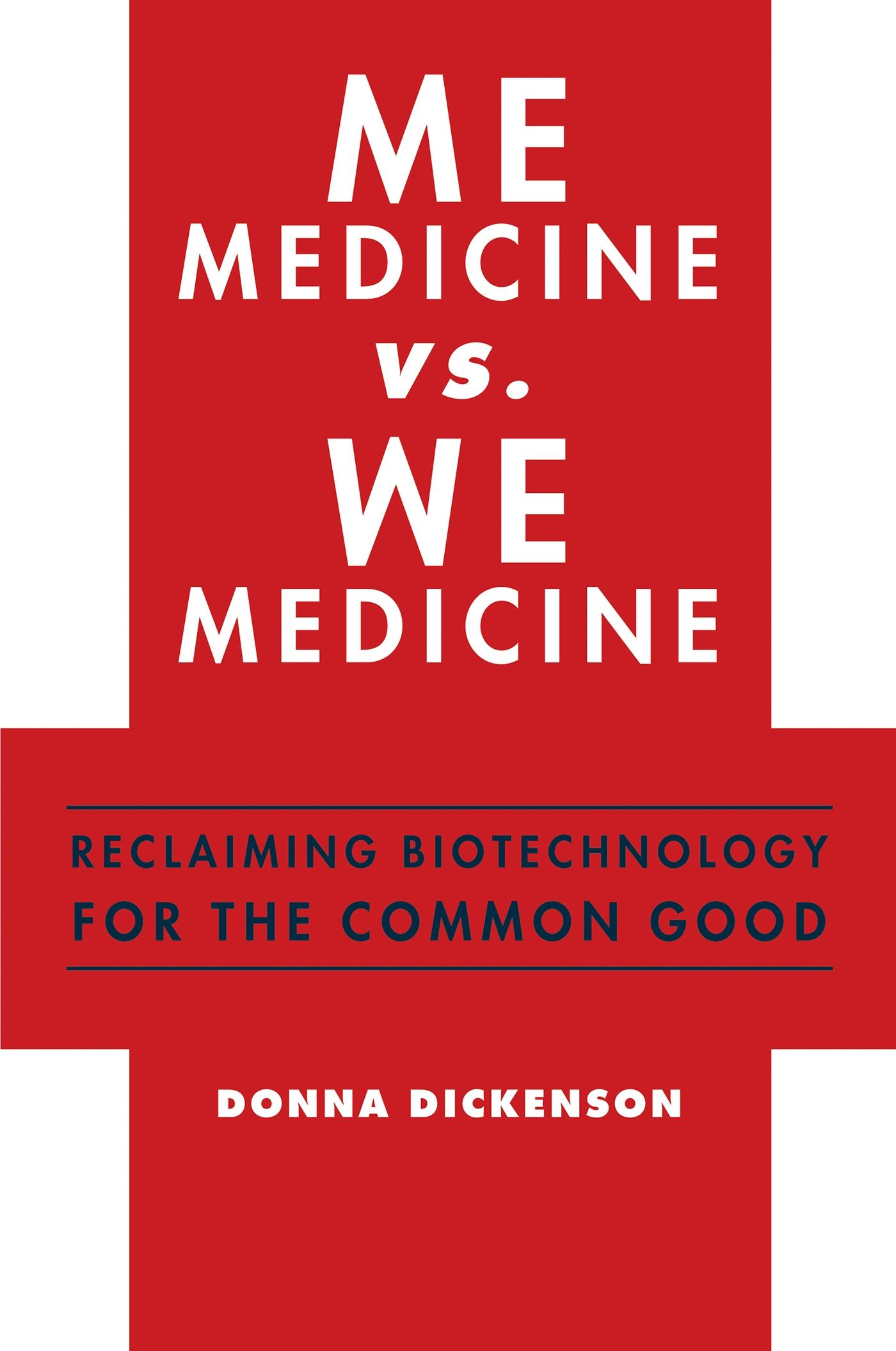
Personalized healthcare—or what the award-winning author Donna Dickenson calls "Me Medicine"—is radically transforming our longstanding "one-size-fits-all" model. Technologies such as direct-to-consumer genetic testing, pharmacogenetically developed therapies in cancer care, private umbilical cord blood banking, and neurocognitive enhancement claim to cater to an individual's specific biological character, and, in some cases, these technologies have shown powerful potential. Yet in others they have produced negligible or even negative results. Whatever is behind the rise of Me Medicine, it isn't just science. So why is Me Medicine rapidly edging out We Medicine, and how has our commitment to our collective health suffered as a result?
In her cogent, provocative analysis, Dickenson examines the economic and political factors fueling the Me Medicine phenomenon and explores how, over time, this paradigm shift in how we approach our health might damage our individual and collective well-being. Historically, the measures of "We Medicine," such as vaccination and investment in public-health infrastructure, have radically extended our life spans, and Dickenson argues we've lost sight of that truth in our enthusiasm for "Me Medicine."
Dickenson explores how personalized medicine illustrates capitalism's protean capacity for creating new products and markets where none existed before—and how this, rather than scientific plausibility, goes a long way toward explaining private umbilical cord blood banks and retail genetics. Drawing on the latest findings from leading scientists, social scientists, and political analysts, she critically examines four possible hypotheses driving our Me Medicine moment: a growing sense of threat; a wave of patient narcissism; corporate interests driving new niche markets; and the dominance of personal choice as a cultural value. She concludes with insights from political theory that emphasize a conception of the commons and the steps we can take to restore its value to modern biotechnology.
Before Memmo my notes were scattered across PDFs. Now a workspace pulls everything into one place — I see exactly what's still left to study.
Memmo's summaries are gold before exams. I don't have to re-read 800 pages two weeks before — just the important parts.
The AI chat has saved me the night before an exam more than once. I just keep asking until I get it — no waiting on a study group to reply.
The quizzes hit exactly what I need to know. Memmo tracks what I get stuck on — so I only practice what's worth it.
Flashcards with spaced repetition are magic. Memmo knows when I'm about to forget something and brings it back.
The AI podcasts are my favorite. I listen on my way to school and get a recap without sitting at a computer.

Handbok i kvalitativa metoder
281 kr

Hållbar utveckling: en introduktion för ingenjörer och andra problemlösare
334 kr

Brymans Samhällsvetenskapliga metoder
390 kr

Projektledning
491 kr

Den orättvisa hälsan: om socioekonomiska skillnader i hälsa och livslängd
326 kr

Vetenskapsteori för nybörjare
196 kr

Organizational Leadership
429 kr

På väg mot läraryrket
172 kr

Det sociala livet i skolan: Socialpsykologiska perspektiv
253 kr

Betygsättningens didaktik
151 kr

Personality
402 kr

Studying Leadership
404 kr

Managing Innovation
477 kr

Introduktion till samhällsvetenskaplig metod
347 kr

The Psychology of Sex and Gender
698 kr

Evidens och kunskap för socialt arbete
207 kr

Introduction to Leadership
605 kr