
Before Memmo my notes were scattered across PDFs. Now a workspace pulls everything into one place — I see exactly what's still left to study.
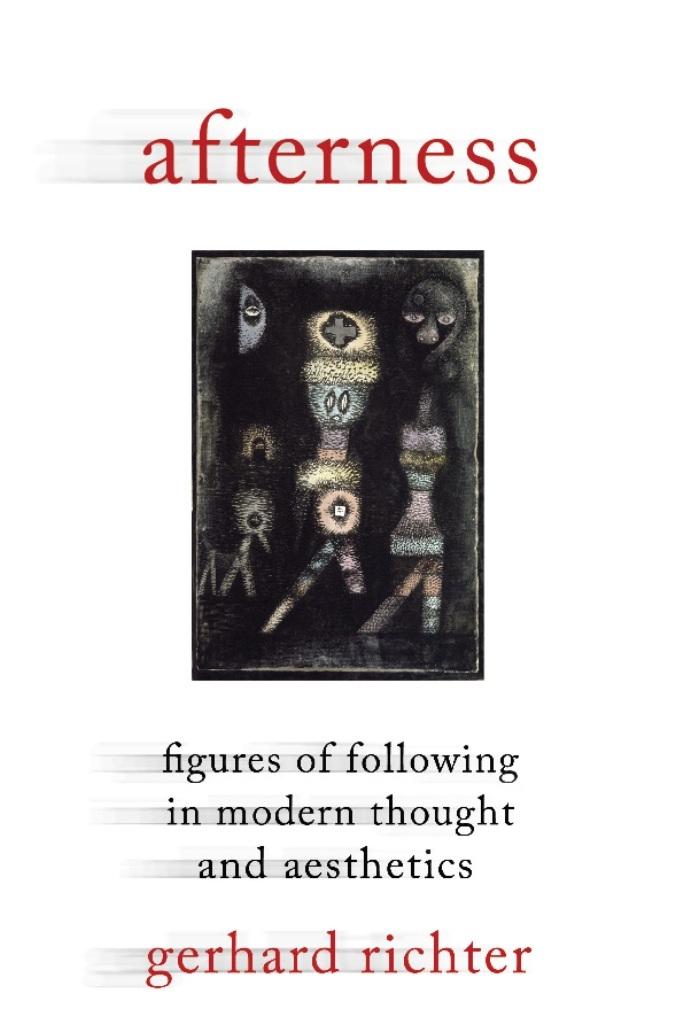
Gerhard Richter's groundbreaking study argues that the concept of "afterness" is a key figure in the thought and aesthetics of modernity. It pursues questions such as: What does it mean for something to "follow" something else? Does that which follows mark a clear break with what came before it, or does it in fact tacitly perpetuate its predecessor as a consequence of its inevitable indebtedness to the terms and conditions of that from which it claims to have departed? Indeed, is not the very act of breaking with, and then following upon, a way of retroactively constructing and fortifying that from which the break that set the movement of following into motion had occurred?
The book explores the concept and movement of afterness as a privileged yet uncanny category through close readings of writers such as Kant, Kafka, Heidegger, Bloch, Benjamin, Brecht, Adorno, Arendt, Lyotard, and Derrida. It shows how the vexed concepts of afterness, following, and coming after shed new light on a constellation of modern preoccupations, including personal and cultural memory, translation, photography, hope, and the historical and conceptual specificity of what has been termed "after Auschwitz." The study's various analysesacross a heterogeneous collection of modern writers and thinkers, diverse historical moments of articulation, and a range of mediaconspire to illuminate Lyotard's apodictic statement that "after philosophy comes philosophy. But it has been altered by the 'after.'" As Richter's intricate study demonstrates, much hinges on our interpretation of the "after." After all, our most fundamental assumptions concerning modern aesthetic representation, conceptual discourse, community, subjectivity, and politics are at stake.
Before Memmo my notes were scattered across PDFs. Now a workspace pulls everything into one place — I see exactly what's still left to study.
Memmo's summaries are gold before exams. I don't have to re-read 800 pages two weeks before — just the important parts.
The AI chat has saved me the night before an exam more than once. I just keep asking until I get it — no waiting on a study group to reply.
The quizzes hit exactly what I need to know. Memmo tracks what I get stuck on — so I only practice what's worth it.
Flashcards with spaced repetition are magic. Memmo knows when I'm about to forget something and brings it back.
The AI podcasts are my favorite. I listen on my way to school and get a recap without sitting at a computer.

Handbok i kvalitativa metoder
281 kr

Hållbar utveckling: en introduktion för ingenjörer och andra problemlösare
334 kr

Brymans Samhällsvetenskapliga metoder
390 kr

Projektledning
491 kr

Den orättvisa hälsan: om socioekonomiska skillnader i hälsa och livslängd
326 kr

Organizational Leadership
429 kr

Vetenskapsteori för nybörjare
196 kr

På väg mot läraryrket
172 kr

Det sociala livet i skolan: Socialpsykologiska perspektiv
253 kr

Betygsättningens didaktik
151 kr

Personality
402 kr

Studying Leadership
404 kr

Managing Innovation
477 kr

Introduktion till samhällsvetenskaplig metod
347 kr

The Psychology of Sex and Gender
698 kr

Evidens och kunskap för socialt arbete
207 kr

Introduction to Leadership
605 kr