
Before Memmo my notes were scattered across PDFs. Now a workspace pulls everything into one place — I see exactly what's still left to study.
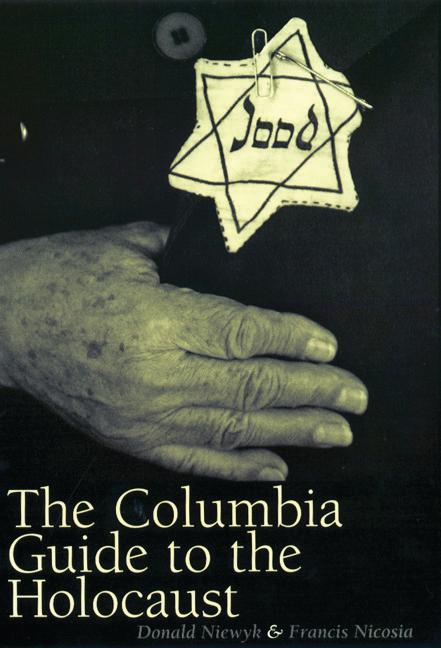
Offering a multidimensional approach to one of the most important episodes of the twentieth century, The Columbia Guide to the Holocaust offers readers and researchers a general history of the Holocaust while delving into the core issues and debates in the study of the Holocaust today.
Each of the book's five distinct parts stands on its own as valuable research aids; together, they constitute an integrated whole. Part I provides a narrative overview of the Holocaust, placing it within the larger context of Nazi Germany and World War II. Part II examines eight critical issues or controversies in the study of the Holocaust, including the following questions: Were the Jews the sole targets of Nazi genocide, or must other groups, such as homosexuals, the handicapped, Gypsies, and political dissenters, also be included? What are the historical roots of the Holocaust? How and why did the "Final Solution" come about? Why did bystanders extend or withhold aid?
Part III consists of a concise chronology of major events and developments that took place surrounding the Holocaust, including the armistice ending World War I, the opening of the first major concentration camp at Dachau, Germany's invasion of Poland, the failed assassination attempt against Hitler, and the formation of Israel.
Part IV contains short descriptive articles on more than two hundred key people, places, terms, and institutions central to a thorough understanding of the Holocaust. Entries include Adolf Eichmann, Anne Frank, the Warsaw Ghetto, Aryanization, the SS, Kristallnacht, and the Catholic Church. Part V presents an annotated guide to the best print, video, electronic, and institutional resources in English for further study.
Armed with the tools contained in this volume, students or researchers investigating this vast and complicated topic will gain an informed understanding of one of the greatest tragedies in world history.
Before Memmo my notes were scattered across PDFs. Now a workspace pulls everything into one place — I see exactly what's still left to study.
Memmo's summaries are gold before exams. I don't have to re-read 800 pages two weeks before — just the important parts.
The AI chat has saved me the night before an exam more than once. I just keep asking until I get it — no waiting on a study group to reply.
The quizzes hit exactly what I need to know. Memmo tracks what I get stuck on — so I only practice what's worth it.
Flashcards with spaced repetition are magic. Memmo knows when I'm about to forget something and brings it back.
The AI podcasts are my favorite. I listen on my way to school and get a recap without sitting at a computer.

Handbok i kvalitativa metoder
281 kr

Hållbar utveckling: en introduktion för ingenjörer och andra problemlösare
334 kr

Brymans Samhällsvetenskapliga metoder
390 kr

Projektledning
491 kr

Den orättvisa hälsan: om socioekonomiska skillnader i hälsa och livslängd
326 kr

Organizational Leadership
429 kr

Vetenskapsteori för nybörjare
196 kr

På väg mot läraryrket
172 kr

Det sociala livet i skolan: Socialpsykologiska perspektiv
253 kr

Betygsättningens didaktik
151 kr

Personality
402 kr

Studying Leadership
404 kr

Managing Innovation
477 kr

Introduktion till samhällsvetenskaplig metod
347 kr

The Psychology of Sex and Gender
698 kr

Evidens och kunskap för socialt arbete
207 kr

Introduction to Leadership
605 kr