
Before Memmo my notes were scattered across PDFs. Now a workspace pulls everything into one place — I see exactly what's still left to study.
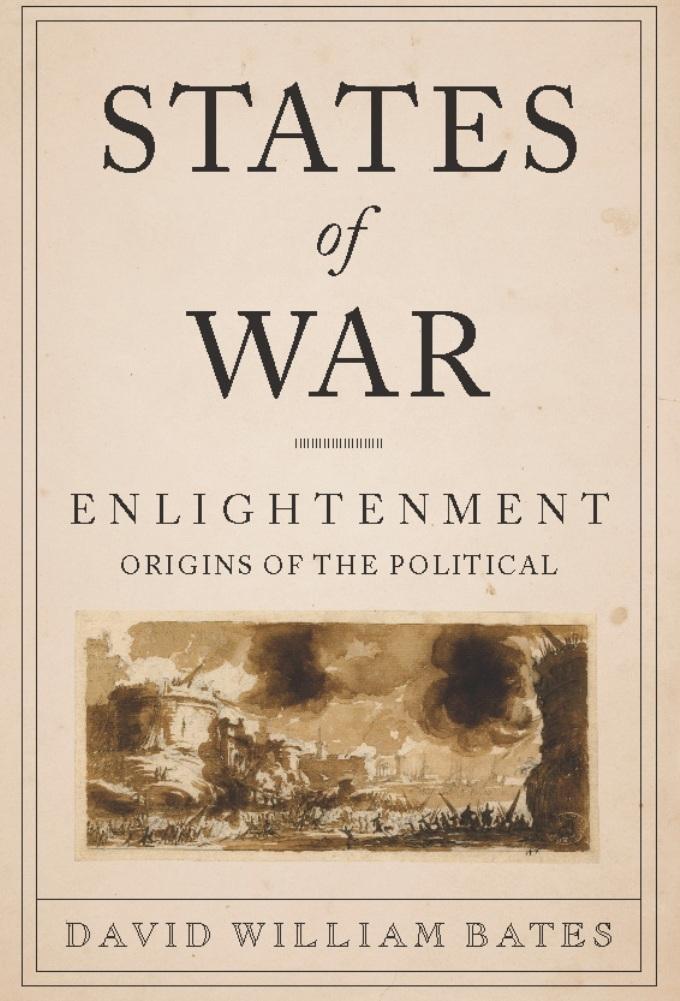
We fear that the growing threat of violent attack has upset the balance between existential concepts of political power, which emphasize security, and traditional notions of constitutional limits meant to protect civil liberties. We worry that constitutional states cannot, during a time of war, terror, and extreme crisis, maintain legality and preserve civil rights and freedoms. David Williams Bates allays these concerns by revisiting the theoretical origins of the modern constitutional state, which, he argues, recognized and made room for tensions among law, war, and the social order.
We traditionally associate the Enlightenment with the taming of absolutist sovereign power through the establishment of a legal state based on the rights of individuals. In his critical rereading, Bates shows instead that Enlightenment thinkers conceived of political autonomy in a systematic, theoretical way. Focusing on the nature of foundational violence, war, and existential crises, eighteenth-century thinkers understood law and constitutional order not as constraints on political power but as the logical implication of that primordial force. Returning to the origin stories that informed the beginnings of political community, Bates reclaims the idea of law, warfare, and the social order as intertwining elements subject to complex historical development. Following an analysis of seminal works by seventeenth-century natural-law theorists, Bates reviews the major canonical thinkers of constitutional theory (Locke, Montesquieu, and Rousseau) from the perspective of existential security and sovereign power. Countering Carl Schmitt's influential notion of the autonomy of the political, Bates demonstrates that Enlightenment thinkers understood the autonomous political sphere as a space of law protecting individuals according to their political status, not as mere members of a historically contingent social order.
Before Memmo my notes were scattered across PDFs. Now a workspace pulls everything into one place — I see exactly what's still left to study.
Memmo's summaries are gold before exams. I don't have to re-read 800 pages two weeks before — just the important parts.
The AI chat has saved me the night before an exam more than once. I just keep asking until I get it — no waiting on a study group to reply.
The quizzes hit exactly what I need to know. Memmo tracks what I get stuck on — so I only practice what's worth it.
Flashcards with spaced repetition are magic. Memmo knows when I'm about to forget something and brings it back.
The AI podcasts are my favorite. I listen on my way to school and get a recap without sitting at a computer.

Handbok i kvalitativa metoder
281 kr

Hållbar utveckling: en introduktion för ingenjörer och andra problemlösare
334 kr

Brymans Samhällsvetenskapliga metoder
390 kr

Projektledning
491 kr

Den orättvisa hälsan: om socioekonomiska skillnader i hälsa och livslängd
326 kr

Vetenskapsteori för nybörjare
196 kr

Organizational Leadership
429 kr

På väg mot läraryrket
172 kr

Det sociala livet i skolan: Socialpsykologiska perspektiv
253 kr

Betygsättningens didaktik
151 kr

Personality
402 kr

Studying Leadership
404 kr

Managing Innovation
477 kr

Introduktion till samhällsvetenskaplig metod
347 kr

The Psychology of Sex and Gender
698 kr

Evidens och kunskap för socialt arbete
207 kr

Introduction to Leadership
605 kr