
Before Memmo my notes were scattered across PDFs. Now a workspace pulls everything into one place — I see exactly what's still left to study.
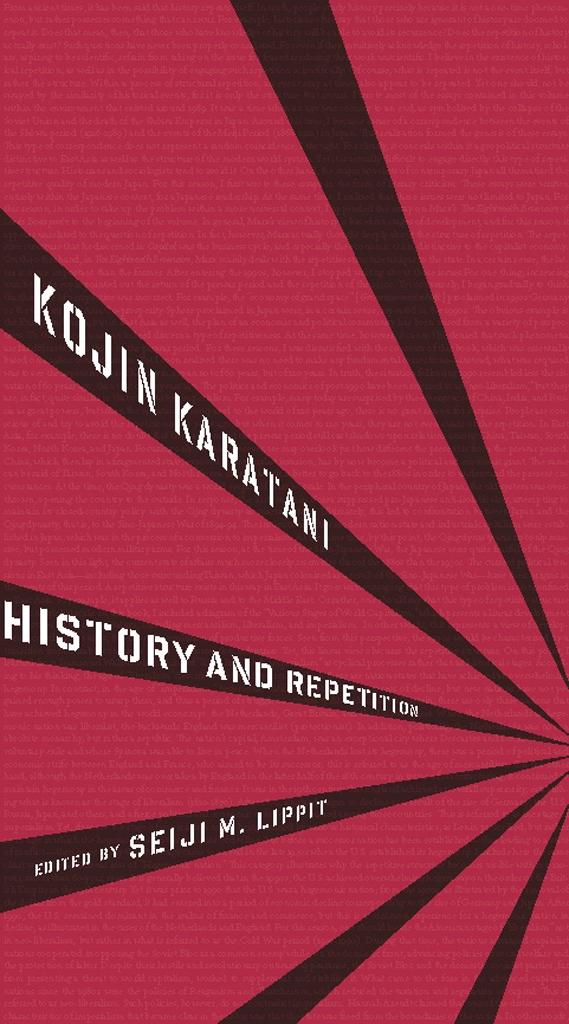
Kojin Karatani wrote the essays in History and Repetition during a time of radical historical change, triggered by the collapse of the Cold War and the death of the Showa emperor in 1989. Reading Karl Marx in an original way, Karatani developed a theory of history based on the repetitive cycle of crises attending the expansion and transformation of capital. His work led to a rigorous analysis of political, economic, and literary forms of representation that recast historical events as a series of repeated forms forged in the transitional moments of global capitalism.
History and Repetition cemented Karatani's reputation as one of Japan's premier thinkers, capable of traversing the fields of philosophy, political economy, history, and literature in his work. The first complete translation of History and Repetition into English, undertaken with the cooperation of Karatani himself, this volume opens with his innovative reading of The Eighteenth Brumaire of Louis Bonaparte, tracing Marx's early theoretical formulation of the state. Karatani follows with a study of violent crises as they recur after major transitions of power, developing his theory of historical repetition and introducing a groundbreaking interpretation of fascism (in both Europe and Japan) as the spectral return of the absolutist monarch in the midst of a crisis of representative democracy.
For Karatani, fascism represents the most violent materialization of the repetitive mechanism of history. Yet he also seeks out singularities that operate outside the brutal inevitability of historical repetition, whether represented in literature or, more precisely, in the process of literature's demise. Closely reading the works of Oe Kenzaburo, Mishima Yukio, Nakagami Kenji, and Murakami Haruki, Karatani compares the recurrent and universal with the singular and unrepeatable, while advancing a compelling theory of the decline of modern literature. Merging theoretical arguments with a concrete analysis of cultural and intellectual history, Karatani's essays encapsulate a brilliant, multidisciplinary perspective on world history.
Before Memmo my notes were scattered across PDFs. Now a workspace pulls everything into one place — I see exactly what's still left to study.
Memmo's summaries are gold before exams. I don't have to re-read 800 pages two weeks before — just the important parts.
The AI chat has saved me the night before an exam more than once. I just keep asking until I get it — no waiting on a study group to reply.
The quizzes hit exactly what I need to know. Memmo tracks what I get stuck on — so I only practice what's worth it.
Flashcards with spaced repetition are magic. Memmo knows when I'm about to forget something and brings it back.
The AI podcasts are my favorite. I listen on my way to school and get a recap without sitting at a computer.

Handbok i kvalitativa metoder
281 kr

Hållbar utveckling: en introduktion för ingenjörer och andra problemlösare
334 kr

Brymans Samhällsvetenskapliga metoder
390 kr

Projektledning
491 kr

Den orättvisa hälsan: om socioekonomiska skillnader i hälsa och livslängd
326 kr

Vetenskapsteori för nybörjare
196 kr

Organizational Leadership
429 kr

På väg mot läraryrket
172 kr

Det sociala livet i skolan: Socialpsykologiska perspektiv
253 kr

Betygsättningens didaktik
151 kr

Personality
402 kr

Studying Leadership
404 kr

Managing Innovation
477 kr

Introduktion till samhällsvetenskaplig metod
347 kr

The Psychology of Sex and Gender
698 kr

Evidens och kunskap för socialt arbete
207 kr

Introduction to Leadership
605 kr