
Before Memmo my notes were scattered across PDFs. Now a workspace pulls everything into one place — I see exactly what's still left to study.
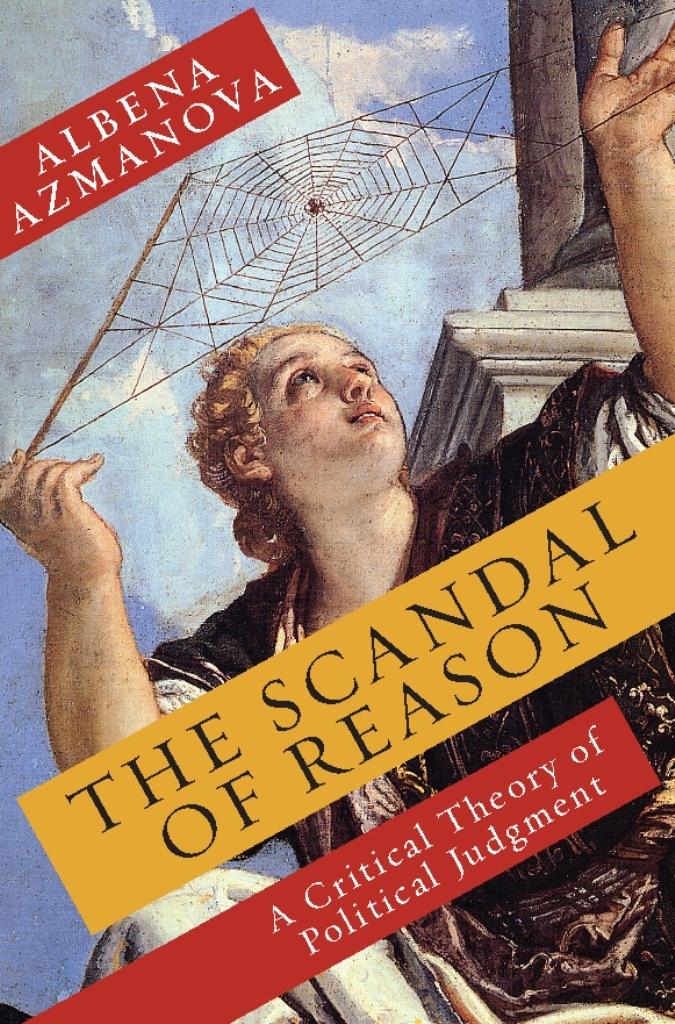
Theories of justice are haunted by a paradox: the more ambitious the theory of justice, the less applicable and useful the model is to political practice; yet the more politically realistic the theory, the weaker its moral ambition, rendering it unsound and equally useless. Brokering a resolution to this "judgment paradox," Albena Azmanova advances a "critical consensus model" of judgment that serves the normative ideals of a just society without the help of ideal theory.
Tracing the evolution of two major traditions in political philosophy—critical theory and philosophical liberalism—and the way they confront the judgment paradox, Azmanova critiques prevailing models of deliberative democracy and their preference for ideal theory over political applicability. Instead, she replaces the reliance on normative models of democracy with an account of the dynamics of reasoned judgment produced in democratic practices of open dialogues. Combining Hannah Arendt's study of judgment with Pierre Bourdieu's social critique of power relations, and incorporating elements of political epistemology from Kant, Wittgenstein, H. L. A. Hart, Max Weber, and American philosophical pragmatism, Azmanova centers her inquiry on the way participants in moral conflicts attribute meaning to their grievances of injustice. She then demonstrates the emancipatory potential of the model of critical deliberative judgment she forges and its capacity to guide policy making.
This model's critical force yields from its capacity to disclose the common structural sources of injustice behind conflicting claims to justice. Moving beyond the conflict between universalist and pluralist positions, Azmanova grounds the question of "what is justice?" in the empirical reality of "who suffers?" in order to discern attainable possibilities for a less unjust world.
Before Memmo my notes were scattered across PDFs. Now a workspace pulls everything into one place — I see exactly what's still left to study.
Memmo's summaries are gold before exams. I don't have to re-read 800 pages two weeks before — just the important parts.
The AI chat has saved me the night before an exam more than once. I just keep asking until I get it — no waiting on a study group to reply.
The quizzes hit exactly what I need to know. Memmo tracks what I get stuck on — so I only practice what's worth it.
Flashcards with spaced repetition are magic. Memmo knows when I'm about to forget something and brings it back.
The AI podcasts are my favorite. I listen on my way to school and get a recap without sitting at a computer.

Handbok i kvalitativa metoder
281 kr

Hållbar utveckling: en introduktion för ingenjörer och andra problemlösare
334 kr

Brymans Samhällsvetenskapliga metoder
390 kr

Projektledning
491 kr

Den orättvisa hälsan: om socioekonomiska skillnader i hälsa och livslängd
326 kr

Vetenskapsteori för nybörjare
196 kr

Organizational Leadership
429 kr

På väg mot läraryrket
172 kr

Det sociala livet i skolan: Socialpsykologiska perspektiv
253 kr

Betygsättningens didaktik
151 kr

Personality
402 kr

Studying Leadership
404 kr

Managing Innovation
477 kr

Introduktion till samhällsvetenskaplig metod
347 kr

The Psychology of Sex and Gender
698 kr

Evidens och kunskap för socialt arbete
207 kr

Introduction to Leadership
605 kr