
Before Memmo my notes were scattered across PDFs. Now a workspace pulls everything into one place — I see exactly what's still left to study.
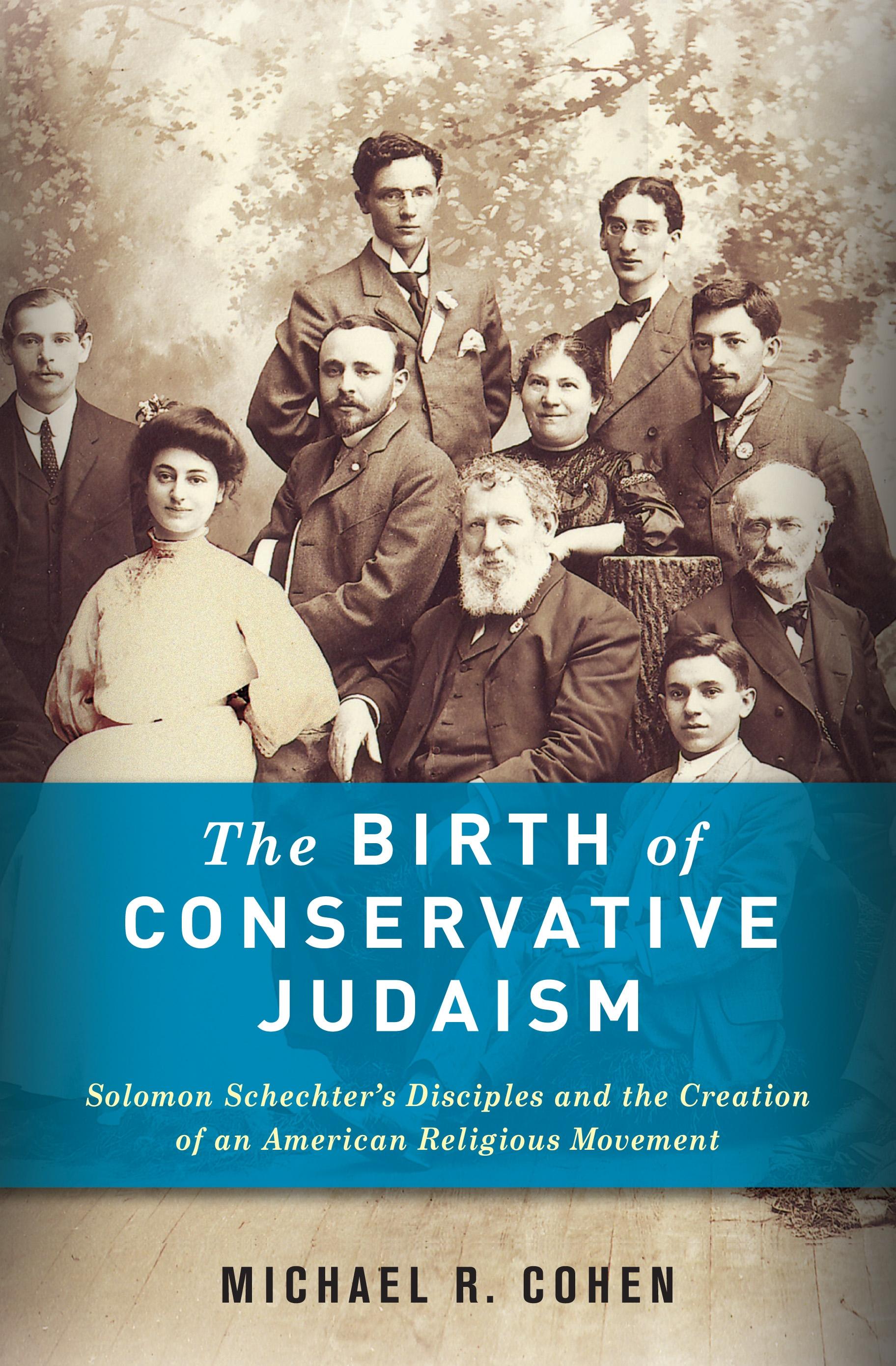
Solomon Schechter (1847–1915), the charismatic leader of New York's Jewish Theological Seminary (JTS), came to America in 1902 intent on revitalizing traditional Judaism. While he advocated a return to traditional practices, Schechter articulated no clear position on divisive issues, instead preferring to focus on similarities that could unite American Jewry under a broad message. Michael R. Cohen demonstrates how Schechter, unable to implement his vision on his own, turned to his disciples, rabbinical students and alumni of JTS, to shape his movement. By midcentury, Conservative Judaism had become the largest American Jewish grouping in the United States, guided by Schechter's disciples and their continuing efforts to embrace diversity while eschewing divisive debates.
Yet Conservative Judaism's fluid boundaries also proved problematic for the movement, frustrating many rabbis who wanted a single platform to define their beliefs. Cohen demonstrates how a legacy of tension between diversity and boundaries now lies at the heart of Conservative Judaism's modern struggle for relevance. His analysis explicates four key claims: that Conservative Judaism's clergy, not its laity or Seminary, created and shaped the movement; that diversity was—and still is—a crucial component of the success and failure of new American religions; that the Conservative movement's contemporary struggle for self-definition is tied to its origins; and that the porous boundaries between Orthodox, Conservative, and Reform Judaism reflect the complexity of the American Jewish landscape—a fact that Schechter and his disciples keenly understood. Rectifying misconceptions in previous accounts of Conservative Judaism's emergence, Cohen's study enables a fresh encounter with a unique religious phenomenon.
Before Memmo my notes were scattered across PDFs. Now a workspace pulls everything into one place — I see exactly what's still left to study.
Memmo's summaries are gold before exams. I don't have to re-read 800 pages two weeks before — just the important parts.
The AI chat has saved me the night before an exam more than once. I just keep asking until I get it — no waiting on a study group to reply.
The quizzes hit exactly what I need to know. Memmo tracks what I get stuck on — so I only practice what's worth it.
Flashcards with spaced repetition are magic. Memmo knows when I'm about to forget something and brings it back.
The AI podcasts are my favorite. I listen on my way to school and get a recap without sitting at a computer.

Handbok i kvalitativa metoder
281 kr

Hållbar utveckling: en introduktion för ingenjörer och andra problemlösare
334 kr

Brymans Samhällsvetenskapliga metoder
390 kr

Projektledning
491 kr

Den orättvisa hälsan: om socioekonomiska skillnader i hälsa och livslängd
326 kr

Vetenskapsteori för nybörjare
196 kr

Organizational Leadership
429 kr

På väg mot läraryrket
172 kr

Det sociala livet i skolan: Socialpsykologiska perspektiv
253 kr

Betygsättningens didaktik
151 kr

Personality
402 kr

Studying Leadership
404 kr

Managing Innovation
477 kr

Introduktion till samhällsvetenskaplig metod
347 kr

The Psychology of Sex and Gender
698 kr

Evidens och kunskap för socialt arbete
207 kr

Introduction to Leadership
605 kr