
Before Memmo my notes were scattered across PDFs. Now a workspace pulls everything into one place — I see exactly what's still left to study.
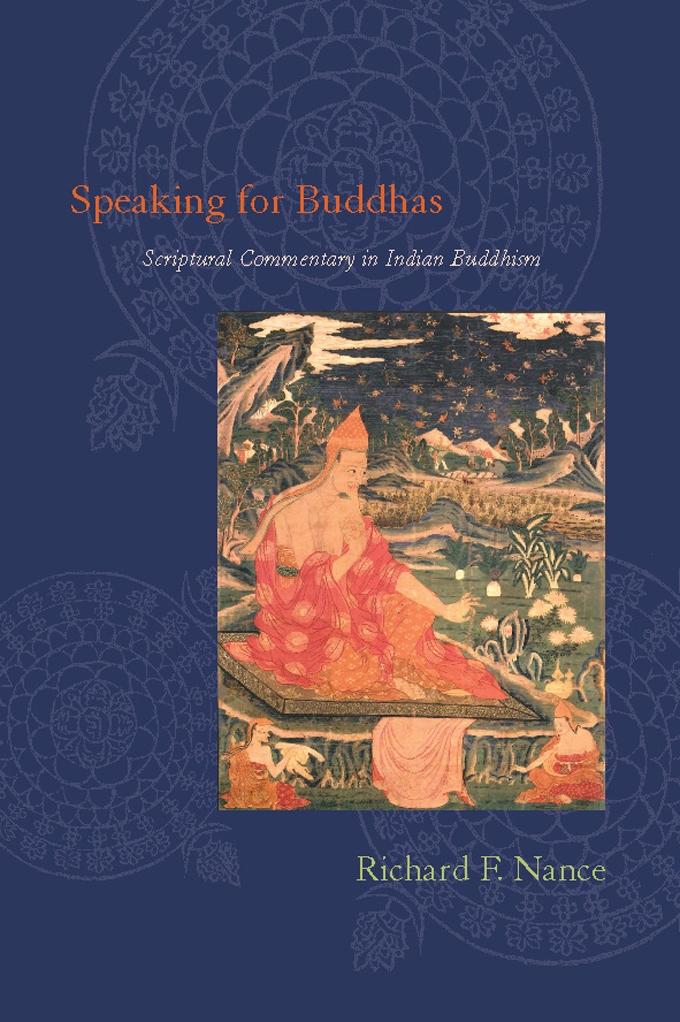
Buddhist intellectual discourse owes its development to a dynamic interplay between primary source materials and subsequent interpretation, yet scholarship on Indian Buddhism has long neglected to privilege one crucial series of texts. Commentaries on Buddhist scriptures, particularly the sutras, offer rich insights into the complex relationship between Buddhist intellectual practices and the norms that informand are informed bythem. Evaluating these commentaries in detail for the first time, Richard F. Nance revisitsand rewrites&mdashthe critical history of Buddhist thought, including its unique conception of doctrinal transmission.
Attributed to such luminaries as Nagarjuna, Vasubandhu, Dignaga, and Santideva, scriptural commentaries have long played an important role in the monastic and philosophical life of Indian Buddhism. Nance reads these texts against the social and cultural conditions of their making, establishing a solid historical basis for the interpretation of key beliefs and doctrines. He also underscores areas of contention, in which scholars debate what it means to speak for, and as, a Buddha.
Throughout these texts, Buddhist commentators struggle to deduce and characterize the speech of Buddhas and teach others how to convey and interpret its meaning. At the same time, they demonstrate the fundamental dilemma of trying to speak on behalf of Buddhas. Nance also investigates the notion of "right speech" as articulated by Buddhist texts and follows ideas about teaching as imagined through the common figure of a Buddhist preacher. He notes the use of epistemological concepts in scriptural interpretation and the protocols guiding the composition of scriptural commentary, and provides translations of three commentarial guides to better clarify the normative assumptions organizing these works.
Before Memmo my notes were scattered across PDFs. Now a workspace pulls everything into one place — I see exactly what's still left to study.
Memmo's summaries are gold before exams. I don't have to re-read 800 pages two weeks before — just the important parts.
The AI chat has saved me the night before an exam more than once. I just keep asking until I get it — no waiting on a study group to reply.
The quizzes hit exactly what I need to know. Memmo tracks what I get stuck on — so I only practice what's worth it.
Flashcards with spaced repetition are magic. Memmo knows when I'm about to forget something and brings it back.
The AI podcasts are my favorite. I listen on my way to school and get a recap without sitting at a computer.

Handbok i kvalitativa metoder
281 kr

Hållbar utveckling: en introduktion för ingenjörer och andra problemlösare
334 kr

Brymans Samhällsvetenskapliga metoder
390 kr

Projektledning
491 kr

Den orättvisa hälsan: om socioekonomiska skillnader i hälsa och livslängd
326 kr

Organizational Leadership
429 kr

Vetenskapsteori för nybörjare
196 kr

På väg mot läraryrket
172 kr

Det sociala livet i skolan: Socialpsykologiska perspektiv
253 kr

Betygsättningens didaktik
151 kr

Personality
402 kr

Studying Leadership
404 kr

Managing Innovation
477 kr

Introduktion till samhällsvetenskaplig metod
347 kr

The Psychology of Sex and Gender
698 kr

Evidens och kunskap för socialt arbete
207 kr

Introduction to Leadership
605 kr