
Before Memmo my notes were scattered across PDFs. Now a workspace pulls everything into one place — I see exactly what's still left to study.
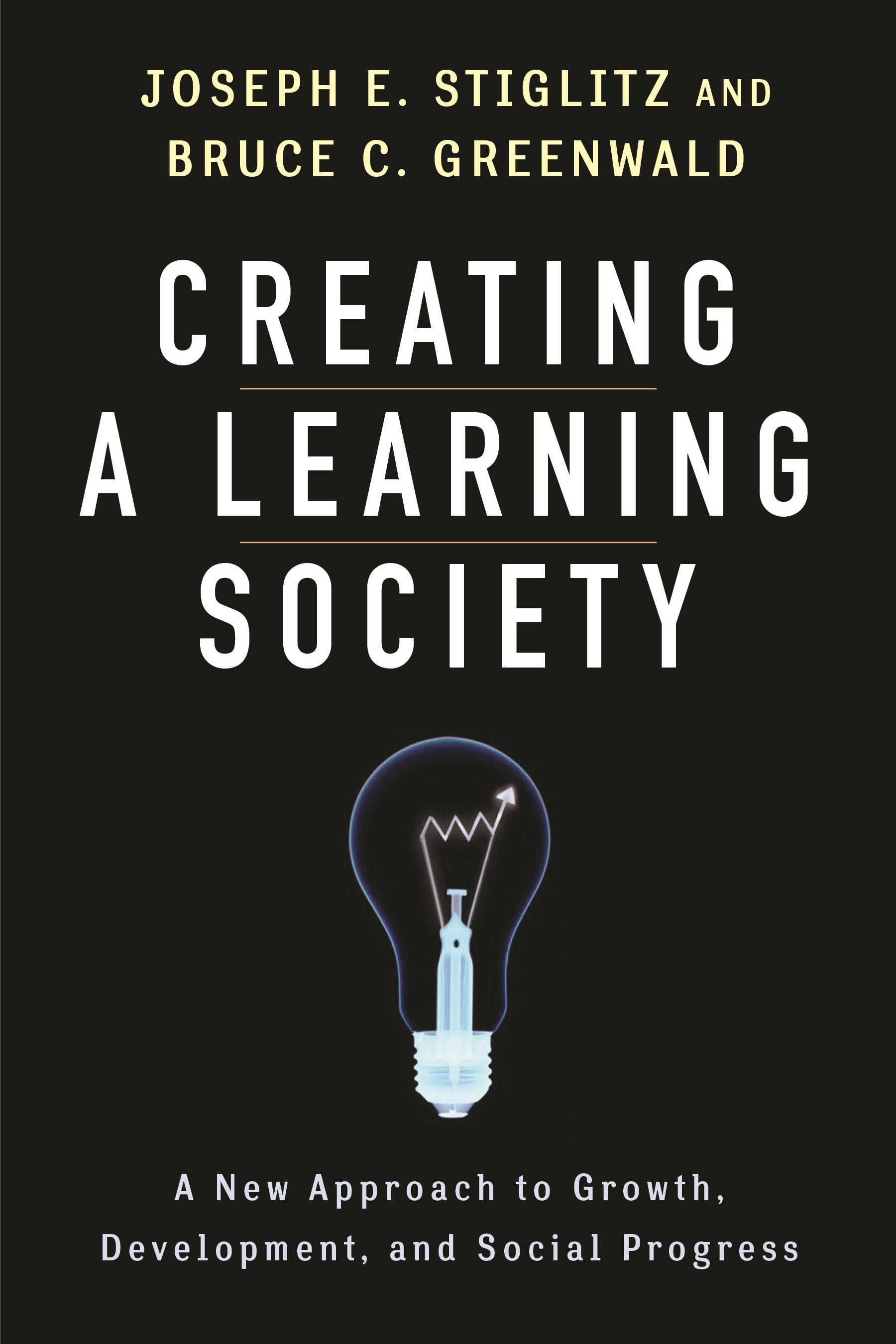
It has long been recognized that an improved standard of living results from advances in technology, not from the accumulation of capital. It has also become clear that what truly separates developed from less-developed countries is not just a gap in resources or output but a gap in knowledge. In fact, the pace at which developing countries grow is largely a function of the pace at which they close that gap.
Thus, to understand how countries grow and develop, it is essential to know how they learn and become more productive and what government can do to promote learning. In Creating a Learning Society, Joseph E. Stiglitz and Bruce C. Greenwald cast light on the significance of this insight for economic theory and policy. Taking as a starting point Kenneth J. Arrow's 1962 paper "Learning by Doing," they explain why the production of knowledge differs from that of other goods and why market economies alone typically do not produce and transmit knowledge efficiently. Closing knowledge gaps and helping laggards learn are central to growth and development. But creating a learning society is equally crucial if we are to sustain improved living standards in advanced countries.
Combining accessible prose with technical economic analysis, Stiglitz and Greenwald provide new models of "endogenous growth," up-ending thowhe thinking about both domestic and global policy and trade regimes. They show well-designed government trade and industrial policies can help create a learning society, and how poorly designed intellectual property regimes can retard learning. They also explain how virtually every government policy has effects, both positive and negative, on learning, a fact that policymakers must recognize. They demonstrate why many standard policy prescriptions, especially those associated with "neoliberal" doctrines focusing on static resource allocations, have impeded learning. Among the provocative implications are that free trade may lead to stagnation whereas broad-based industrial protection and exchange rate interventions may bring benefits—not just to the industrial sector, but to the entire economy.
The volume concludes with brief commentaries from Philippe Aghion and Michael Woodford, as well as from Nobel Laureates Kenneth J. Arrow and Robert M. Solow.
Before Memmo my notes were scattered across PDFs. Now a workspace pulls everything into one place — I see exactly what's still left to study.
Memmo's summaries are gold before exams. I don't have to re-read 800 pages two weeks before — just the important parts.
The AI chat has saved me the night before an exam more than once. I just keep asking until I get it — no waiting on a study group to reply.
The quizzes hit exactly what I need to know. Memmo tracks what I get stuck on — so I only practice what's worth it.
Flashcards with spaced repetition are magic. Memmo knows when I'm about to forget something and brings it back.
The AI podcasts are my favorite. I listen on my way to school and get a recap without sitting at a computer.

Handbok i kvalitativa metoder
281 kr

Hållbar utveckling: en introduktion för ingenjörer och andra problemlösare
334 kr

Brymans Samhällsvetenskapliga metoder
390 kr

Projektledning
491 kr

Den orättvisa hälsan: om socioekonomiska skillnader i hälsa och livslängd
326 kr

Vetenskapsteori för nybörjare
196 kr

Organizational Leadership
429 kr

På väg mot läraryrket
172 kr

Det sociala livet i skolan: Socialpsykologiska perspektiv
253 kr

Betygsättningens didaktik
151 kr

Personality
402 kr

Studying Leadership
404 kr

Managing Innovation
477 kr

Introduktion till samhällsvetenskaplig metod
347 kr

The Psychology of Sex and Gender
698 kr

Evidens och kunskap för socialt arbete
207 kr

Introduction to Leadership
605 kr