
Before Memmo my notes were scattered across PDFs. Now a workspace pulls everything into one place — I see exactly what's still left to study.
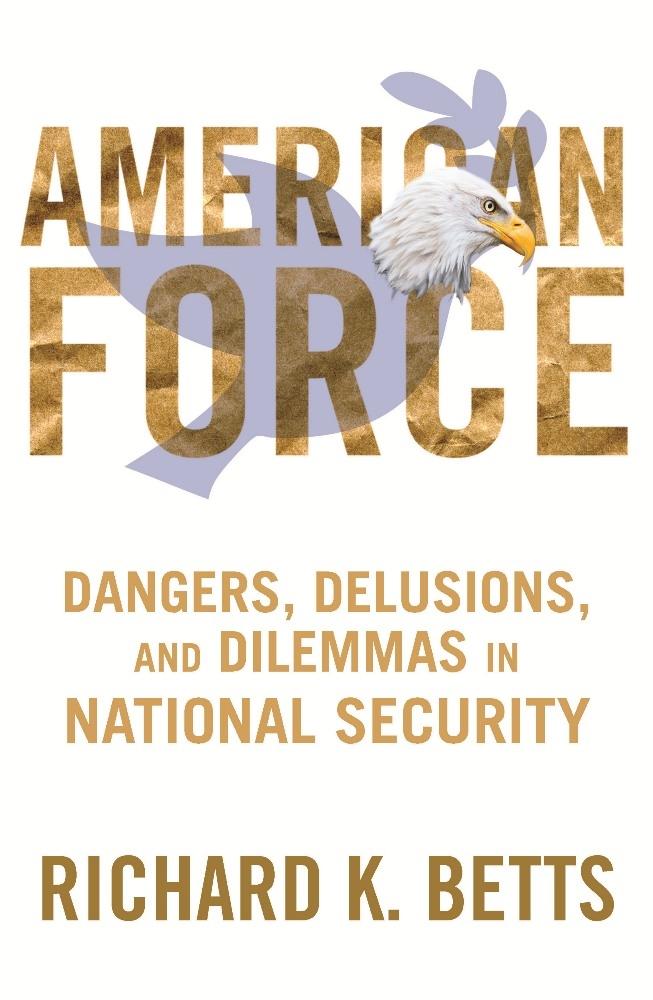
While American national security policy has grown more interventionist since the Cold War, Washington has also hoped to shape the world on the cheap. Misled by the stunning success against Iraq in 1991, administrations of both parties have pursued ambitious aims with limited force, committing the country's military frequently yet often hesitantly, with inconsistent justification. These ventures have produced strategic confusion, unplanned entanglements, and indecisive results. This collection of essays by Richard K. Betts, a leading international politics scholar, investigates the use of American force since the end of the Cold War, suggesting guidelines for making it more selective and successful.
Betts brings his extensive knowledge of twentieth century American diplomatic and military history to bear on the full range of theory and practice in national security, surveying the Cold War roots of recent initiatives and arguing that U.S. policy has always been more unilateral than liberal theorists claim. He exposes mistakes made by humanitarian interventions and peace operations; reviews the issues raised by terrorism and the use of modern nuclear, biological, and cyber weapons; evaluates the case for preventive war, which almost always proves wrong; weighs the lessons learned from campaigns in Iraq, Afghanistan, and Vietnam; assesses the rise of China and the resurgence of Russia; quells concerns about civil-military relations; exposes anomalies within recent defense budgets; and confronts the practical barriers to effective strategy. Betts ultimately argues for greater caution and restraint, while encouraging more decisive action when force is required, and he recommends a more dispassionate assessment of national security interests, even in the face of global instability and unfamiliar threats.
Before Memmo my notes were scattered across PDFs. Now a workspace pulls everything into one place — I see exactly what's still left to study.
Memmo's summaries are gold before exams. I don't have to re-read 800 pages two weeks before — just the important parts.
The AI chat has saved me the night before an exam more than once. I just keep asking until I get it — no waiting on a study group to reply.
The quizzes hit exactly what I need to know. Memmo tracks what I get stuck on — so I only practice what's worth it.
Flashcards with spaced repetition are magic. Memmo knows when I'm about to forget something and brings it back.
The AI podcasts are my favorite. I listen on my way to school and get a recap without sitting at a computer.

Handbok i kvalitativa metoder
281 kr

Hållbar utveckling: en introduktion för ingenjörer och andra problemlösare
334 kr

Brymans Samhällsvetenskapliga metoder
390 kr

Projektledning
491 kr

Den orättvisa hälsan: om socioekonomiska skillnader i hälsa och livslängd
326 kr

Organizational Leadership
429 kr

Vetenskapsteori för nybörjare
196 kr

På väg mot läraryrket
172 kr

Det sociala livet i skolan: Socialpsykologiska perspektiv
253 kr

Betygsättningens didaktik
151 kr

Personality
402 kr

Studying Leadership
404 kr

Managing Innovation
477 kr

Introduktion till samhällsvetenskaplig metod
347 kr

The Psychology of Sex and Gender
698 kr

Evidens och kunskap för socialt arbete
207 kr

Introduction to Leadership
605 kr