
Before Memmo my notes were scattered across PDFs. Now a workspace pulls everything into one place — I see exactly what's still left to study.
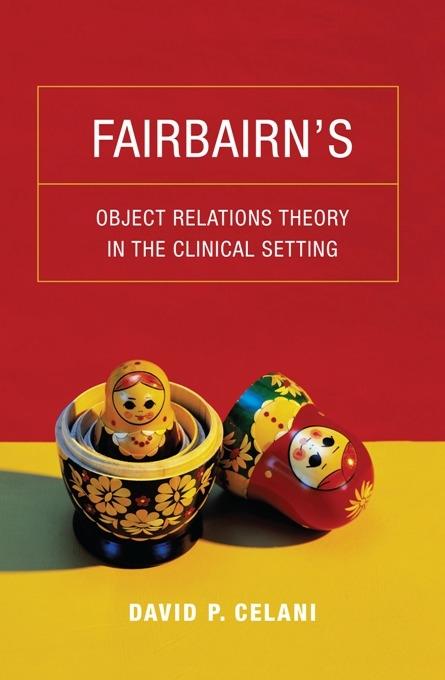
W. R. D. Fairbairn (1889-1964) challenged the dominance of Freud's drive theory with a psychoanalytic theory based on the internalization of human relationships. Fairbairn assumed that the unconscious develops in childhood and contains dissociated memories of parental neglect, insensitivity, and outright abuse that are impossible the children to tolerate consciously. In Fairbairn's model, these dissociated memories protect developing children from recognizing how badly they are being treated and allow them to remain attached even to physically abusive parents.
Attachment is paramount in Fairbairn's model, as he recognized that children are absolutely and unconditionally dependent on their parents. Kidnapped children who remain attached to their abusive captors despite opportunities to escape illustrate this intense dependency, even into adolescence. At the heart of Fairbairn's model is a structural theory that organizes actual relational events into three self-and-object pairs: one conscious pair (the central ego, which relates exclusively to the ideal object in the external world) and two mostly unconscious pairs (the child's antilibidinal ego, which relates exclusively to the rejecting parts of the object, and the child's libidinal ego, which relates exclusively to the exciting parts of the object). The two dissociated self-and-object pairs remain in the unconscious but can emerge and suddenly take over the individual's central ego. When they emerge, the "other" is misperceived as either an exciting or a rejecting object, thus turning these internal structures into a source of transferences and reenactments. Fairbairn's central defense mechanism, splitting, is the fast shift from central ego dominance to either the libidinal ego or the antilibidinal ego-a near perfect model of the borderline personality disorder.
In this book, David Celani reviews Fairbairn's five foundational papers and outlines their application in the clinical setting. He discusses the four unconscious structures and offers the clinician concrete suggestions on how to recognize and respond to them effectively in the heat of the clinical interview. Incorporating decades of experience into his analysis, Celani emphasizes the internalization of the therapist as a new "good" object and devotes entire sections to the treatment of histrionic, obsessive, and borderline personality disorders.
Before Memmo my notes were scattered across PDFs. Now a workspace pulls everything into one place — I see exactly what's still left to study.
Memmo's summaries are gold before exams. I don't have to re-read 800 pages two weeks before — just the important parts.
The AI chat has saved me the night before an exam more than once. I just keep asking until I get it — no waiting on a study group to reply.
The quizzes hit exactly what I need to know. Memmo tracks what I get stuck on — so I only practice what's worth it.
Flashcards with spaced repetition are magic. Memmo knows when I'm about to forget something and brings it back.
The AI podcasts are my favorite. I listen on my way to school and get a recap without sitting at a computer.

Handbok i kvalitativa metoder
281 kr

Hållbar utveckling: en introduktion för ingenjörer och andra problemlösare
334 kr

Brymans Samhällsvetenskapliga metoder
390 kr

Projektledning
491 kr

Den orättvisa hälsan: om socioekonomiska skillnader i hälsa och livslängd
326 kr

Vetenskapsteori för nybörjare
196 kr

Organizational Leadership
429 kr

På väg mot läraryrket
172 kr

Det sociala livet i skolan: Socialpsykologiska perspektiv
253 kr

Betygsättningens didaktik
151 kr

Personality
402 kr

Studying Leadership
404 kr

Managing Innovation
477 kr

Introduktion till samhällsvetenskaplig metod
347 kr

The Psychology of Sex and Gender
698 kr

Evidens och kunskap för socialt arbete
207 kr

Introduction to Leadership
605 kr