
Before Memmo my notes were scattered across PDFs. Now a workspace pulls everything into one place — I see exactly what's still left to study.
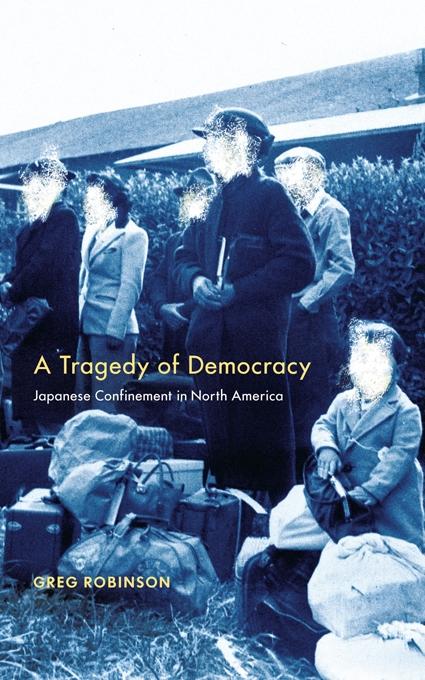
The confinement of some 120,000 Japanese Americans during World War II, often called the Japanese American internment, has been described as the worst official civil rights violation of modern U. S. history. Greg Robinson not only offers a bold new understanding of these events but also studies them within a larger time frame and from a transnational perspective.
Drawing on newly discovered material, Robinson provides a backstory of confinement that reveals for the first time the extent of the American government's surveillance of Japanese communities in the years leading up to war and the construction of what officials termed "concentration camps" for enemy aliens. He also considers the aftermath of confinement, including the place of Japanese Americans in postwar civil rights struggles, the long movement by former camp inmates for redress, and the continuing role of the camps as touchstones for nationwide commemoration and debate.
Most remarkably, A Tragedy of Democracy is the first book to analyze official policy toward West Coast Japanese Americans within a North American context. Robinson studies confinement on the mainland alongside events in wartime Hawaii, where fears of Japanese Americans justified Army dictatorship, suspension of the Constitution, and the imposition of military tribunals. He similarly reads the treatment of Japanese Americans against Canada's confinement of 22,000 citizens and residents of Japanese ancestry from British Columbia. A Tragedy of Democracy recounts the expulsion of almost 5,000 Japanese from Mexico's Pacific Coast and the poignant story of the Japanese Latin Americans who were kidnapped from their homes and interned in the United States. Approaching Japanese confinement as a continental and international phenomenon, Robinson offers a truly kaleidoscopic understanding of its genesis and outcomes.
The confinement of some 120,000 Japanese Americans during World War II, often called the Japanese American internment, has been described as the worst official civil rights violation of modern U. S. history. Greg Robinson not only offers a bold new understanding of these events but also studies them within a larger time frame and from a transnational perspective. Drawing on newly discovered material, Robinson provides a backstory of confinement that reveals for the first time the extent of the American government's surveillance of Japanese communities in the years leading up to war and the construction of what officials termed "concentration camps" for enemy aliens. He also considers the aftermath of confinement, including the place of Japanese Americans in postwar civil rights struggles, the long movement by former camp inmates for redress, and the continuing role of the camps as touchstones for nationwide commemoration and debate. Most remarkably, A Tragedy of Democracy is the first book to analyze official policy toward West Coast Japanese Americans within a North American context. Robinson studies confinement on the mainland alongside events in wartime Hawaii, where fears of Japanese Americans justified Army dictatorship, suspension of the Constitution, and the imposition of military tribunals. He similarly reads the treatment of Japanese Americans against Canada's confinement of 22,000 citizens and residents of Japanese ancestry from British Columbia. A Tragedy of Democracy recounts the expulsion of almost 5,000 Japanese from Mexico's Pacific Coast and the poignant story of the Japanese Latin Americans who were kidnapped from their homes and interned in the United States. Approaching Japanese confinement as a continental and international phenomenon, Robinson offers a truly kaleidoscopic understanding of its genesis and outcomes.
Before Memmo my notes were scattered across PDFs. Now a workspace pulls everything into one place — I see exactly what's still left to study.
Memmo's summaries are gold before exams. I don't have to re-read 800 pages two weeks before — just the important parts.
The AI chat has saved me the night before an exam more than once. I just keep asking until I get it — no waiting on a study group to reply.
The quizzes hit exactly what I need to know. Memmo tracks what I get stuck on — so I only practice what's worth it.
Flashcards with spaced repetition are magic. Memmo knows when I'm about to forget something and brings it back.
The AI podcasts are my favorite. I listen on my way to school and get a recap without sitting at a computer.

Handbok i kvalitativa metoder
281 kr

Hållbar utveckling: en introduktion för ingenjörer och andra problemlösare
334 kr

Brymans Samhällsvetenskapliga metoder
390 kr

Projektledning
491 kr

Den orättvisa hälsan: om socioekonomiska skillnader i hälsa och livslängd
326 kr

Vetenskapsteori för nybörjare
196 kr

Organizational Leadership
429 kr

På väg mot läraryrket
172 kr

Det sociala livet i skolan: Socialpsykologiska perspektiv
253 kr

Betygsättningens didaktik
151 kr

Personality
402 kr

Studying Leadership
404 kr

Managing Innovation
477 kr

Introduktion till samhällsvetenskaplig metod
347 kr

The Psychology of Sex and Gender
698 kr

Evidens och kunskap för socialt arbete
207 kr

Introduction to Leadership
605 kr