
Before Memmo my notes were scattered across PDFs. Now a workspace pulls everything into one place — I see exactly what's still left to study.
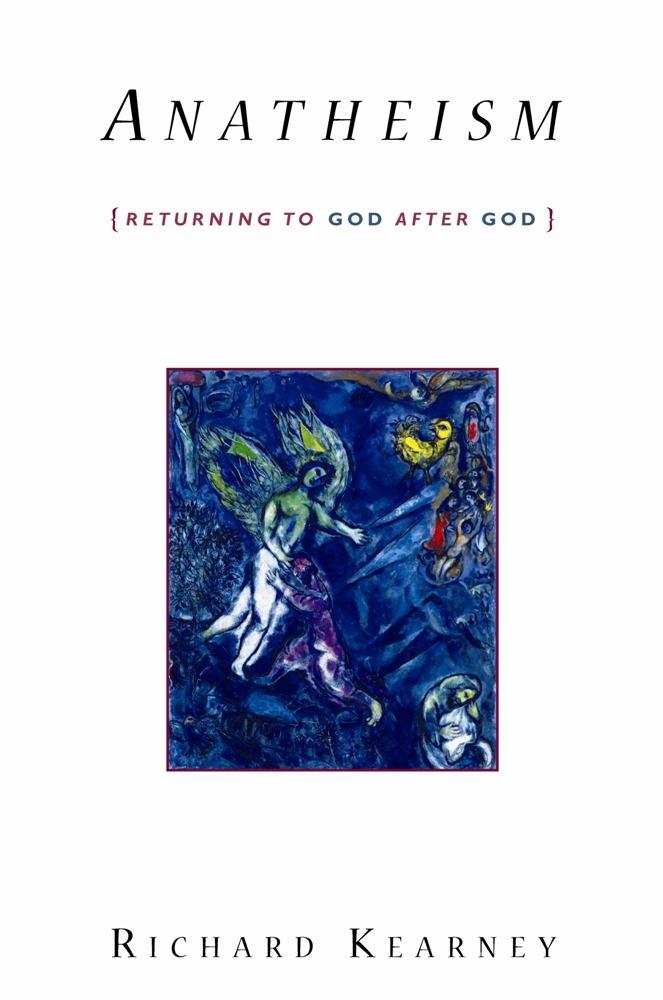
Has the passing of the old God paved the way for a new kind of religious project, a more responsible way to seek, sound, and love the things we call divine? Has the suspension of dogmatic certainties and presumptions opened a space in which we can encounter religious wonder anew? Situated at the split between theism and atheism, we now have the opportunity to respond in deeper, freer ways to things we cannot fathom or prove.
Distinguished philosopher Richard Kearney calls this condition ana-theos, or God after God-a moment of creative "not knowing" that signifies a break with former sureties and invites us to forge new meanings from the most ancient of wisdoms. Anatheism refers to an inaugural event that lies at the heart of every great religion, a wager between hospitality and hostility to the stranger, the otherthe sense of something "more." By analyzing the roots of our own anatheistic moment, Kearney shows not only how a return to God is possible for those who seek it but also how a more liberating faith can be born.
Kearney begins by locating a turn toward sacred secularity in contemporary philosophy, focusing on Maurice Merleau-Ponty and Paul Ricoeur. He then marks "epiphanies" in the modernist masterpieces of James Joyce, Marcel Proust, and Virginia Woolf. Kearney concludes with a discussion of the role of theism and atheism in conflict and peace, confronting the distinction between sacramental and sacrificial belief or the God who gives life and the God who takes it away. Accepting that we can never be sure about God, he argues, is the only way to rediscover a hidden holiness in life and to reclaim an everyday divinity.
Before Memmo my notes were scattered across PDFs. Now a workspace pulls everything into one place — I see exactly what's still left to study.
Memmo's summaries are gold before exams. I don't have to re-read 800 pages two weeks before — just the important parts.
The AI chat has saved me the night before an exam more than once. I just keep asking until I get it — no waiting on a study group to reply.
The quizzes hit exactly what I need to know. Memmo tracks what I get stuck on — so I only practice what's worth it.
Flashcards with spaced repetition are magic. Memmo knows when I'm about to forget something and brings it back.
The AI podcasts are my favorite. I listen on my way to school and get a recap without sitting at a computer.

Handbok i kvalitativa metoder
281 kr

Hållbar utveckling: en introduktion för ingenjörer och andra problemlösare
334 kr

Brymans Samhällsvetenskapliga metoder
390 kr

Projektledning
491 kr

Den orättvisa hälsan: om socioekonomiska skillnader i hälsa och livslängd
326 kr

Organizational Leadership
429 kr

Vetenskapsteori för nybörjare
196 kr

På väg mot läraryrket
172 kr

Det sociala livet i skolan: Socialpsykologiska perspektiv
253 kr

Betygsättningens didaktik
151 kr

Personality
402 kr

Studying Leadership
404 kr

Managing Innovation
477 kr

Introduktion till samhällsvetenskaplig metod
347 kr

The Psychology of Sex and Gender
698 kr

Evidens och kunskap för socialt arbete
207 kr

Introduction to Leadership
605 kr