
Before Memmo my notes were scattered across PDFs. Now a workspace pulls everything into one place — I see exactly what's still left to study.
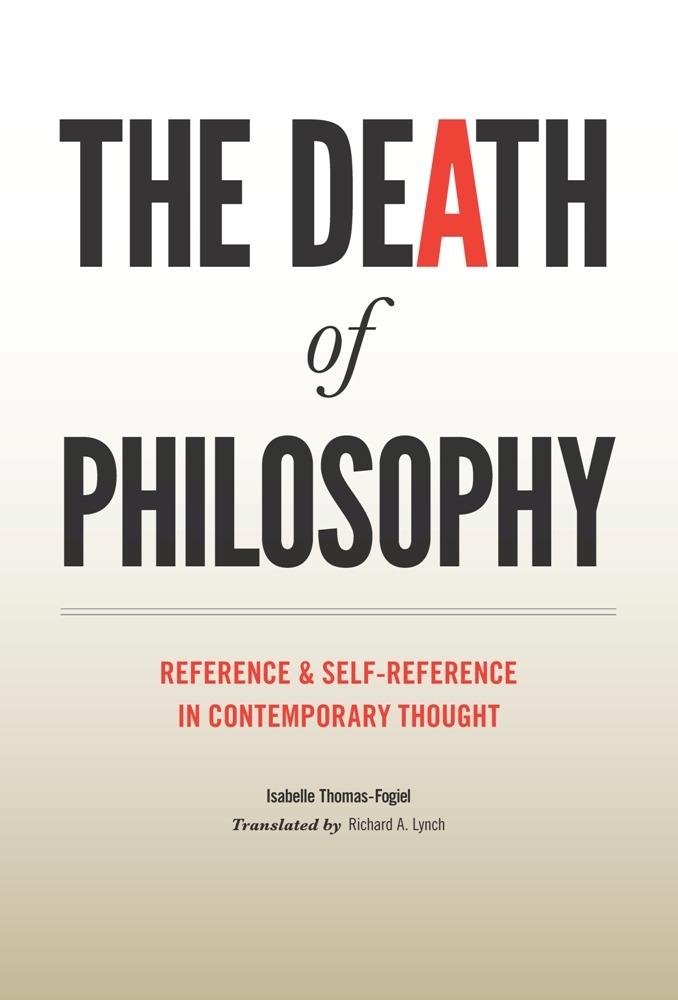
Philosophers debate the death of philosophy as much as they debate the death of God. Kant claimed responsibility for both philosophy's beginning and end, while Heidegger argued it concluded with Nietzsche. In the twentieth century, figures as diverse as John Austin and Richard Rorty have proclaimed philosophy's end, with some even calling for the advent of "postphilosophy." In an effort to make sense of these conflicting positionswhich often say as much about the philosopher as his subjectIsabelle Thomas-Fogiel undertakes the first systematic treatment of "the end of philosophy," while also recasting the history of western thought itself.
Thomas-Fogiel begins with postphilosophical claims such as scientism, which she reveals to be self-refuting, for they subsume philosophy into the branches of the natural sciences. She discovers similar issues in Rorty's skepticism and strands of continental thought. Revisiting the work of late-nineteenth and early-twentieth-century philosophers, when the split between analytical and continental philosophy began, Thomas-Fogiel finds both traditions followed the same paththe road of referencewhich ultimately led to self-contradiction. This phenomenon, whether valorized or condemned, has been understood as the death of philosophy. Tracing this pattern from Quine to Rorty, from Heidegger to Levinas and Habermas, Thomas-Fogiel reveals the self-contradiction at the core of their claims while also carving an alternative path through self-reference. Trained under the French philosopher Bernard Bourgeois, she remakes philosophy in exciting new ways for the twenty-first century.
Before Memmo my notes were scattered across PDFs. Now a workspace pulls everything into one place — I see exactly what's still left to study.
Memmo's summaries are gold before exams. I don't have to re-read 800 pages two weeks before — just the important parts.
The AI chat has saved me the night before an exam more than once. I just keep asking until I get it — no waiting on a study group to reply.
The quizzes hit exactly what I need to know. Memmo tracks what I get stuck on — so I only practice what's worth it.
Flashcards with spaced repetition are magic. Memmo knows when I'm about to forget something and brings it back.
The AI podcasts are my favorite. I listen on my way to school and get a recap without sitting at a computer.

Handbok i kvalitativa metoder
281 kr

Hållbar utveckling: en introduktion för ingenjörer och andra problemlösare
334 kr

Brymans Samhällsvetenskapliga metoder
390 kr

Projektledning
491 kr

Den orättvisa hälsan: om socioekonomiska skillnader i hälsa och livslängd
326 kr

Vetenskapsteori för nybörjare
196 kr

Organizational Leadership
429 kr

På väg mot läraryrket
172 kr

Det sociala livet i skolan: Socialpsykologiska perspektiv
253 kr

Betygsättningens didaktik
151 kr

Personality
402 kr

Studying Leadership
404 kr

Managing Innovation
477 kr

Introduktion till samhällsvetenskaplig metod
347 kr

The Psychology of Sex and Gender
698 kr

Evidens och kunskap för socialt arbete
207 kr

Introduction to Leadership
605 kr