
Before Memmo my notes were scattered across PDFs. Now a workspace pulls everything into one place — I see exactly what's still left to study.
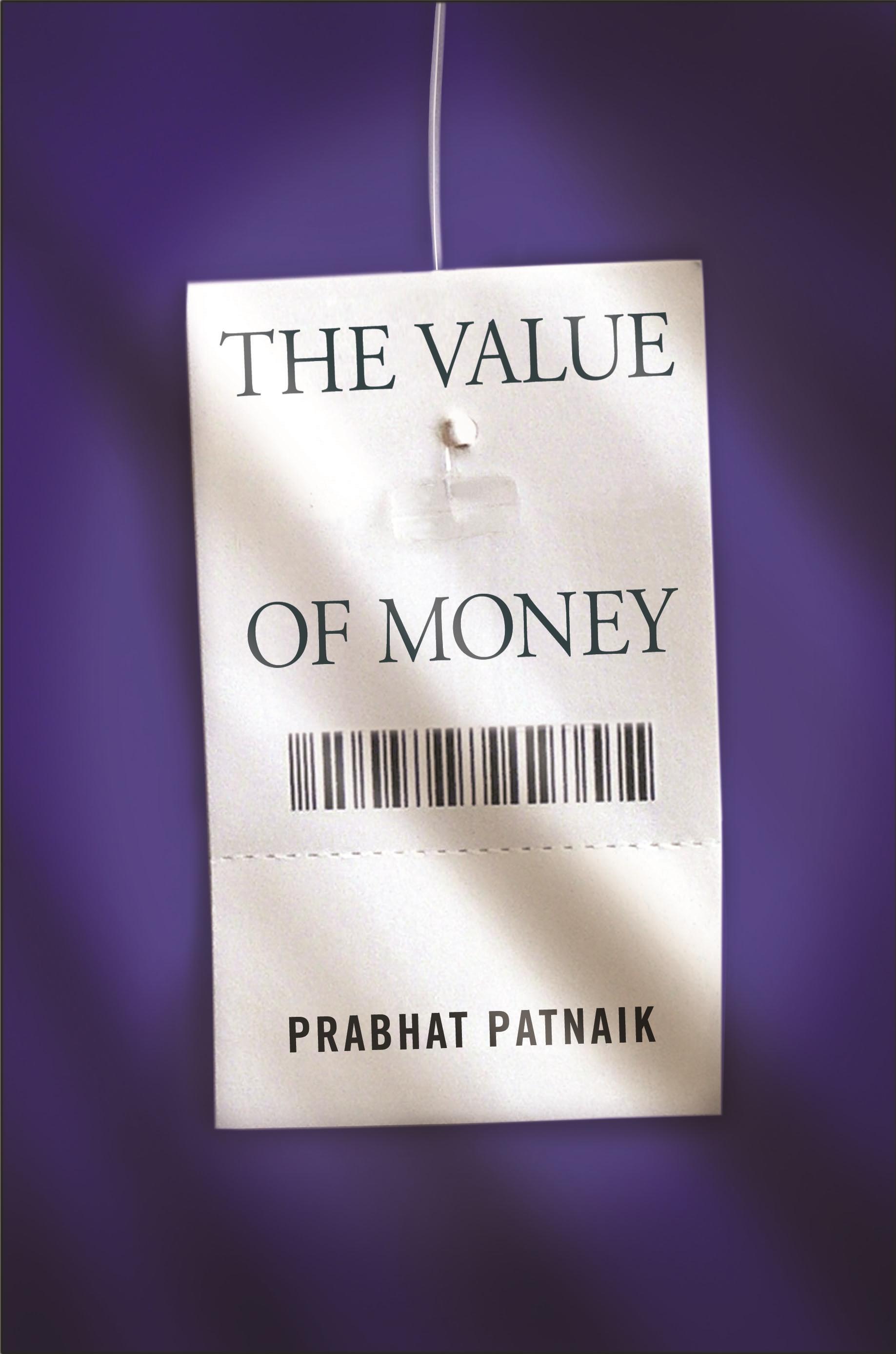
Why is money more valuable than the paper on which it is printed? Monetarists link the value of money to its supply and demand, believing the latter depends on the total value of the commodities it circulates. According to Prabhat Patnaik, this logic is flawed. In his view, in any nonbarter economy, the value we assign to money is determined independently of its supply and demand.
Through an original and provocative critique of monetarism, Patnaik advances a revolutionary understanding of macroeconomics that highlights the "propertyist" position of Karl Marx and John Maynard Keynes. Unlike the usual division between "classical" economists (e.g., David Ricardo and Marx) and the "marginalists" (e.g., Carl Menger, William Stanley Jevons, and Léon Walras), Patnaik places "monetarists," including Ricardo, on one side, while grouping propertyist writers like Marx, Keynes, and Rosa Luxemburg on the other. This second group subscribes to the idea that the value of money is given from outside the realm of supply and demand, therefore making money a form in which wealth is held. The fact that money is held as wealth in turn gives rise to the possibility of deficiency of aggregate demand under capitalism.
It is no accident that this possibility was highlighted by Marx and Keynes while going largely unrecognized by Ricardo and contemporary monetarists. At the same time, Patnaik points to a weakness in the Marx-Keynes traditionnamely, its lack of any satisfactory explanation of why the value of money, determined from outside the realm of supply and demand, remains relatively stable over long stretches of time. The answer to this question lies in the fact that capitalism is not a self-contained system but is born from a precapitalist setting with which it interacts and where it creates massive labor reserves that, in turn, impart stability to the value of money. Patnaik's theory of money, then, is also a theory of imperialism, and he concludes with a discussion of the contemporary international monetary system, which he terms the "oil-dollar" standard.
Before Memmo my notes were scattered across PDFs. Now a workspace pulls everything into one place — I see exactly what's still left to study.
Memmo's summaries are gold before exams. I don't have to re-read 800 pages two weeks before — just the important parts.
The AI chat has saved me the night before an exam more than once. I just keep asking until I get it — no waiting on a study group to reply.
The quizzes hit exactly what I need to know. Memmo tracks what I get stuck on — so I only practice what's worth it.
Flashcards with spaced repetition are magic. Memmo knows when I'm about to forget something and brings it back.
The AI podcasts are my favorite. I listen on my way to school and get a recap without sitting at a computer.

Handbok i kvalitativa metoder
281 kr

Hållbar utveckling: en introduktion för ingenjörer och andra problemlösare
334 kr

Brymans Samhällsvetenskapliga metoder
390 kr

Projektledning
491 kr

Den orättvisa hälsan: om socioekonomiska skillnader i hälsa och livslängd
326 kr

Vetenskapsteori för nybörjare
196 kr

Organizational Leadership
429 kr

På väg mot läraryrket
172 kr

Det sociala livet i skolan: Socialpsykologiska perspektiv
253 kr

Betygsättningens didaktik
151 kr

Personality
402 kr

Studying Leadership
404 kr

Managing Innovation
477 kr

Introduktion till samhällsvetenskaplig metod
347 kr

The Psychology of Sex and Gender
698 kr

Evidens och kunskap för socialt arbete
207 kr

Introduction to Leadership
605 kr