
Before Memmo my notes were scattered across PDFs. Now a workspace pulls everything into one place — I see exactly what's still left to study.
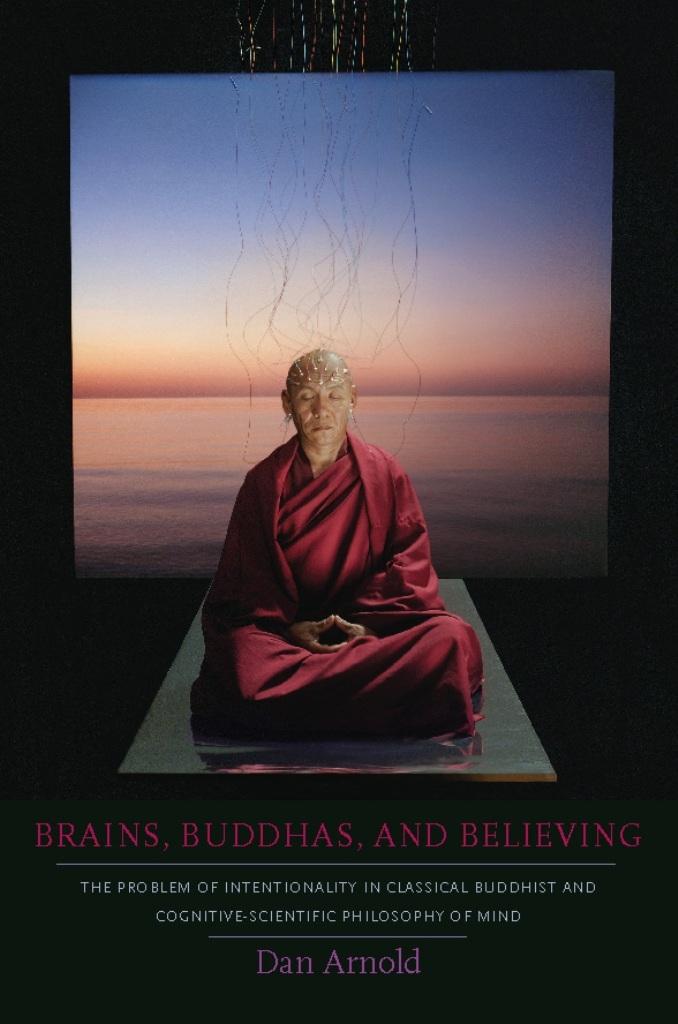
Premodern Buddhists are sometimes characterized as veritable "mind scientists" whose insights anticipate modern research on the brain and mind. Aiming to complicate this story, Dan Arnold confronts a significant obstacle to popular attempts at harmonizing classical Buddhist and modern scientific thought: since most Indian Buddhists held that the mental continuum is uninterrupted by death (its continuity is what Buddhists mean by "rebirth"), they would have no truck with the idea that everything about the mental can be explained in terms of brain events. Nevertheless, a predominant stream of Indian Buddhist thought, associated with the seventh-century thinker Dharmakirti, turns out to be vulnerable to arguments modern philosophers have leveled against physicalism.
By characterizing the philosophical problems commonly faced by Dharmakirti and contemporary philosophers such as Jerry Fodor and Daniel Dennett, Arnold seeks to advance an understanding of both first-millennium Indian arguments and contemporary debates on the philosophy of mind. The issues center on what modern philosophers have called intentionality—the fact that the mind can be about (or represent or mean) other things. Tracing an account of intentionality through Kant, Wilfrid Sellars, and John McDowell, Arnold argues that intentionality cannot, in principle, be explained in causal terms.
Elaborating some of Dharmakirti's central commitments (chiefly his apoha theory of meaning and his account of self-awareness), Arnold shows that despite his concern to refute physicalism, Dharmakirti's causal explanations of the mental mean that modern arguments from intentionality cut as much against his project as they do against physicalist philosophies of mind. This is evident in the arguments of some of Dharmakirti's contemporaneous Indian critics (proponents of the orthodox Brahmanical Mimasa school as well as fellow Buddhists from the Madhyamaka school of thought), whose critiques exemplify the same logic as modern arguments from intentionality. Elaborating these various strands of thought, Arnold shows that seemingly arcane arguments among first-millennium Indian thinkers can illuminate matters still very much at the heart of contemporary philosophy.
Before Memmo my notes were scattered across PDFs. Now a workspace pulls everything into one place — I see exactly what's still left to study.
Memmo's summaries are gold before exams. I don't have to re-read 800 pages two weeks before — just the important parts.
The AI chat has saved me the night before an exam more than once. I just keep asking until I get it — no waiting on a study group to reply.
The quizzes hit exactly what I need to know. Memmo tracks what I get stuck on — so I only practice what's worth it.
Flashcards with spaced repetition are magic. Memmo knows when I'm about to forget something and brings it back.
The AI podcasts are my favorite. I listen on my way to school and get a recap without sitting at a computer.

Handbok i kvalitativa metoder
281 kr

Hållbar utveckling: en introduktion för ingenjörer och andra problemlösare
334 kr

Brymans Samhällsvetenskapliga metoder
390 kr

Projektledning
491 kr

Den orättvisa hälsan: om socioekonomiska skillnader i hälsa och livslängd
326 kr

Vetenskapsteori för nybörjare
196 kr

Organizational Leadership
429 kr

På väg mot läraryrket
172 kr

Det sociala livet i skolan: Socialpsykologiska perspektiv
253 kr

Betygsättningens didaktik
151 kr

Personality
402 kr

Studying Leadership
404 kr

Managing Innovation
477 kr

Introduktion till samhällsvetenskaplig metod
347 kr

The Psychology of Sex and Gender
698 kr

Evidens och kunskap för socialt arbete
207 kr

Introduction to Leadership
605 kr