
Before Memmo my notes were scattered across PDFs. Now a workspace pulls everything into one place — I see exactly what's still left to study.
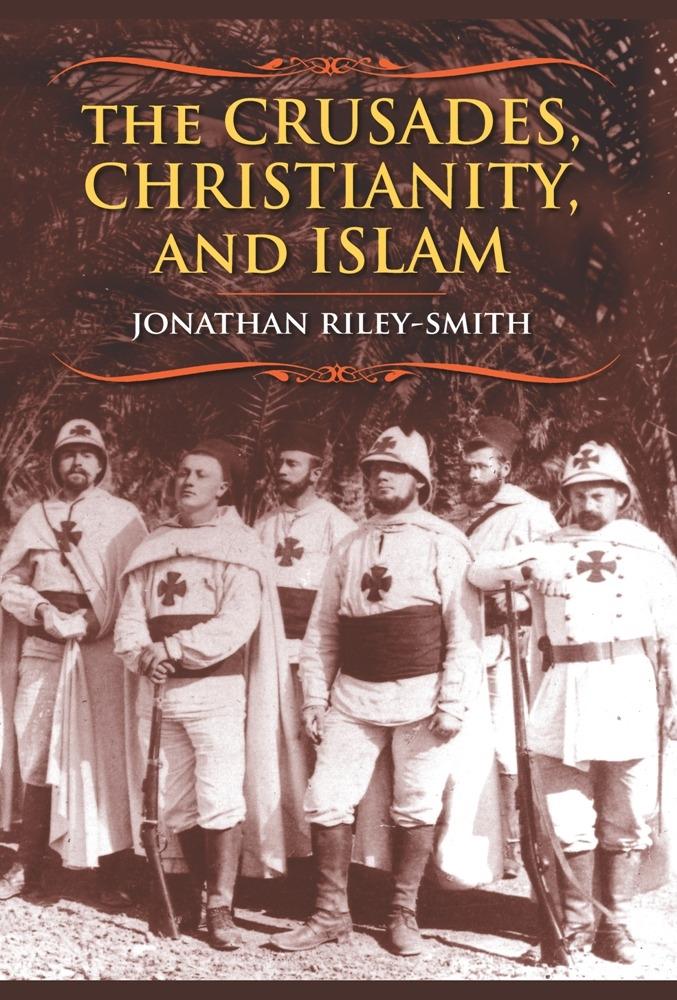
The Crusades were penitential war-pilgrimages fought in the Levant and the eastern Mediterranean, as well as in North Africa, Spain, Portugal, Poland, the Baltic region, Hungary, the Balkans, and Western Europe. Beginning in the eleventh century and ending as late as the eighteenth, these holy wars were waged against Muslims and other enemies of the Church, enlisting generations of laymen and laywomen to fight for the sake of Christendom.
Crusading features prominently in today's religio-political hostilities, yet the perceptions of these wars held by Arab nationalists, pan-Islamists, and many in the West have been deeply distorted by the language and imagery of nineteenth-century European imperialism. With this book, Jonathan Riley-Smith returns to the actual story of the Crusades, explaining why and where they were fought and how deeply their narratives and symbolism became embedded in popular Catholic thought and devotional life.
From this history, Riley-Smith traces the legacy of the Crusades into modern times, specifically within the attitudes of European imperialists and colonialists and within the beliefs of twentieth-century Muslims. Europeans fashioned an interpretation of the Crusades from the writings of Walter Scott and a French contemporary, Joseph-François Michaud. Scott portrayed Islamic societies as forward-thinking, while casting Christian crusaders as culturally backward and often morally corrupt. Michaud, in contrast, glorified crusading, and his followers used its imagery to illuminate imperial adventures.
These depictions have had a profound influence on contemporary Western opinion, as well as on Muslim attitudes toward their past and present. Whether regarded as a valid expression of Christianity's divine enterprise or condemned as a weapon of empire, crusading has been a powerful rhetorical tool for centuries. In order to understand the preoccupations of Islamist jihadis and the character of Western discourse on the Middle East, Riley-Smith argues, we must understand how images of crusading were formed in the nineteenth and twentieth centuries.
Before Memmo my notes were scattered across PDFs. Now a workspace pulls everything into one place — I see exactly what's still left to study.
Memmo's summaries are gold before exams. I don't have to re-read 800 pages two weeks before — just the important parts.
The AI chat has saved me the night before an exam more than once. I just keep asking until I get it — no waiting on a study group to reply.
The quizzes hit exactly what I need to know. Memmo tracks what I get stuck on — so I only practice what's worth it.
Flashcards with spaced repetition are magic. Memmo knows when I'm about to forget something and brings it back.
The AI podcasts are my favorite. I listen on my way to school and get a recap without sitting at a computer.

Handbok i kvalitativa metoder
281 kr

Hållbar utveckling: en introduktion för ingenjörer och andra problemlösare
334 kr

Brymans Samhällsvetenskapliga metoder
390 kr

Projektledning
491 kr

Den orättvisa hälsan: om socioekonomiska skillnader i hälsa och livslängd
326 kr

Vetenskapsteori för nybörjare
196 kr

Organizational Leadership
429 kr

På väg mot läraryrket
172 kr

Det sociala livet i skolan: Socialpsykologiska perspektiv
253 kr

Betygsättningens didaktik
151 kr

Personality
402 kr

Studying Leadership
404 kr

Managing Innovation
477 kr

Introduktion till samhällsvetenskaplig metod
347 kr

The Psychology of Sex and Gender
698 kr

Evidens och kunskap för socialt arbete
207 kr

Introduction to Leadership
605 kr