
Before Memmo my notes were scattered across PDFs. Now a workspace pulls everything into one place — I see exactly what's still left to study.
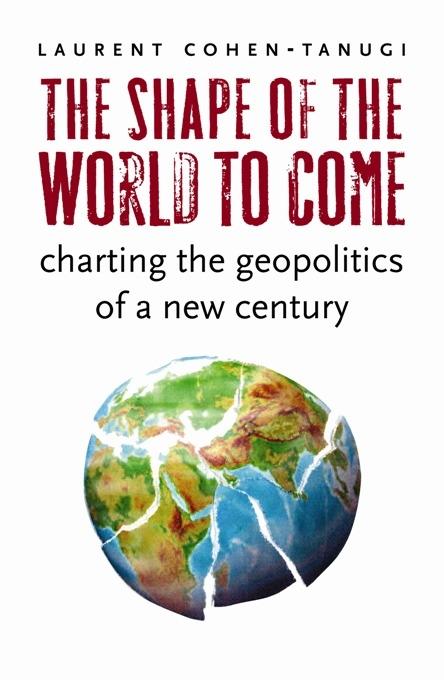
Contrary to an optimistic vision of a world "flattened" by the virtues of globalization, the sustainability and positive outcomes of economic and political homogenization are far from guaranteed. For better and for worse, globalization has become the most powerful force shaping the world's geopolitical landscape, whether it has meant integration or fragmentation, peace or war. The future partly depends on how new economic giants such as China, India, and others make use of their power. It also depends on how well Western democracies can preserve their tenuous hold on leadership, cohesion, and the pursuit of the common good.
Offering the most comprehensive analysis of world politics to date, Laurent Cohen-Tanugi takes on globalization's cheerleaders and detractors, who, in their narrow focus, have failed to recognize the full extent to which globalization has become a geopolitical phenomenon. Offering an interpretative framework for thought and action, Cohen-Tanugi suggests how we should approach our new "multipolar" worlda world that is anything but the balanced and harmonious system many welcomed as a desirable alternative to the "American Empire."
Cohen-Tanugi's point is not that the major trends of economic globalization, technological revolution, regional integration, and democratic progress are no longer at work. His argument is that economic globalization exists in a complex dialectic with the traditional geopolitics it has, ironically, helped to revive. This tension has created an ambivalent world that requires democracies to operate in two realms: the realm of economic integration and multilateralismor peaceful, astrategic, "postmodern" internationalismand the more traditional, even regressive realm of confrontation between national and regional strategies of power fought against a background of terrorism, civil wars, and nuclear proliferation.
Before Memmo my notes were scattered across PDFs. Now a workspace pulls everything into one place — I see exactly what's still left to study.
Memmo's summaries are gold before exams. I don't have to re-read 800 pages two weeks before — just the important parts.
The AI chat has saved me the night before an exam more than once. I just keep asking until I get it — no waiting on a study group to reply.
The quizzes hit exactly what I need to know. Memmo tracks what I get stuck on — so I only practice what's worth it.
Flashcards with spaced repetition are magic. Memmo knows when I'm about to forget something and brings it back.
The AI podcasts are my favorite. I listen on my way to school and get a recap without sitting at a computer.

Handbok i kvalitativa metoder
281 kr

Hållbar utveckling: en introduktion för ingenjörer och andra problemlösare
334 kr

Brymans Samhällsvetenskapliga metoder
390 kr

Projektledning
491 kr

Den orättvisa hälsan: om socioekonomiska skillnader i hälsa och livslängd
326 kr

Vetenskapsteori för nybörjare
196 kr

Organizational Leadership
429 kr

På väg mot läraryrket
172 kr

Det sociala livet i skolan: Socialpsykologiska perspektiv
253 kr

Betygsättningens didaktik
151 kr

Personality
402 kr

Studying Leadership
404 kr

Managing Innovation
477 kr

Introduktion till samhällsvetenskaplig metod
347 kr

The Psychology of Sex and Gender
698 kr

Evidens och kunskap för socialt arbete
207 kr

Introduction to Leadership
605 kr