
Before Memmo my notes were scattered across PDFs. Now a workspace pulls everything into one place — I see exactly what's still left to study.
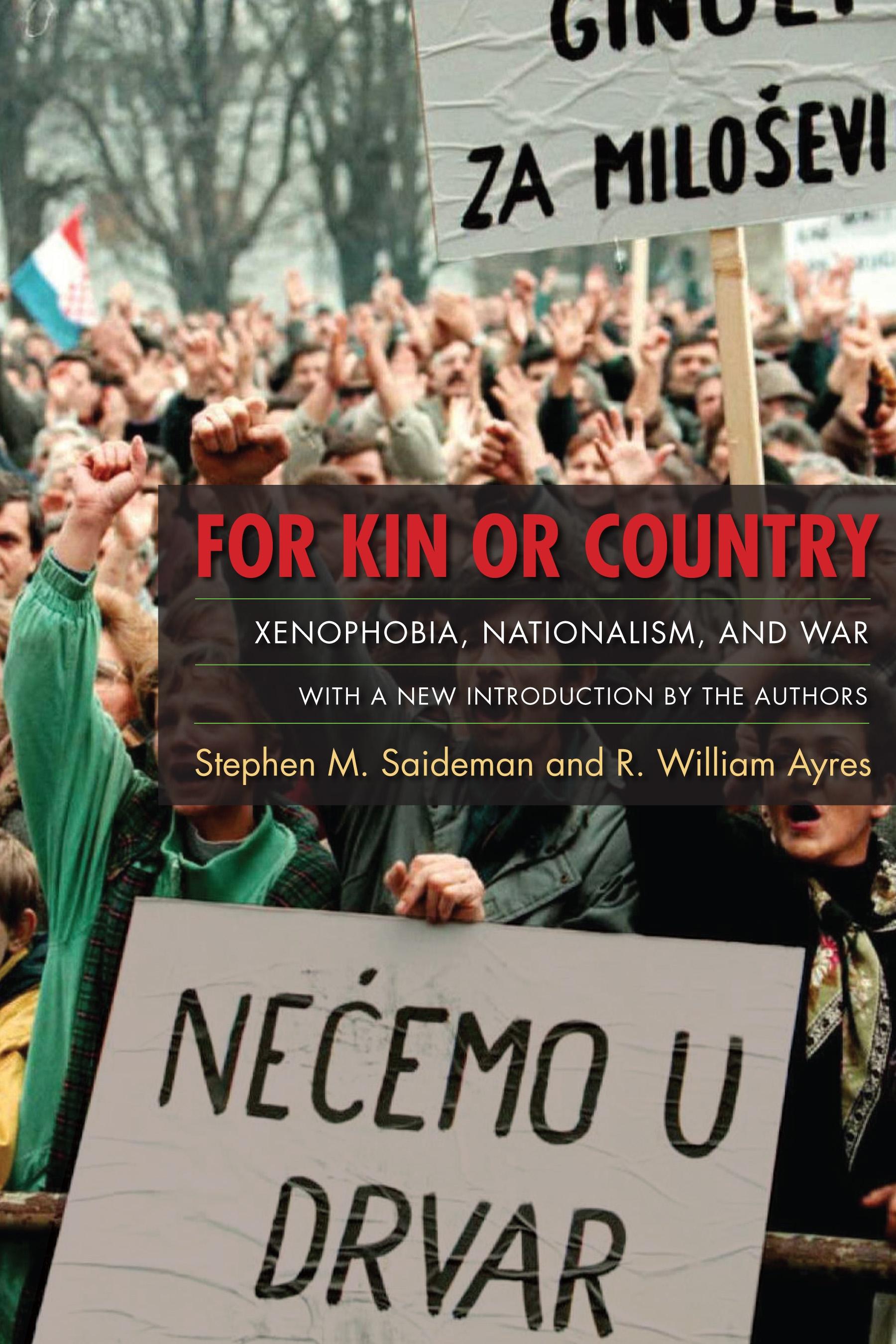
The collapse of an empire can result in the division of families and the redrawing of geographical boundaries. New leaders promise the return of people and territories that may have been lost in the past, often advocating aggressive foreign policies that can result in costly and devastating wars. The final years of the Austro-Hungarian and Ottoman empires, the end of European colonization in Africa and Asia, and the demise of the Soviet Union were all accompanied by war and atrocity.
These efforts to reunite lost kin are known as irredentism—territorial claims based on shared ethnic ties made by one state to a minority population residing within another state. For Kin or Country explores this phenomenon, investigating why the collapse of communism prompted more violence in some instances and less violence in others. Despite the tremendous political and economic difficulties facing all former communist states during their transition to a market democracy, only Armenia, Croatia, and Serbia tried to upset existing boundaries. Hungary, Romania, and Russia practiced much more restraint.
The authors examine various explanations for the causes of irredentism and for the pursuit of less antagonistic policies, including the efforts by Western Europe to tame Eastern Europe. Ultimately, the authors find that internal forces drive irredentist policy even at the risk of a country's self-destruction and that xenophobia may have actually worked to stabilize many postcommunist states in Eastern Europe.
Events in Russia and Eastern Europe in 2014 have again brought irredentism into the headlines. In a new Introduction, the authors address some of the events and dynamics that have developed since the original version of the book was published. By focusing on how nationalist identity interact with the interests of politicians, For Kin or Country explains why some states engage in aggressive irredentism and when others forgo those opportunities that is as relevant to Russia and Ukraine in 2014 as it was for Serbia, Croatia, and Armenia in the 1990s.
Before Memmo my notes were scattered across PDFs. Now a workspace pulls everything into one place — I see exactly what's still left to study.
Memmo's summaries are gold before exams. I don't have to re-read 800 pages two weeks before — just the important parts.
The AI chat has saved me the night before an exam more than once. I just keep asking until I get it — no waiting on a study group to reply.
The quizzes hit exactly what I need to know. Memmo tracks what I get stuck on — so I only practice what's worth it.
Flashcards with spaced repetition are magic. Memmo knows when I'm about to forget something and brings it back.
The AI podcasts are my favorite. I listen on my way to school and get a recap without sitting at a computer.

Handbok i kvalitativa metoder
281 kr

Hållbar utveckling: en introduktion för ingenjörer och andra problemlösare
334 kr

Brymans Samhällsvetenskapliga metoder
390 kr

Projektledning
491 kr

Den orättvisa hälsan: om socioekonomiska skillnader i hälsa och livslängd
326 kr

Vetenskapsteori för nybörjare
196 kr

Organizational Leadership
429 kr

På väg mot läraryrket
172 kr

Det sociala livet i skolan: Socialpsykologiska perspektiv
253 kr

Betygsättningens didaktik
151 kr

Personality
402 kr

Studying Leadership
404 kr

Managing Innovation
477 kr

Introduktion till samhällsvetenskaplig metod
347 kr

The Psychology of Sex and Gender
698 kr

Evidens och kunskap för socialt arbete
207 kr

Introduction to Leadership
605 kr