
Before Memmo my notes were scattered across PDFs. Now a workspace pulls everything into one place — I see exactly what's still left to study.
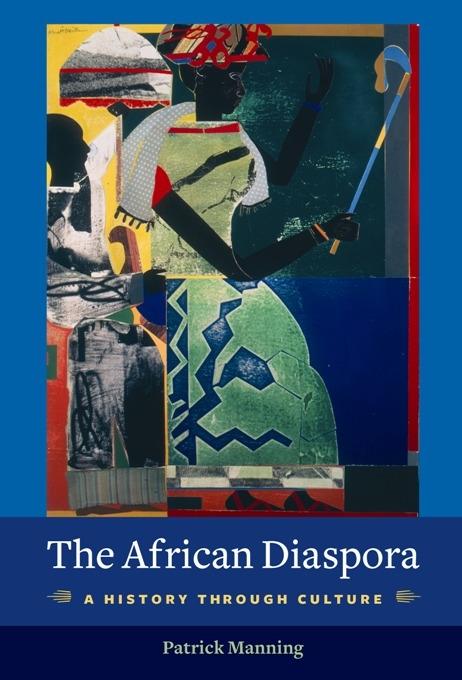
Patrick Manning refuses to divide the African diaspora into the experiences of separate regions and nations. Instead, he follows the multiple routes that brought Africans and people of African descent into contact with one another and with Europe, Asia, and the Americas. In weaving these stories together, Manning shows how the waters of the Atlantic Ocean, the Mediterranean Sea, and the Indian Ocean fueled dynamic interactions among black communities and cultures and how these patterns resembled those of a number of connected diasporas concurrently taking shape across the globe.
Manning begins in 1400 and traces five central themes: the connections that enabled Africans to mutually identify and hold together as a global community; discourses on race; changes in economic circumstance; the character of family life; and the evolution of popular culture. His approach reveals links among seemingly disparate worlds. In the mid-nineteenth century, for example, slavery came under attack in North America, South America, southern Africa, West Africa, the Ottoman Empire, and India, with former slaves rising to positions of political prominence. Yet at the beginning of the twentieth century, the near-elimination of slavery brought new forms of discrimination that removed almost all blacks from government for half a century.
Manning underscores the profound influence that the African diaspora had on world history, demonstrating the inextricable link between black migration and the rise of modernity, especially in regards to the processes of industrialization and urbanization. A remarkably inclusive and far-reaching work, The African Diaspora proves that the advent of modernity cannot be imaginatively or comprehensively engaged without taking the African peoples and the African continent as a whole into account.
Before Memmo my notes were scattered across PDFs. Now a workspace pulls everything into one place — I see exactly what's still left to study.
Memmo's summaries are gold before exams. I don't have to re-read 800 pages two weeks before — just the important parts.
The AI chat has saved me the night before an exam more than once. I just keep asking until I get it — no waiting on a study group to reply.
The quizzes hit exactly what I need to know. Memmo tracks what I get stuck on — so I only practice what's worth it.
Flashcards with spaced repetition are magic. Memmo knows when I'm about to forget something and brings it back.
The AI podcasts are my favorite. I listen on my way to school and get a recap without sitting at a computer.

Handbok i kvalitativa metoder
281 kr

Hållbar utveckling: en introduktion för ingenjörer och andra problemlösare
334 kr

Brymans Samhällsvetenskapliga metoder
390 kr

Projektledning
491 kr

Den orättvisa hälsan: om socioekonomiska skillnader i hälsa och livslängd
326 kr

Vetenskapsteori för nybörjare
196 kr

Organizational Leadership
429 kr

På väg mot läraryrket
172 kr

Det sociala livet i skolan: Socialpsykologiska perspektiv
253 kr

Betygsättningens didaktik
151 kr

Personality
402 kr

Studying Leadership
404 kr

Managing Innovation
477 kr

Introduktion till samhällsvetenskaplig metod
347 kr

The Psychology of Sex and Gender
698 kr

Evidens och kunskap för socialt arbete
207 kr

Introduction to Leadership
605 kr