
Before Memmo my notes were scattered across PDFs. Now a workspace pulls everything into one place — I see exactly what's still left to study.
Winner, 2007 Albert Hourani Book Award, Middle East Studies Association
Winner, 2008 Award for Excellence in the Study of Religion in Analytical-Descriptive Studies, American Academy of Religion
Winner, 2011 John Nicholas Brown Prize, Medieval Academy of America
Winner, 2008 Ralph Waldo Emerson Award, Phi Beta Kappa
Shortlisted, 2008 Best First Book in the History of Religions, American Academy of Religion
Longlisted, 2008 Cundill International Prize and Lecture in HIstory at McGill University
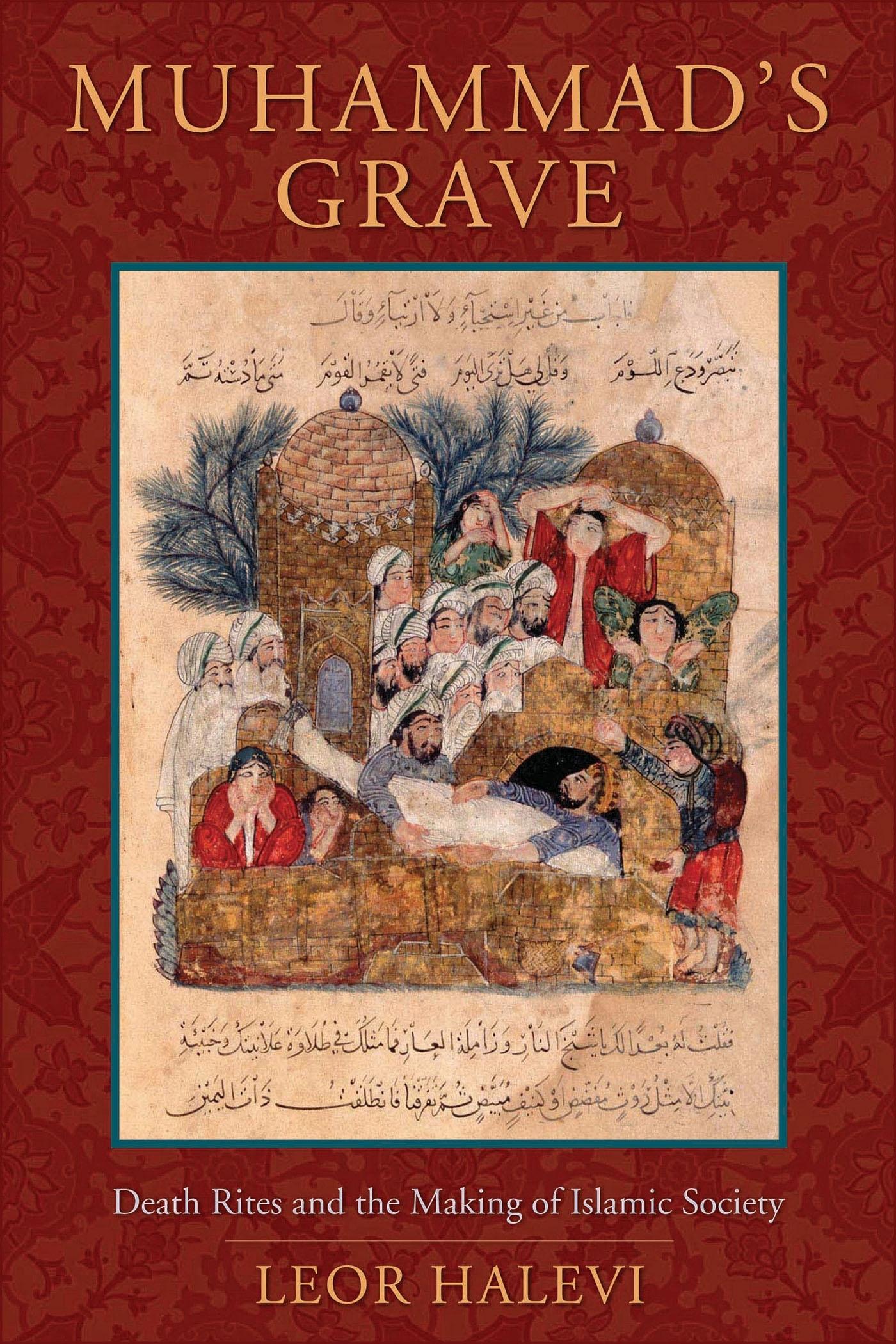
In his probing study of the role of death rites in the making of Islamic society, Leor Halevi imaginatively plays prescriptive texts against material culture and advances new ways of interpreting highly contested sources. His original research reveals that religious scholars of the early Islamic period produced codes of funerary law not only to define the handling of a Muslim corpse but also to transform everyday urban practices. Relying on oral traditions, these scholars established new social patterns in the cities of Arabia, Mesopotamia, and the eastern Mediterranean. They distinguished Islamic rites from Christian, Jewish, and Zoroastrian rites and changed the way men and women interacted publicly and privately.
In each chapter Halevi explores a different layer of human interaction, following the movement of the corpse from the deathbed to the grave. In the process he analyzes the real and imaginary relationships between husbands and wives, prayer leaders and mourners, and even dreamers and the dead. He describes how Muslims wailed for the deceased, prepared corpses for burial, marched in funerary processions, and prayed for the dead, highlighting the specific economic and political factors involved in these rituals as well as key religious and sexual divisions.
Offering a unique perspective on the making of Islamic social and religious ideals during this early period, Halevi forges a fascinating link between the development of funerary rites and the efforts of an emerging religion to carve out its own, distinct identity. Muhammad's Grave is a groundbreaking history of the rise of Islam and the roots of contemporary Muslim attitudes toward the body and society.
Before Memmo my notes were scattered across PDFs. Now a workspace pulls everything into one place — I see exactly what's still left to study.
Memmo's summaries are gold before exams. I don't have to re-read 800 pages two weeks before — just the important parts.
The AI chat has saved me the night before an exam more than once. I just keep asking until I get it — no waiting on a study group to reply.
The quizzes hit exactly what I need to know. Memmo tracks what I get stuck on — so I only practice what's worth it.
Flashcards with spaced repetition are magic. Memmo knows when I'm about to forget something and brings it back.
The AI podcasts are my favorite. I listen on my way to school and get a recap without sitting at a computer.

Handbok i kvalitativa metoder
281 kr

Hållbar utveckling: en introduktion för ingenjörer och andra problemlösare
334 kr

Brymans Samhällsvetenskapliga metoder
390 kr

Projektledning
491 kr

Den orättvisa hälsan: om socioekonomiska skillnader i hälsa och livslängd
326 kr

Organizational Leadership
429 kr

Vetenskapsteori för nybörjare
196 kr

På väg mot läraryrket
172 kr

Det sociala livet i skolan: Socialpsykologiska perspektiv
253 kr

Betygsättningens didaktik
151 kr

Personality
402 kr

Studying Leadership
404 kr

Managing Innovation
477 kr

Introduktion till samhällsvetenskaplig metod
347 kr

The Psychology of Sex and Gender
698 kr

Evidens och kunskap för socialt arbete
207 kr

Introduction to Leadership
605 kr