
Before Memmo my notes were scattered across PDFs. Now a workspace pulls everything into one place — I see exactly what's still left to study.
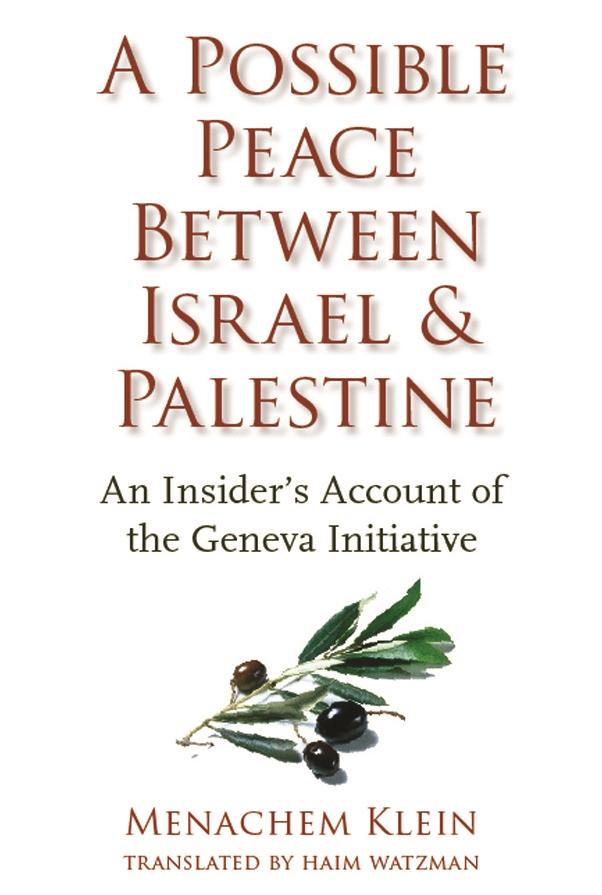
In 2003, after two years of negotiations, a group of prominent Israelis and Palestinians signed a model peace treaty. The document, popularly called the Geneva Initiative, contained detailed provisions resolving all outstanding issues between Israel and the Palestinian people, including drawing a border between Israel and Palestine, dividing Jerusalem, and determining the status of the Palestinian refugees.
The negotiators presented this citizens' initiative to the Israeli and Palestinian peoples and urged them to accept it. One of the Israeli negotiators was Menachem Klein, a political scientist who has written extensively about the Jerusalem issue in the context of peace negotiations. Although the Geneva Initiative was not endorsed by the governments of either side, it became a fundamental term of reference for solving the Middle East conflict. In this firsthand account, Klein explains how and why these groups were able to achieve agreement. He directly addresses the formation of the Israeli and Palestinian teams, how they managed their negotiations, and their communications with both governments. He also discusses the role of third-party facilitators and the strategy behind marketing the Geneva Initiative to the public.
A scholar and participant in the Geneva negotiations, Klein is able to provide both an inside perspective and an impartial analysis of the diplomatic efforts behind this historic compromise. He compares the negotiations to previous Israeli-Palestinian talks both formal and informal and the resolution of conflicts in South Africa and Algeria. Klein hopes that by treating the event as a case study we can learn a tremendous amount about the needs and approaches of both parties and the necessary shape peace must take between them.
Before Memmo my notes were scattered across PDFs. Now a workspace pulls everything into one place — I see exactly what's still left to study.
Memmo's summaries are gold before exams. I don't have to re-read 800 pages two weeks before — just the important parts.
The AI chat has saved me the night before an exam more than once. I just keep asking until I get it — no waiting on a study group to reply.
The quizzes hit exactly what I need to know. Memmo tracks what I get stuck on — so I only practice what's worth it.
Flashcards with spaced repetition are magic. Memmo knows when I'm about to forget something and brings it back.
The AI podcasts are my favorite. I listen on my way to school and get a recap without sitting at a computer.

Handbok i kvalitativa metoder
281 kr

Hållbar utveckling: en introduktion för ingenjörer och andra problemlösare
334 kr

Brymans Samhällsvetenskapliga metoder
390 kr

Projektledning
491 kr

Den orättvisa hälsan: om socioekonomiska skillnader i hälsa och livslängd
326 kr

Vetenskapsteori för nybörjare
196 kr

Organizational Leadership
429 kr

På väg mot läraryrket
172 kr

Det sociala livet i skolan: Socialpsykologiska perspektiv
253 kr

Betygsättningens didaktik
151 kr

Personality
402 kr

Studying Leadership
404 kr

Managing Innovation
477 kr

Introduktion till samhällsvetenskaplig metod
347 kr

The Psychology of Sex and Gender
698 kr

Evidens och kunskap för socialt arbete
207 kr

Introduction to Leadership
605 kr