
Before Memmo my notes were scattered across PDFs. Now a workspace pulls everything into one place — I see exactly what's still left to study.
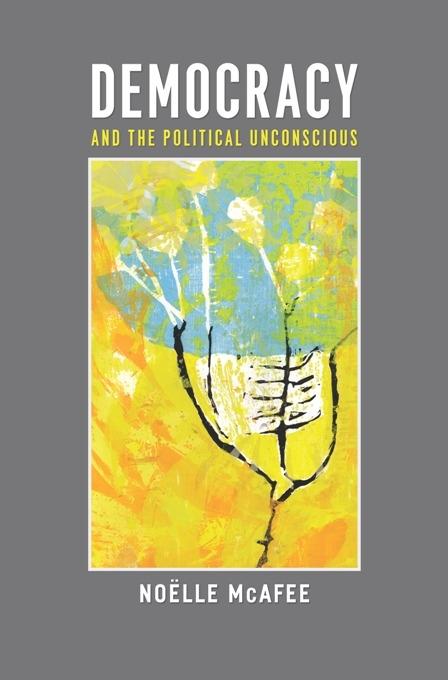
Political philosopher Noëlle McAfee proposes a powerful new political theory for our post-9/11 world, in which an old pathology-the repetition compulsion-has manifested itself in a seemingly endless war on terror. McAfee argues that the quintessentially human desire to participate in a world with others is the key to understanding the public sphere and to creating a more democratic society, a world that all members can have a hand in shaping. But when some are effectively denied this participation, whether through trauma or terror, instead of democratic politics, there arises a political unconscious, an effect of desires unarticulated, failures to sublimate, voices kept silent, and repression reenacted. Not only is this condition undemocratic and unjust, it may lead to further trauma. Unless its troubles are worked through, a political community risks continual repetition and even self-destruction.
McAfee deftly weaves together her experience as an observer of democratic life with an array of intellectual schemas, from poststructural psychoanalysis to Rawlsian and Habermasian democratic theories, as well as semiotics, civic republicanism, and American pragmatism. She begins with an analysis of the traumatic effects of silencing members of a political community. Then she explores the potential of deliberative dialogue and other "talking cures" and public testimonies, such as the South African Truth and Reconciliation Commission, to help societies work through, rather than continually act out, their conflicts.
Democracy and the Political Unconscious is rich in theoretical insights, but it is also grounded in the practical problems of those who are trying to process the traumas of oppression, terror, and brutality and create more decent and democratic societies. Drawing on a breathtaking range of theoretical frameworks and empirical observations, Democracy and the Political Unconscious charts a course for democratic transformation in a world sorely lacking in democratic practice.
Before Memmo my notes were scattered across PDFs. Now a workspace pulls everything into one place — I see exactly what's still left to study.
Memmo's summaries are gold before exams. I don't have to re-read 800 pages two weeks before — just the important parts.
The AI chat has saved me the night before an exam more than once. I just keep asking until I get it — no waiting on a study group to reply.
The quizzes hit exactly what I need to know. Memmo tracks what I get stuck on — so I only practice what's worth it.
Flashcards with spaced repetition are magic. Memmo knows when I'm about to forget something and brings it back.
The AI podcasts are my favorite. I listen on my way to school and get a recap without sitting at a computer.

Handbok i kvalitativa metoder
281 kr

Hållbar utveckling: en introduktion för ingenjörer och andra problemlösare
334 kr

Brymans Samhällsvetenskapliga metoder
390 kr

Projektledning
491 kr

Den orättvisa hälsan: om socioekonomiska skillnader i hälsa och livslängd
326 kr

Vetenskapsteori för nybörjare
196 kr

Organizational Leadership
429 kr

På väg mot läraryrket
172 kr

Det sociala livet i skolan: Socialpsykologiska perspektiv
253 kr

Betygsättningens didaktik
151 kr

Personality
402 kr

Studying Leadership
404 kr

Managing Innovation
477 kr

Introduktion till samhällsvetenskaplig metod
347 kr

The Psychology of Sex and Gender
698 kr

Evidens och kunskap för socialt arbete
207 kr

Introduction to Leadership
605 kr