
Before Memmo my notes were scattered across PDFs. Now a workspace pulls everything into one place — I see exactly what's still left to study.
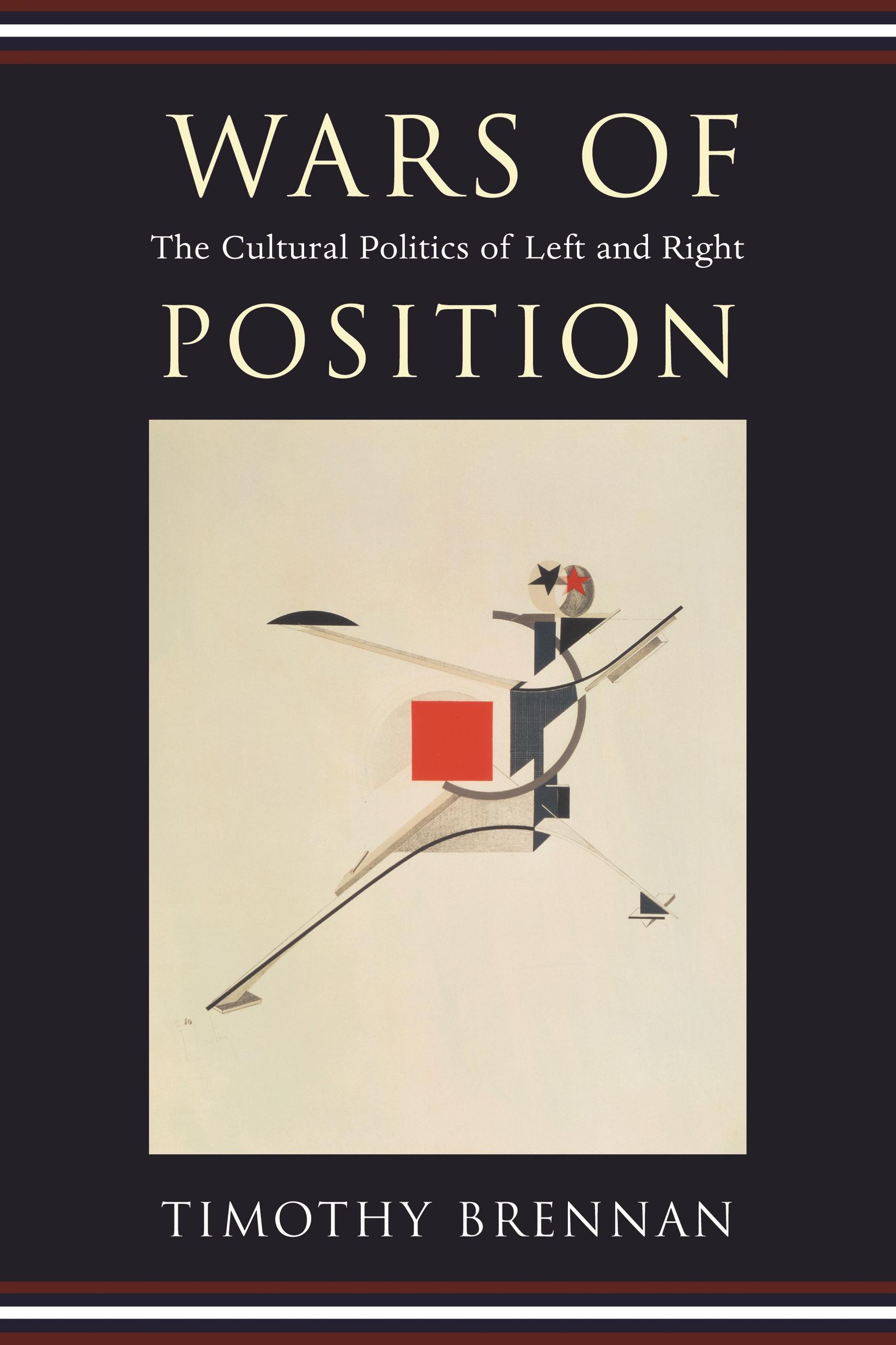
Taking stock of contemporary social, cultural, and political currents, Timothy Brennan explores key turning points in the recent history of American intellectual life. He contends that a certain social-democratic vision of politics has been banished from public discussion, leading to an unlikely convergence of the political right and the academic left and a deadening of critical opposition. Brennan challenges the conventional view that affiliations based on political belief, claims upon the state, or the public interest have been rendered obsolete by the march of events in the years before and after Reagan. Instead, he lays out a new path for a future infused with a sense of intellectual and political possibility.
In highlighting the shift in America's intellectual culture, Brennan makes the case for seeing belief as an identity. As much as race or ethnicity, political belief, Brennan argues, is itself an identity-one that remains unrecognized and without legal protections while possessing its own distinctive culture. Brennan also champions the idea of cosmopolitanism and critiques those theorists who relegate the left to the status of postcolonial "other."
Wars of Position documents how alternative views were chased from the public stage by strategic acts of censorship, including within supposedly dissident wings of the humanities. He explores how the humanities entered the cultural and political mainstream and settled into an awkward secular religion of the "middle way." In a series of interrelated chapters, Brennan considers narratives of the fall of the Berlin Wall and the Clinton impeachment; reexamines Salman Rushdie's pre-fatwa writing to illuminate its radical social leanings; presents a startling new interpretation of Edward Said; looks at the fatal reception of Antonio Gramsci within postcolonial history and criticism; and offers a stinging critique of Hardt and Negri's Empire and the influence of Italian radicalism on contemporary cultural theory. Throughout the work, Brennan also draws on and critiques the ideas and influence of Heidegger, Lyotard, Kristeva, and other influential theorists.
Before Memmo my notes were scattered across PDFs. Now a workspace pulls everything into one place — I see exactly what's still left to study.
Memmo's summaries are gold before exams. I don't have to re-read 800 pages two weeks before — just the important parts.
The AI chat has saved me the night before an exam more than once. I just keep asking until I get it — no waiting on a study group to reply.
The quizzes hit exactly what I need to know. Memmo tracks what I get stuck on — so I only practice what's worth it.
Flashcards with spaced repetition are magic. Memmo knows when I'm about to forget something and brings it back.
The AI podcasts are my favorite. I listen on my way to school and get a recap without sitting at a computer.

Handbok i kvalitativa metoder
281 kr

Hållbar utveckling: en introduktion för ingenjörer och andra problemlösare
334 kr

Brymans Samhällsvetenskapliga metoder
390 kr

Projektledning
491 kr

Den orättvisa hälsan: om socioekonomiska skillnader i hälsa och livslängd
326 kr

Vetenskapsteori för nybörjare
196 kr

Organizational Leadership
429 kr

På väg mot läraryrket
172 kr

Det sociala livet i skolan: Socialpsykologiska perspektiv
253 kr

Betygsättningens didaktik
151 kr

Personality
402 kr

Studying Leadership
404 kr

Managing Innovation
477 kr

Introduktion till samhällsvetenskaplig metod
347 kr

The Psychology of Sex and Gender
698 kr

Evidens och kunskap för socialt arbete
207 kr

Introduction to Leadership
605 kr