
Before Memmo my notes were scattered across PDFs. Now a workspace pulls everything into one place — I see exactly what's still left to study.
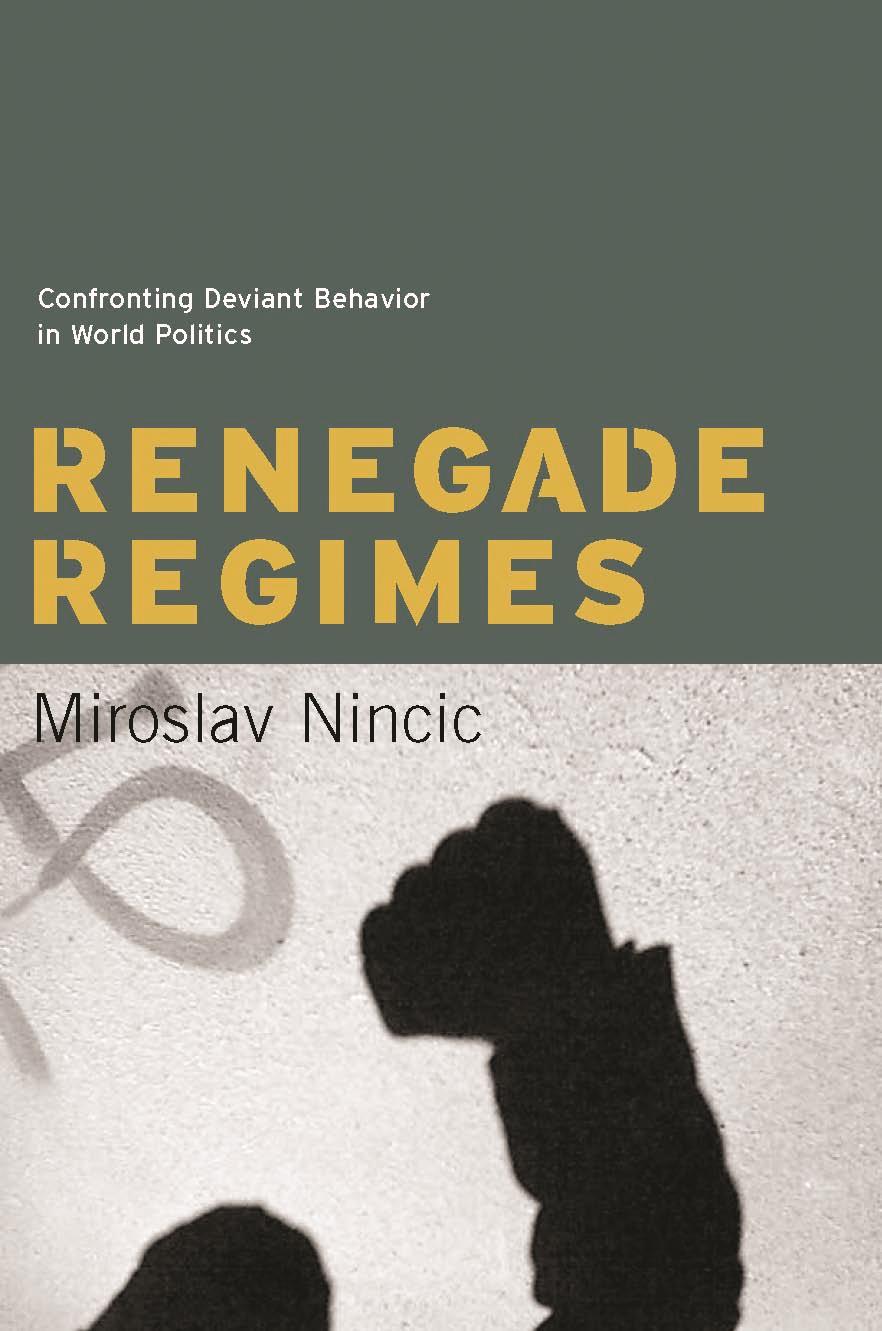
Rogue states pursue weapons of mass destruction, support terrorism, violate human rights, engage in acts of territorial aggression, and pose a threat to the international community. Recent debates and policy shifts regarding Iraq, North Korea, Syria, Iran, and Afghanistan reflect the uneven attempts to contend with regimes that pursue deviant behavior. In this timely new work, Miroslav Nincic illuminates the complex issues and policy choices surrounding clashes between international society and states that challenge the majority's espoused interests and values. As conventional approaches to international relations lose their relevance in a changing world, Nincic's work provides new and necessary frameworks and perspectives.
Nincic explores recent events and develops theoretical models of contemporary asymmetrical power relations among states to offer a systematic account of the genesis, trajectory, and motivations of renegade regimes. He discusses how the pursuit of policies that defy international norms is often motivated by a regime's desire for greater domestic control. From this starting point, Nincic considers states' deviant behavior through two stages: the first is the initial decision to defy key aspects of the international normative order, and the second is the manner in which subsequent behavior is shaped by the international community's responses.
In addressing attempts to control pariah states, Nincic assesses the effectiveness of sanctions and military responses. He provocatively argues that comprehensive economic sanctions can lead to a restructuring of the renegade regime's ideology and economy that ultimately strengthens its grip on power. In his chapter on military intervention, Nincic argues that force or the threat of force against a rogue state frequently triggers a protective reflex among its citizens, inspiring them to rally around the government's goals and values. Military threats, Nincic concludes, produce several kinds of consequences and their impact needs to be better understood.
Before Memmo my notes were scattered across PDFs. Now a workspace pulls everything into one place — I see exactly what's still left to study.
Memmo's summaries are gold before exams. I don't have to re-read 800 pages two weeks before — just the important parts.
The AI chat has saved me the night before an exam more than once. I just keep asking until I get it — no waiting on a study group to reply.
The quizzes hit exactly what I need to know. Memmo tracks what I get stuck on — so I only practice what's worth it.
Flashcards with spaced repetition are magic. Memmo knows when I'm about to forget something and brings it back.
The AI podcasts are my favorite. I listen on my way to school and get a recap without sitting at a computer.

Handbok i kvalitativa metoder
281 kr

Hållbar utveckling: en introduktion för ingenjörer och andra problemlösare
334 kr

Brymans Samhällsvetenskapliga metoder
390 kr

Projektledning
491 kr

Den orättvisa hälsan: om socioekonomiska skillnader i hälsa och livslängd
326 kr

Vetenskapsteori för nybörjare
196 kr

Organizational Leadership
429 kr

På väg mot läraryrket
172 kr

Det sociala livet i skolan: Socialpsykologiska perspektiv
253 kr

Betygsättningens didaktik
151 kr

Personality
402 kr

Studying Leadership
404 kr

Managing Innovation
477 kr

Introduktion till samhällsvetenskaplig metod
347 kr

The Psychology of Sex and Gender
698 kr

Evidens och kunskap för socialt arbete
207 kr

Introduction to Leadership
605 kr