
Before Memmo my notes were scattered across PDFs. Now a workspace pulls everything into one place — I see exactly what's still left to study.
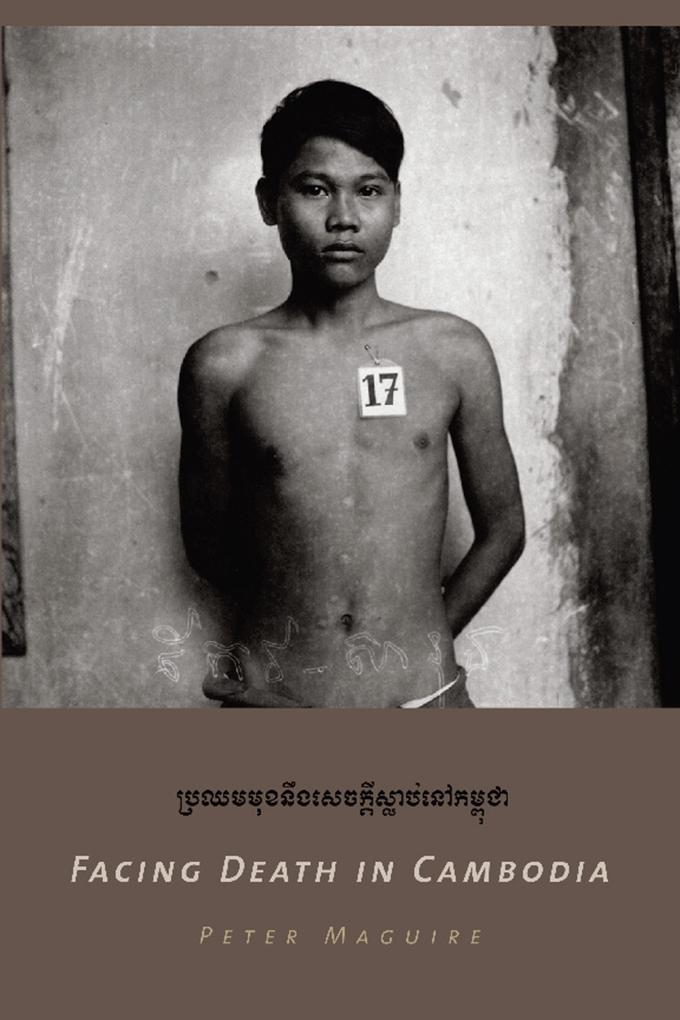
The Khmer Rouge regime took control of Cambodia by force of arms, then committed the most brazen crimes since the Third Reich: at least 1.5 million people murdered between 1975 and 1979. Yet no individuals were ever tried or punished. This book is the story of Peter Maguire's effort to learn how Cambodia's "culture of impunity" developed, why it persists, and the failures of the "international community" to confront the Cambodian genocide. Written from a personal and historical perspective, Facing Death in Cambodia recounts Maguire's growing anguish over the gap between theories of universal justice and political realities.
Maguire documents the atrocities and the aftermath through personal interviews with victims and perpetrators, discussions with international and NGO officials, journalistic accounts, and government sources gathered during a ten-year odyssey in search of answers. The book includes a selection of haunting pictures from among the thousands taken at the now infamous Tuol Sleng prison (also referred to as S-21), through which at least 14,000 men, women, and children passed—and from which fewer than a dozen emerged alive.
What he discovered raises troubling questions: Was the Cambodian genocide a preview of the genocidal civil wars that would follow in the wake of the Cold War? Is international justice an attainable idea or a fiction superimposed over an unbearably dark reality? Did issues of political expediency allow Cambodian leaders to escape prosecution?The Khmer Rouge violated the Nuremberg Principles, the United Nations Charter, the laws of war, and the UN Genocide Convention. Yet in the decade after the regime's collapse, the perpetrators were rescued and rehabilitated-even rewarded-by China, Thailand, the United States, and the UN. According to Peter Maguire, Cambodia holds the key to understanding why recent UN interventions throughout the world have failed to prevent atrocities and to enforce treaties.
Before Memmo my notes were scattered across PDFs. Now a workspace pulls everything into one place — I see exactly what's still left to study.
Memmo's summaries are gold before exams. I don't have to re-read 800 pages two weeks before — just the important parts.
The AI chat has saved me the night before an exam more than once. I just keep asking until I get it — no waiting on a study group to reply.
The quizzes hit exactly what I need to know. Memmo tracks what I get stuck on — so I only practice what's worth it.
Flashcards with spaced repetition are magic. Memmo knows when I'm about to forget something and brings it back.
The AI podcasts are my favorite. I listen on my way to school and get a recap without sitting at a computer.

Handbok i kvalitativa metoder
281 kr

Hållbar utveckling: en introduktion för ingenjörer och andra problemlösare
334 kr

Brymans Samhällsvetenskapliga metoder
390 kr

Projektledning
491 kr

Den orättvisa hälsan: om socioekonomiska skillnader i hälsa och livslängd
326 kr

Organizational Leadership
429 kr

Vetenskapsteori för nybörjare
196 kr

På väg mot läraryrket
172 kr

Det sociala livet i skolan: Socialpsykologiska perspektiv
253 kr

Betygsättningens didaktik
151 kr

Personality
402 kr

Studying Leadership
404 kr

Managing Innovation
477 kr

Introduktion till samhällsvetenskaplig metod
347 kr

The Psychology of Sex and Gender
698 kr

Evidens och kunskap för socialt arbete
207 kr

Introduction to Leadership
605 kr