
Before Memmo my notes were scattered across PDFs. Now a workspace pulls everything into one place — I see exactly what's still left to study.
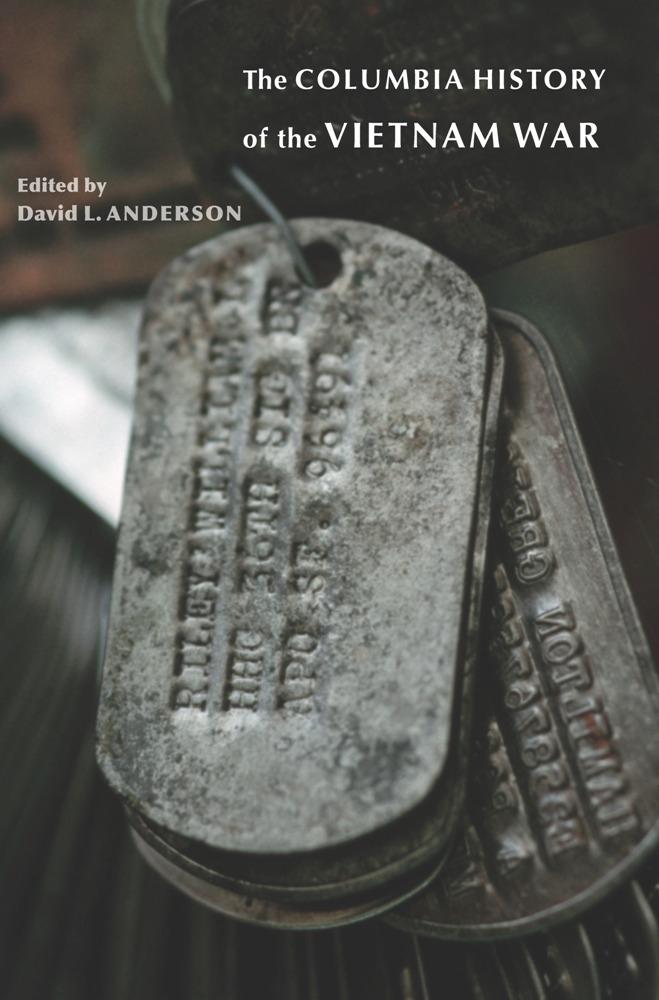
Rooted in recent scholarship, The Columbia History of the Vietnam War offers profound new perspectives on the political, historical, military, and social issues that defined the war and its effect on the United States and Vietnam. Laying the chronological and critical foundations for the volume, David L. Anderson opens with an essay on the Vietnam War's major moments and enduring relevance. Mark Philip Bradley follows with a reexamination of Vietnamese revolutionary nationalism and the Vietminh-led war against French colonialism. Richard H. Immerman revisits Eisenhower's and Kennedy's efforts at nation building in South Vietnam, and Gary R. Hess reviews America's military commitment under Kennedy and Johnson. Lloyd C. Gardner investigates the motivations behind Johnson's escalation of force, and Robert J. McMahon focuses on the pivotal period before and after the Tet Offensive. Jeffrey P. Kimball then makes sense of Nixon's paradoxical decision to end U.S. intervention while pursuing a destructive air war.
John Prados and Eric Bergerud devote essays to America's military strategy, while Helen E. Anderson and Robert K. Brigham explore the war's impact on Vietnamese women and urban culture. Melvin Small recounts the domestic tensions created by America's involvement in Vietnam, and Kenton Clymer traces the spread of the war to Laos and Cambodia. Concluding essays by Robert D. Schulzinger and George C. Herring account for the legacy of the war within Vietnamese and American contexts and diagnose the symptoms of the "Vietnam syndrome" evident in later debates about U.S. foreign policy. America's experience in Vietnam continues to figure prominently in discussions about strategy and defense, not to mention within discourse on the identity of the United States as a nation. Anderson's expert collection is therefore essential to understanding America's entanglement in the Vietnam War and the conflict's influence on the nation's future interests abroad.
Before Memmo my notes were scattered across PDFs. Now a workspace pulls everything into one place — I see exactly what's still left to study.
Memmo's summaries are gold before exams. I don't have to re-read 800 pages two weeks before — just the important parts.
The AI chat has saved me the night before an exam more than once. I just keep asking until I get it — no waiting on a study group to reply.
The quizzes hit exactly what I need to know. Memmo tracks what I get stuck on — so I only practice what's worth it.
Flashcards with spaced repetition are magic. Memmo knows when I'm about to forget something and brings it back.
The AI podcasts are my favorite. I listen on my way to school and get a recap without sitting at a computer.

Handbok i kvalitativa metoder
281 kr

Hållbar utveckling: en introduktion för ingenjörer och andra problemlösare
334 kr

Brymans Samhällsvetenskapliga metoder
390 kr

Projektledning
491 kr

Den orättvisa hälsan: om socioekonomiska skillnader i hälsa och livslängd
326 kr

Vetenskapsteori för nybörjare
196 kr

Organizational Leadership
429 kr

På väg mot läraryrket
172 kr

Det sociala livet i skolan: Socialpsykologiska perspektiv
253 kr

Betygsättningens didaktik
151 kr

Personality
402 kr

Studying Leadership
404 kr

Managing Innovation
477 kr

Introduktion till samhällsvetenskaplig metod
347 kr

The Psychology of Sex and Gender
698 kr

Evidens och kunskap för socialt arbete
207 kr

Introduction to Leadership
605 kr