
Before Memmo my notes were scattered across PDFs. Now a workspace pulls everything into one place — I see exactly what's still left to study.
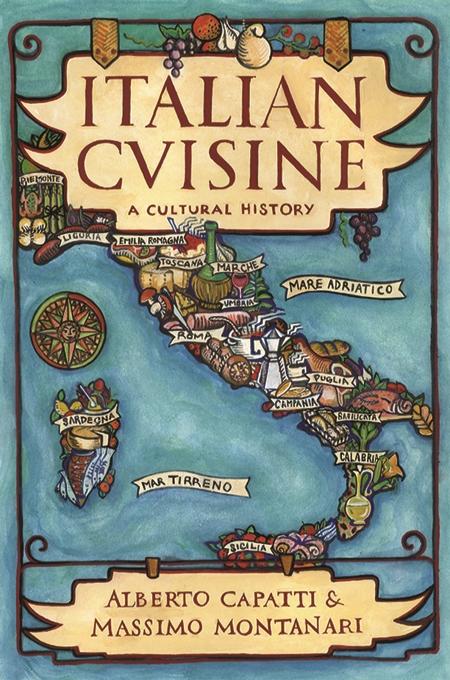
Italy, the country with a hundred cities and a thousand bell towers, is also the country with a hundred cuisines and a thousand recipes. Its great variety of culinary practices reflects a history long dominated by regionalism and political division, and has led to the common conception of Italian food as a mosaic of regional customs rather than a single tradition. Nonetheless, this magnificent new book demonstrates the development of a distinctive, unified culinary tradition throughout the Italian peninsula.
Alberto Capatti and Massimo Montanari uncover a network of culinary customs, food lore, and cooking practices, dating back as far as the Middle Ages, that are identifiably Italian:
o Italians used forks 300 years before other Europeans, possibly because they were needed to handle pasta, which is slippery and dangerously hot.
o Italians invented the practice of chilling drinks and may have invented ice cream.
o Italian culinary practice influenced the rest of Europe to place more emphasis on vegetables and less on meat.
o Salad was a distinctive aspect of the Italian meal as early as the sixteenth century.
The authors focus on culinary developments in the late medieval, Renaissance, and Baroque eras, aided by a wealth of cookbooks produced throughout the early modern period. They show how Italy's culinary identities emerged over the course of the centuries through an exchange of information and techniques among geographical regions and social classes. Though temporally, spatially, and socially diverse, these cuisines refer to a common experience that can be described as Italian. Thematically organized around key issues in culinary history and beautifully illustrated, Italian Cuisine is a rich history of the ingredients, dishes, techniques, and social customs behind the Italian food we know and love today.
Before Memmo my notes were scattered across PDFs. Now a workspace pulls everything into one place — I see exactly what's still left to study.
Memmo's summaries are gold before exams. I don't have to re-read 800 pages two weeks before — just the important parts.
The AI chat has saved me the night before an exam more than once. I just keep asking until I get it — no waiting on a study group to reply.
The quizzes hit exactly what I need to know. Memmo tracks what I get stuck on — so I only practice what's worth it.
Flashcards with spaced repetition are magic. Memmo knows when I'm about to forget something and brings it back.
The AI podcasts are my favorite. I listen on my way to school and get a recap without sitting at a computer.

Handbok i kvalitativa metoder
281 kr

Hållbar utveckling: en introduktion för ingenjörer och andra problemlösare
334 kr

Brymans Samhällsvetenskapliga metoder
390 kr

Projektledning
491 kr

Den orättvisa hälsan: om socioekonomiska skillnader i hälsa och livslängd
326 kr

Vetenskapsteori för nybörjare
196 kr

Organizational Leadership
429 kr

På väg mot läraryrket
172 kr

Det sociala livet i skolan: Socialpsykologiska perspektiv
253 kr

Betygsättningens didaktik
151 kr

Personality
402 kr

Studying Leadership
404 kr

Managing Innovation
477 kr

Introduktion till samhällsvetenskaplig metod
347 kr

The Psychology of Sex and Gender
698 kr

Evidens och kunskap för socialt arbete
207 kr

Introduction to Leadership
605 kr