
Before Memmo my notes were scattered across PDFs. Now a workspace pulls everything into one place — I see exactly what's still left to study.
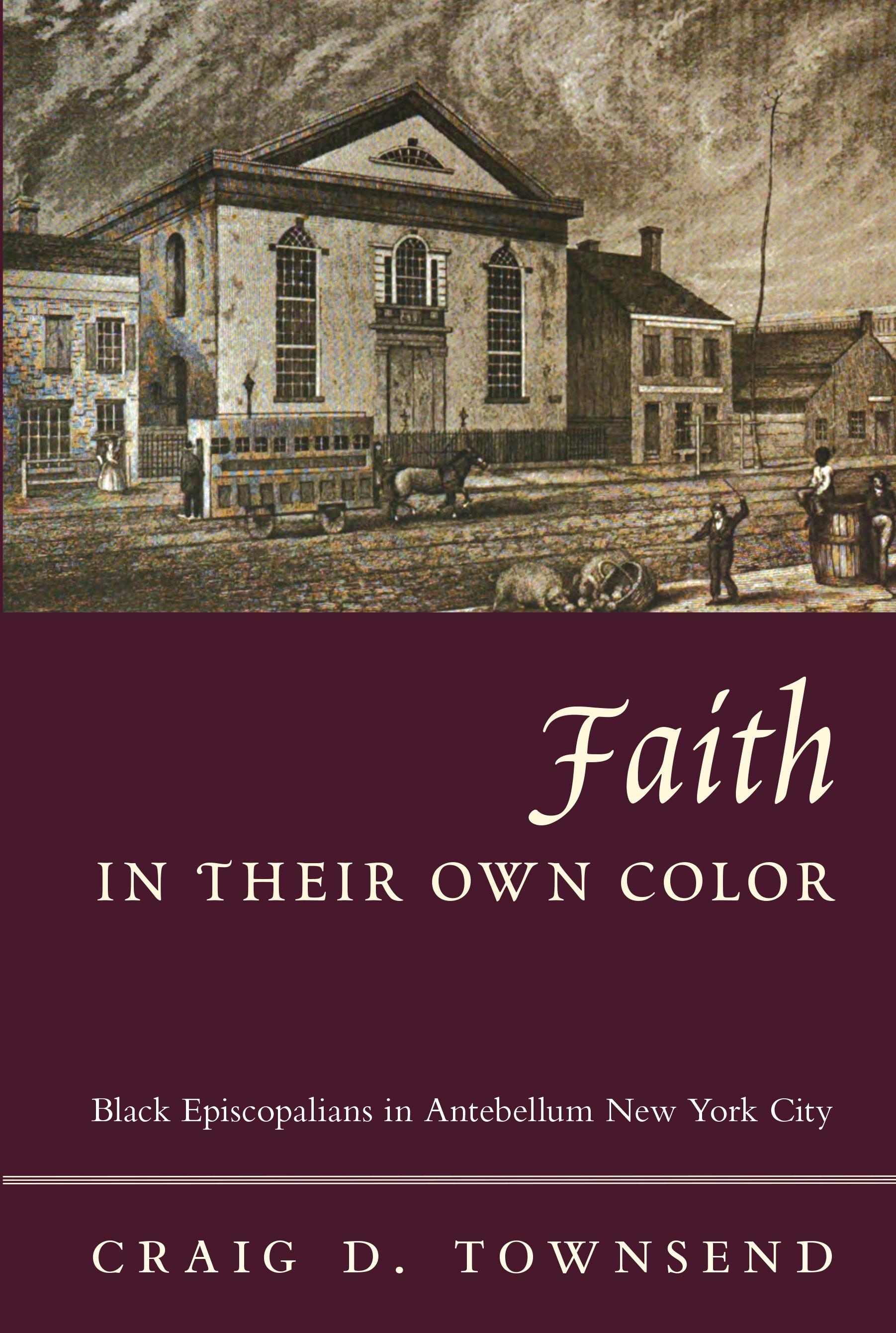
On a September afternoon in 1853, three African American men from St. Philip's Church walked into the Convention of the Episcopal Diocese of New York and took their seats among five hundred wealthy and powerful white church leaders. Ultimately, and with great reluctance, the Convention had acceded to the men's request: official recognition for St. Philip's, the first African American Episcopal church in New York City. In Faith in Their Own Color, Craig D. Townsend tells the remarkable story of St. Philip's and its struggle to create an autonomous and independent church. His work unearths a forgotten chapter in the history of New York City and African Americans and sheds new light on the ways religious faith can both reinforce and overcome racial boundaries.
Founded in 1809, St. Philip's had endured a fire; a riot by anti-abolitionists that nearly destroyed the church; and more than forty years of discrimination by the Episcopalian hierarchy. In contrast to the majority of African Americans, who were flocking to evangelical denominations, the congregation of St. Philip's sought to define itself within an overwhelmingly white hierarchical structure. Their efforts reflected the tension between their desire for self-determination, on the one hand, and acceptance by a white denomination, on the other.
The history of St. Philip's Church also illustrates the racism and extraordinary difficulties African Americans confronted in antebellum New York City, where full abolition did not occur until 1827. Townsend describes the constant and complex negotiation of the divide between black and white New Yorkers. He also recounts the fascinating stories of historically overlooked individuals who built and fought for St. Philip's, including Rev. Peter Williams, the second African American ordained in the Episcopal Church; Dr. James McCune Smith, the first African American to earn an M.D.; pickling magnate Henry Scott; the combative priest Alexander Crummell; and John Jay II, the grandson of the first chief justice of the Supreme Court and an ardent abolitionist, who helped secure acceptance of St. Philip's.
Before Memmo my notes were scattered across PDFs. Now a workspace pulls everything into one place — I see exactly what's still left to study.
Memmo's summaries are gold before exams. I don't have to re-read 800 pages two weeks before — just the important parts.
The AI chat has saved me the night before an exam more than once. I just keep asking until I get it — no waiting on a study group to reply.
The quizzes hit exactly what I need to know. Memmo tracks what I get stuck on — so I only practice what's worth it.
Flashcards with spaced repetition are magic. Memmo knows when I'm about to forget something and brings it back.
The AI podcasts are my favorite. I listen on my way to school and get a recap without sitting at a computer.

Handbok i kvalitativa metoder
281 kr

Hållbar utveckling: en introduktion för ingenjörer och andra problemlösare
334 kr

Brymans Samhällsvetenskapliga metoder
390 kr

Projektledning
491 kr

Den orättvisa hälsan: om socioekonomiska skillnader i hälsa och livslängd
326 kr

Vetenskapsteori för nybörjare
196 kr

Organizational Leadership
429 kr

På väg mot läraryrket
172 kr

Det sociala livet i skolan: Socialpsykologiska perspektiv
253 kr

Betygsättningens didaktik
151 kr

Personality
402 kr

Studying Leadership
404 kr

Managing Innovation
477 kr

Introduktion till samhällsvetenskaplig metod
347 kr

The Psychology of Sex and Gender
698 kr

Evidens och kunskap för socialt arbete
207 kr

Introduction to Leadership
605 kr