
Before Memmo my notes were scattered across PDFs. Now a workspace pulls everything into one place — I see exactly what's still left to study.
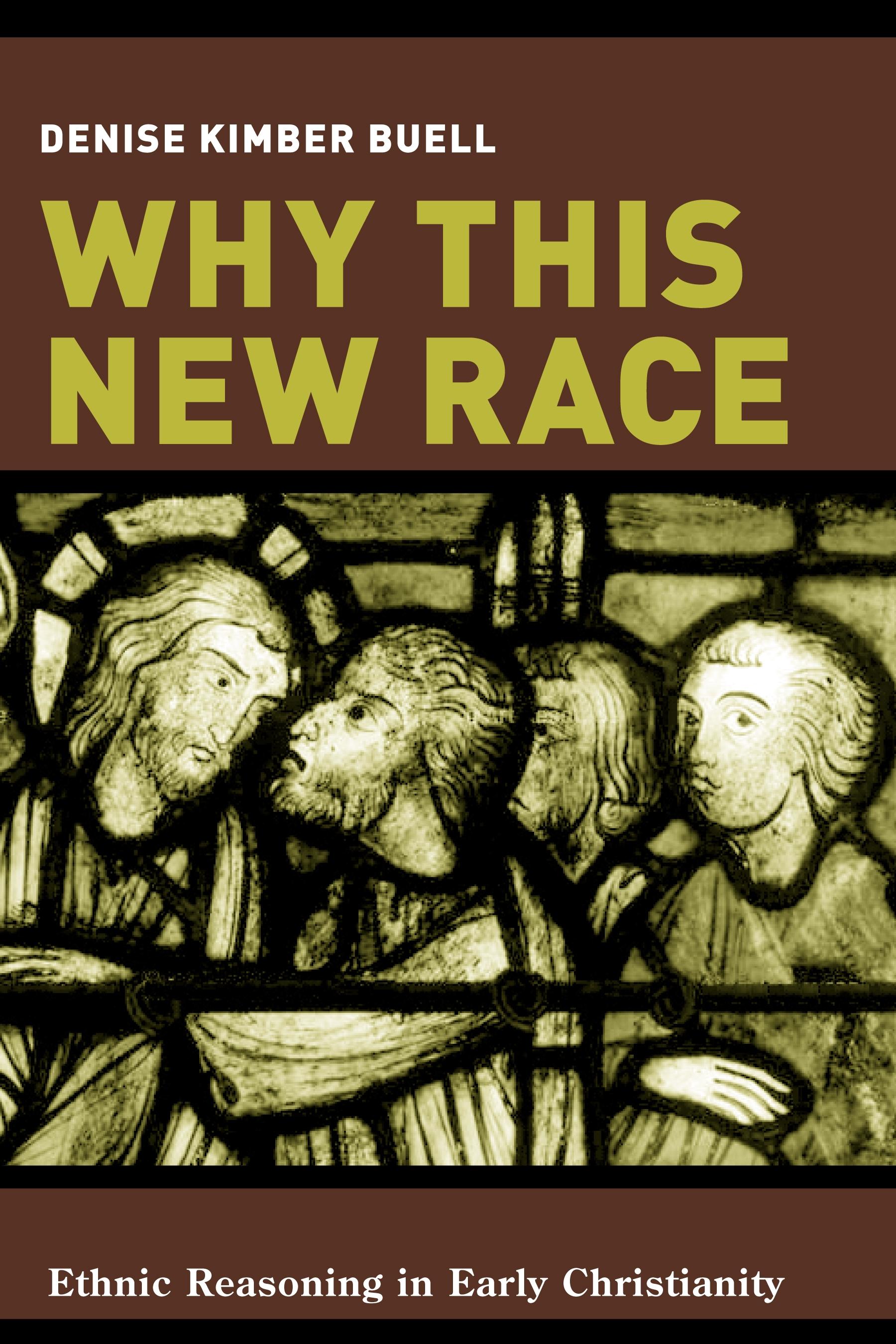
Why This New Race offers a radical new way of thinking about the origins of Christian identity. Conventional histories have understood Christianity as a religion that from its beginnings sought to transcend ethnic and racial distinctions. Denise Kimber Buell challenges this view by revealing the centrality of ethnicity and race in early definitions of Christianity. Buell's readings of various texts consider the use of "ethnic reasoning" to depict Christianness as more than a set of shared religious practices and beliefs. By asking themselves, "Why this new race?" Christians positioned themselves as members of an ethnos or genos distinct from Jews, Romans, and Greeks.
Buell focuses on texts written before Christianity became legal in 313 C.E., including Greek apologetic treatises, martyr narratives, and works by Clement of Alexandria, Origen, and Tertullian. Philosophers and theologians used ethnic reasoning to define Christians as a distinct people within classical and ancient Near East society and in intra-Christian debates about what constituted Christianness. Many characterized Christianness as both fixed and fluid-it had a real essence (fixed) but could be acquired through conversion (fluid). Buell demonstrates how this dynamic view of race and ethnicity allowed Christians to establish boundaries around the meaning of Christianness and to develop universalizing claims that all should join the Christian people.
In addressing questions of historiography, Buell analyzes why generations of scholars have refused to acknowledge ethnic reasoning in early Christian discourses. Moreover, Buell's arguments about the importance of ethnicity and religion in early Christianity provide insights into the historical legacy of Christian anti-Semitism as well as contemporary issues of race.
Before Memmo my notes were scattered across PDFs. Now a workspace pulls everything into one place — I see exactly what's still left to study.
Memmo's summaries are gold before exams. I don't have to re-read 800 pages two weeks before — just the important parts.
The AI chat has saved me the night before an exam more than once. I just keep asking until I get it — no waiting on a study group to reply.
The quizzes hit exactly what I need to know. Memmo tracks what I get stuck on — so I only practice what's worth it.
Flashcards with spaced repetition are magic. Memmo knows when I'm about to forget something and brings it back.
The AI podcasts are my favorite. I listen on my way to school and get a recap without sitting at a computer.

Handbok i kvalitativa metoder
281 kr

Hållbar utveckling: en introduktion för ingenjörer och andra problemlösare
334 kr

Brymans Samhällsvetenskapliga metoder
390 kr

Projektledning
491 kr

Den orättvisa hälsan: om socioekonomiska skillnader i hälsa och livslängd
326 kr

Organizational Leadership
429 kr

Vetenskapsteori för nybörjare
196 kr

På väg mot läraryrket
172 kr

Det sociala livet i skolan: Socialpsykologiska perspektiv
253 kr

Betygsättningens didaktik
151 kr

Personality
402 kr

Studying Leadership
404 kr

Managing Innovation
477 kr

Introduktion till samhällsvetenskaplig metod
347 kr

The Psychology of Sex and Gender
698 kr

Evidens och kunskap för socialt arbete
207 kr

Introduction to Leadership
605 kr