
Before Memmo my notes were scattered across PDFs. Now a workspace pulls everything into one place — I see exactly what's still left to study.
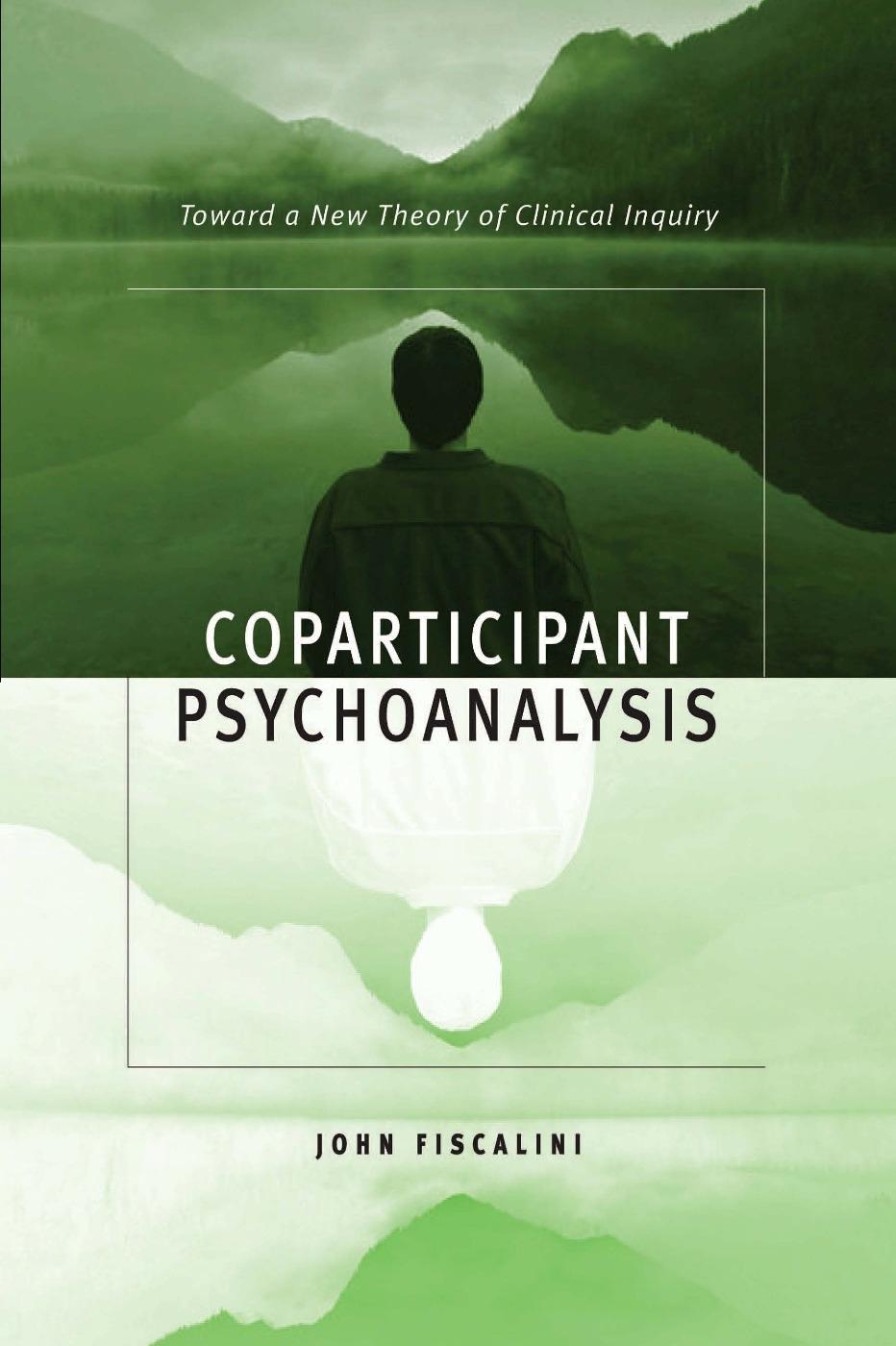
Traditionally, two clinical models have been dominant in psychoanalysis: the classical paradigm, which views the analyst as an objective mirror, and the participant-observation paradigm, which views the analyst as an intersubjective participant-observer. According to John Fiscalini, an evolutionary shift in psychoanalytic consciousness has been taking place, giving rise to coparticipant inquiry, a third paradigm that represents a dramatic shift in analytic clinical theory and that has profound clinical implications.
Coparticipant inquiry integrates the individualistic focus of the classical tradition and the social focus of the participant-observer perspective. It is marked by a radical emphasis on analysts' and patients' analytic equality, emotional reciprocity, psychic symmetry, and relational mutuality. Unlike the previous two paradigms, coparticipant inquiry suggests that we are all inherently communal beings and, yet, are simultaneously innately self-fulfilling, unique individuals. The book looks closely at the therapeutic dialectics of the personal and interpersonal selves and discusses narcissism—the perversion of the self—within its clinical role as the neurosis that contextualizes all other neuroses. Thus the goal of this book is to define coparticipant inquiry; articulate its major principles; analyze its implications for a theory of the self and the treatment of narcissism; and discuss the therapeutic potential of the coparticipant field and the coparticipant nature of transference, resistance, therapeutic action, and analytic vitality. Fiscalini explores "analytic space," which marks the psychic limit of coparticipant activity; the "living through process," which, he suggests, subtends all analytic change; and "openness to singularity," which is essential to analytic vitality.
Coparticipant Psychoanalysis brings crucial insights to clinical theory and practice and is an invaluable resource for psychoanalysts and therapists, as well as students and practitioners of psychology, psychiatry, and social work.
Before Memmo my notes were scattered across PDFs. Now a workspace pulls everything into one place — I see exactly what's still left to study.
Memmo's summaries are gold before exams. I don't have to re-read 800 pages two weeks before — just the important parts.
The AI chat has saved me the night before an exam more than once. I just keep asking until I get it — no waiting on a study group to reply.
The quizzes hit exactly what I need to know. Memmo tracks what I get stuck on — so I only practice what's worth it.
Flashcards with spaced repetition are magic. Memmo knows when I'm about to forget something and brings it back.
The AI podcasts are my favorite. I listen on my way to school and get a recap without sitting at a computer.

Handbok i kvalitativa metoder
281 kr

Hållbar utveckling: en introduktion för ingenjörer och andra problemlösare
334 kr

Brymans Samhällsvetenskapliga metoder
390 kr

Projektledning
491 kr

Den orättvisa hälsan: om socioekonomiska skillnader i hälsa och livslängd
326 kr

Organizational Leadership
429 kr

Vetenskapsteori för nybörjare
196 kr

På väg mot läraryrket
172 kr

Det sociala livet i skolan: Socialpsykologiska perspektiv
253 kr

Betygsättningens didaktik
151 kr

Personality
402 kr

Studying Leadership
404 kr

Managing Innovation
477 kr

Introduktion till samhällsvetenskaplig metod
347 kr

The Psychology of Sex and Gender
698 kr

Evidens och kunskap för socialt arbete
207 kr

Introduction to Leadership
605 kr