
Before Memmo my notes were scattered across PDFs. Now a workspace pulls everything into one place — I see exactly what's still left to study.
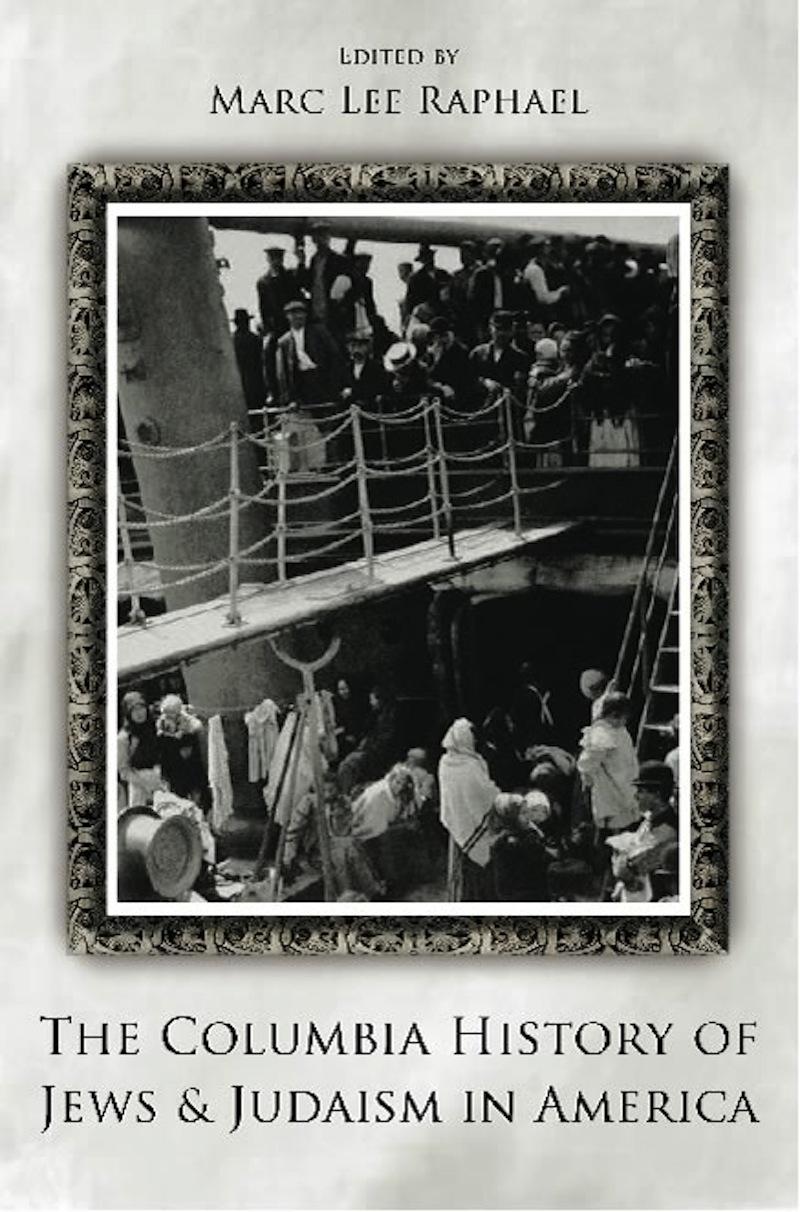
This is the first anthology in more than half a century to offer fresh insight into the history of Jews and Judaism in America. Beginning with six chronological survey essays, the collection builds with twelve topical essays focusing on a variety of important themes in the American Jewish and Judaic experience.
The volume opens with early Jewish settlers (1654-1820), the expansion of Jewish life in America (1820-1901), the great wave of eastern European Jewish immigrants (1880-1924), the character of American Judaism between the two world wars, American Jewish life from the end of World War II to the Six-Day War, and the growth of Jews' influence and affluence. The second half of the book includes essays on the community of Orthodox Jews, the history of Jewish education in America, the rise of Jewish social clubs at the turn of the century, the history of southern and western Jewry, Jewish responses to Nazism and the Holocaust; feminism's confrontation with Judaism, and the eternal question of what defines American Jewish culture.
The contributions of distinguished scholars seamlessly integrate recent scholarship. Endnotes provide the reader with access to the authors' research and sources. Comprehensive, original, and elegantly crafted, The Columbia History of Jews and Judaism in America not only introduces the student to this thrilling history but also provides new perspectives for the scholar.
Contributors: Dianne Ashton (Rowan University), Mark K. Bauman (Atlanta Metropolitan College), Kimmy Caplan (Bar-Ilan University, Israel), Eli Faber (City University of New York), Eric L. Goldstein (University of Michigan), Jeffrey S. Gurock (Yeshiva University), Jenna Weissman Joselit (Princeton University), Melissa Klapper (Rowan University), Alan T. Levenson (Siegal College of Judaic Studies), Rafael Medoff (David S. Wyman Institute for Holocaust Studies), Pamela S. Nadell (American University), Riv-Ellen Prell (University of Minnesota), Linda S. Raphael (George Washington University), Jeffrey Shandler (Rutgers University), Michael E. Staub (City University of New York), William Toll (University of Oregon), Beth S. Wenger (University of Pennsylvania), Stephen J. Whitfield (Brandeis University)
Before Memmo my notes were scattered across PDFs. Now a workspace pulls everything into one place — I see exactly what's still left to study.
Memmo's summaries are gold before exams. I don't have to re-read 800 pages two weeks before — just the important parts.
The AI chat has saved me the night before an exam more than once. I just keep asking until I get it — no waiting on a study group to reply.
The quizzes hit exactly what I need to know. Memmo tracks what I get stuck on — so I only practice what's worth it.
Flashcards with spaced repetition are magic. Memmo knows when I'm about to forget something and brings it back.
The AI podcasts are my favorite. I listen on my way to school and get a recap without sitting at a computer.

Handbok i kvalitativa metoder
281 kr

Hållbar utveckling: en introduktion för ingenjörer och andra problemlösare
334 kr

Brymans Samhällsvetenskapliga metoder
390 kr

Projektledning
491 kr

Den orättvisa hälsan: om socioekonomiska skillnader i hälsa och livslängd
326 kr

Vetenskapsteori för nybörjare
196 kr

Organizational Leadership
429 kr

På väg mot läraryrket
172 kr

Det sociala livet i skolan: Socialpsykologiska perspektiv
253 kr

Betygsättningens didaktik
151 kr

Personality
402 kr

Studying Leadership
404 kr

Managing Innovation
477 kr

Introduktion till samhällsvetenskaplig metod
347 kr

The Psychology of Sex and Gender
698 kr

Evidens och kunskap för socialt arbete
207 kr

Introduction to Leadership
605 kr