
Before Memmo my notes were scattered across PDFs. Now a workspace pulls everything into one place — I see exactly what's still left to study.
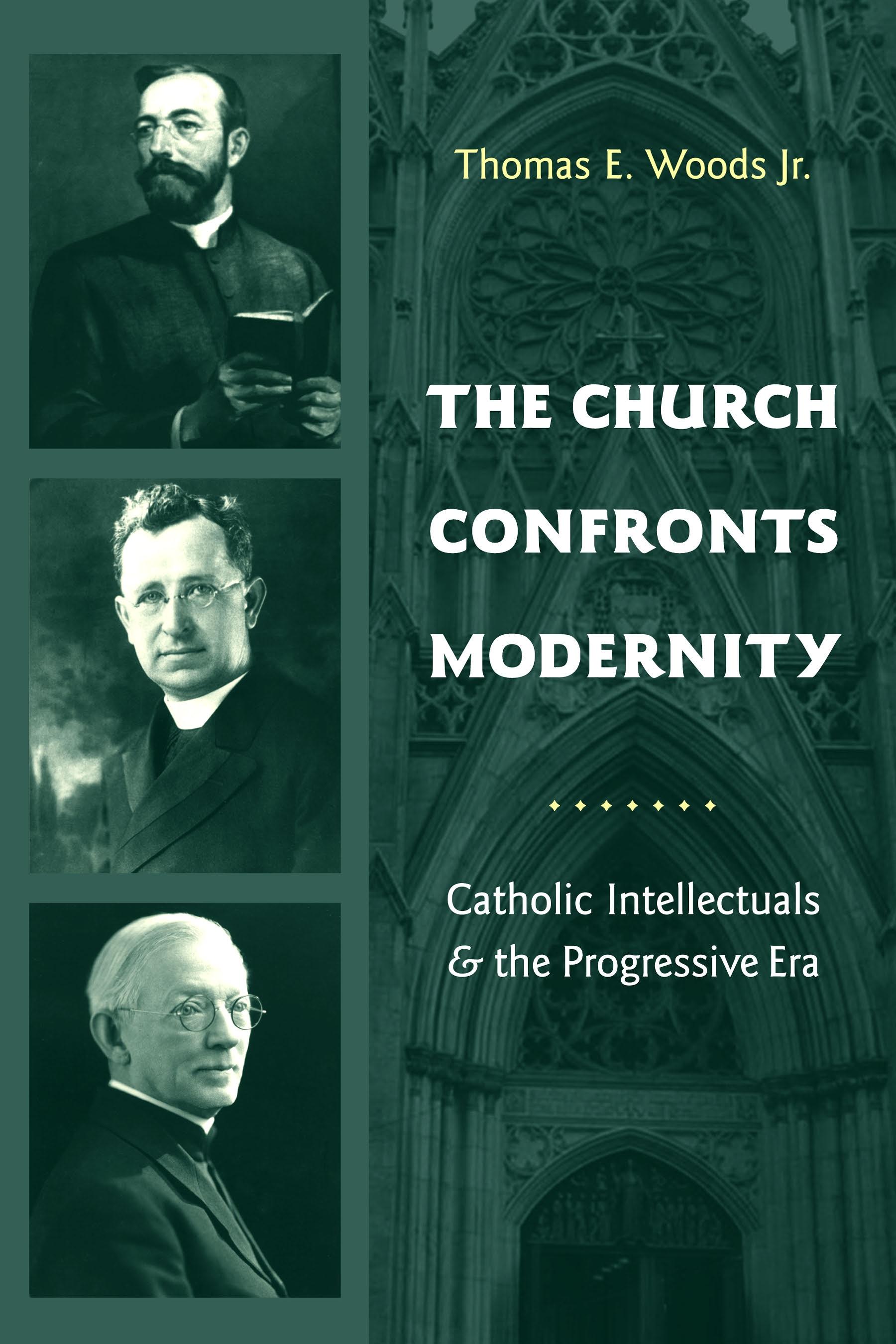
As the twentieth century opened, American intellectuals grew increasingly sympathetic to Pragmatism and empirical methods in the social sciences. The Progressive program as a whole—in the form of Pragmatism, education, modern sociology, and nationalism—seemed to be in agreement on one thing: everything was in flux. The dogma and "absolute truth" of the Church were archaisms, unsuited to modern American citizenship and at odds with the new public philosophy being forged by such intellectuals as John Dewey, William James, and the New Republic magazine. Catholics saw this new public philosophy as at least partly an attack on them.
Focusing on the Catholic intellectual critique of modernity during the period immediately before and after the turn of the twentieth century, this provocative and original book examines how the Catholic Church attempted to retain its identity in an age of pluralism. It shows a Church fundamentally united on major issues—quite unlike the present-day Catholic Church, which has been the site of a low-intensity civil war since the close of the Second Vatican Council in 1965. Defenders of the faith opposed James, Dewey, and other representatives of Pragmatism as it played out in ethics, education, and nationalism. Their goals were to found an economic and political philosophy based on natural law, to appropriate what good they could find in Progressivism to the benefit of the Church, and to make America a Catholic country.
The Church Confronts Modernity explores how the decidedly nonpluralistic institution of Christianity responded to an increasingly pluralistic intellectual environment. In a culture whose chief value was pluralism, they insisted on the uniqueness of the Church and the need for making value judgments based on what they considered a sound philosophy of humanity. In neither capitulating to the new creed nor retreating into a self-righteous isolation, American Catholic intellectuals thus laid the groundwork for a half-century of intellectual vitality.
Before Memmo my notes were scattered across PDFs. Now a workspace pulls everything into one place — I see exactly what's still left to study.
Memmo's summaries are gold before exams. I don't have to re-read 800 pages two weeks before — just the important parts.
The AI chat has saved me the night before an exam more than once. I just keep asking until I get it — no waiting on a study group to reply.
The quizzes hit exactly what I need to know. Memmo tracks what I get stuck on — so I only practice what's worth it.
Flashcards with spaced repetition are magic. Memmo knows when I'm about to forget something and brings it back.
The AI podcasts are my favorite. I listen on my way to school and get a recap without sitting at a computer.

Handbok i kvalitativa metoder
281 kr

Hållbar utveckling: en introduktion för ingenjörer och andra problemlösare
334 kr

Brymans Samhällsvetenskapliga metoder
390 kr

Projektledning
491 kr

Den orättvisa hälsan: om socioekonomiska skillnader i hälsa och livslängd
326 kr

Vetenskapsteori för nybörjare
196 kr

Organizational Leadership
429 kr

På väg mot läraryrket
172 kr

Det sociala livet i skolan: Socialpsykologiska perspektiv
253 kr

Betygsättningens didaktik
151 kr

Personality
402 kr

Studying Leadership
404 kr

Managing Innovation
477 kr

Introduktion till samhällsvetenskaplig metod
347 kr

The Psychology of Sex and Gender
698 kr

Evidens och kunskap för socialt arbete
207 kr

Introduction to Leadership
605 kr