
Before Memmo my notes were scattered across PDFs. Now a workspace pulls everything into one place — I see exactly what's still left to study.
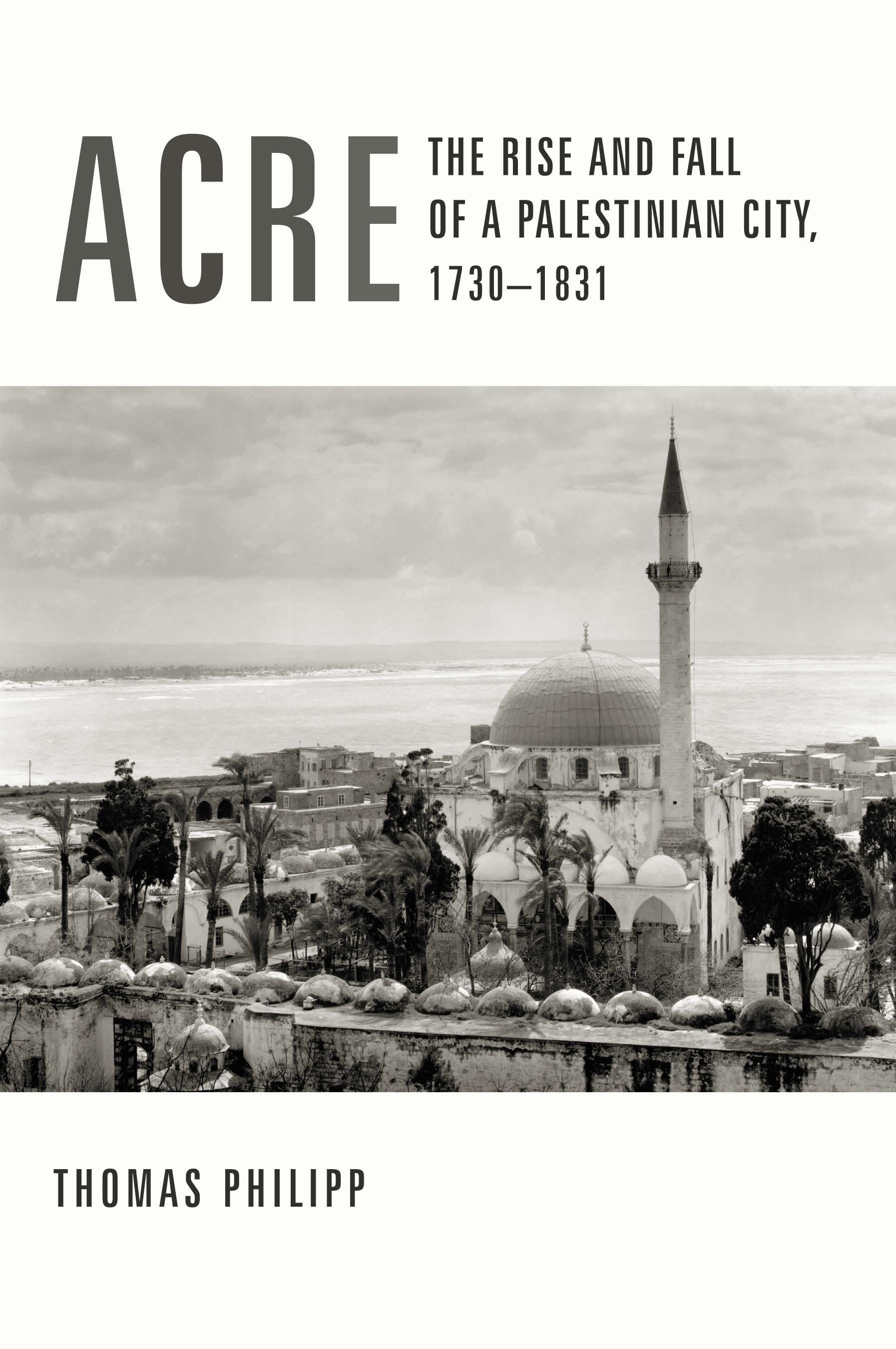
Thomas Philipp's study of Acre combines the most extensive use to date of local Arabic sources with commercial records in Europe to shed light on a region and power center many identify as the beginning of modern Palestinian history. The third largest city in eighteenth-century Syria—after Aleppo and Damascus—Acre was the capital of a politically and economically unique region on the Mediterranean coast that included what is today northern Israel and southern Lebanon. In the eighteenth century, Acre grew dramatically from a small fishing village to a fortified city of some 25,000 inhabitants. Cash crops (first cotton, then grain) made Acre the center of trade and political power and linked it inextricably to the world economy. Acre was markedly different from other cities in the region: its urban society consisted almost exclusively of immigrants seeking their fortune.
The rise and fall of Acre in the eighteenth and nineteenth centuries, Thomas Philipp argues, must be seen against the background of the decay of central power in the Ottoman empire. Destabilization of imperial authority allowed for the resurfacing of long-submerged traditional power centers and the integration of Arab regions into European and world economies. This larger imperial context proves the key to addressing many questions about the local history of Acre and its peripheries. How were the new sources of wealth and patterns of commerce that remade Acre reconciled with traditional forms of political power and social organization? Were these forms really traditional? Or did entirely new classes develop under the circumstances of an immigrant society and new commercial needs? And why did Acre, after such propitious beginnings as a center of export trade and political and military power strong enough to defy Napoleon, give way to the dazzling rise of Beirut in the nineteenth century? For centuries the object of the Crusader's fury and the trader's envy, Acre is here restored to its full significance at a crucial moment in Middle Eastern history.
Before Memmo my notes were scattered across PDFs. Now a workspace pulls everything into one place — I see exactly what's still left to study.
Memmo's summaries are gold before exams. I don't have to re-read 800 pages two weeks before — just the important parts.
The AI chat has saved me the night before an exam more than once. I just keep asking until I get it — no waiting on a study group to reply.
The quizzes hit exactly what I need to know. Memmo tracks what I get stuck on — so I only practice what's worth it.
Flashcards with spaced repetition are magic. Memmo knows when I'm about to forget something and brings it back.
The AI podcasts are my favorite. I listen on my way to school and get a recap without sitting at a computer.

Handbok i kvalitativa metoder
281 kr

Hållbar utveckling: en introduktion för ingenjörer och andra problemlösare
334 kr

Brymans Samhällsvetenskapliga metoder
390 kr

Projektledning
491 kr

Den orättvisa hälsan: om socioekonomiska skillnader i hälsa och livslängd
326 kr

Organizational Leadership
429 kr

Vetenskapsteori för nybörjare
196 kr

På väg mot läraryrket
172 kr

Det sociala livet i skolan: Socialpsykologiska perspektiv
253 kr

Betygsättningens didaktik
151 kr

Personality
402 kr

Studying Leadership
404 kr

Managing Innovation
477 kr

Introduktion till samhällsvetenskaplig metod
347 kr

The Psychology of Sex and Gender
698 kr

Evidens och kunskap för socialt arbete
207 kr

Introduction to Leadership
605 kr