
Before Memmo my notes were scattered across PDFs. Now a workspace pulls everything into one place — I see exactly what's still left to study.
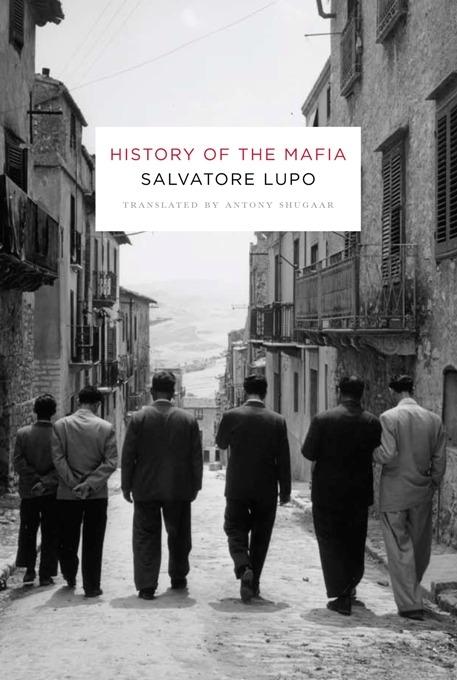
When we think of the Italian Mafia, we think of Marlon Brando, Tony Soprano, and the Corleonesiconic actors and characters who give shady dealings a mythical pop presence. Yet these sensational depictions take us only so far. The true story of the Mafia reveals both an organization and mindset dedicated to the preservation of tradition. It is no accident that the rise of the Mafia coincided with the unification of Italy and the influx of immigrants into America. The Mafia means more than a horse head under the sheetsit functions as an alternative to the state, providing its own social and political justice.
Combining a nuanced history with a unique counternarrative concerning stereotypes of the immigrant, Salvatore Lupo, a leading historian of modern Italy and a major authority on its criminal history, has written the definitive account of the Sicilian Mafia from 1860 to the present. Consulting rare archival sources, he traces the web of associations, both illicit and legitimate, that have defined Cosa Nostra during its various incarnations. He focuses on several crucial periods of transition: the Italian unification of 1860 to 1861, the murder of noted politician Notarbartolo, fascist repression of the Mafia, the Allied invasion of 1943, social conflicts after each world war, and the major murders and trials of the 1980s.
Lupo identifies the internal cultural codes that define the Mafia and places these codes within the context of social groups and communities. He also challenges the belief that the Mafia has grown more ruthless in recent decades. Rather than representing a shift from "honorable" crime to immoral drug trafficking and violence, Lupo argues the terroristic activities of the modern Mafia signify a new desire for visibility and a distinct break from the state. Where these pursuits will take the family adds a fascinating coda to Lupo's work.
Before Memmo my notes were scattered across PDFs. Now a workspace pulls everything into one place — I see exactly what's still left to study.
Memmo's summaries are gold before exams. I don't have to re-read 800 pages two weeks before — just the important parts.
The AI chat has saved me the night before an exam more than once. I just keep asking until I get it — no waiting on a study group to reply.
The quizzes hit exactly what I need to know. Memmo tracks what I get stuck on — so I only practice what's worth it.
Flashcards with spaced repetition are magic. Memmo knows when I'm about to forget something and brings it back.
The AI podcasts are my favorite. I listen on my way to school and get a recap without sitting at a computer.

Handbok i kvalitativa metoder
281 kr

Hållbar utveckling: en introduktion för ingenjörer och andra problemlösare
334 kr

Brymans Samhällsvetenskapliga metoder
390 kr

Projektledning
491 kr

Den orättvisa hälsan: om socioekonomiska skillnader i hälsa och livslängd
326 kr

Vetenskapsteori för nybörjare
196 kr

Organizational Leadership
429 kr

På väg mot läraryrket
172 kr

Det sociala livet i skolan: Socialpsykologiska perspektiv
253 kr

Betygsättningens didaktik
151 kr

Personality
402 kr

Studying Leadership
404 kr

Managing Innovation
477 kr

Introduktion till samhällsvetenskaplig metod
347 kr

The Psychology of Sex and Gender
698 kr

Evidens och kunskap för socialt arbete
207 kr

Introduction to Leadership
605 kr