
Before Memmo my notes were scattered across PDFs. Now a workspace pulls everything into one place — I see exactly what's still left to study.
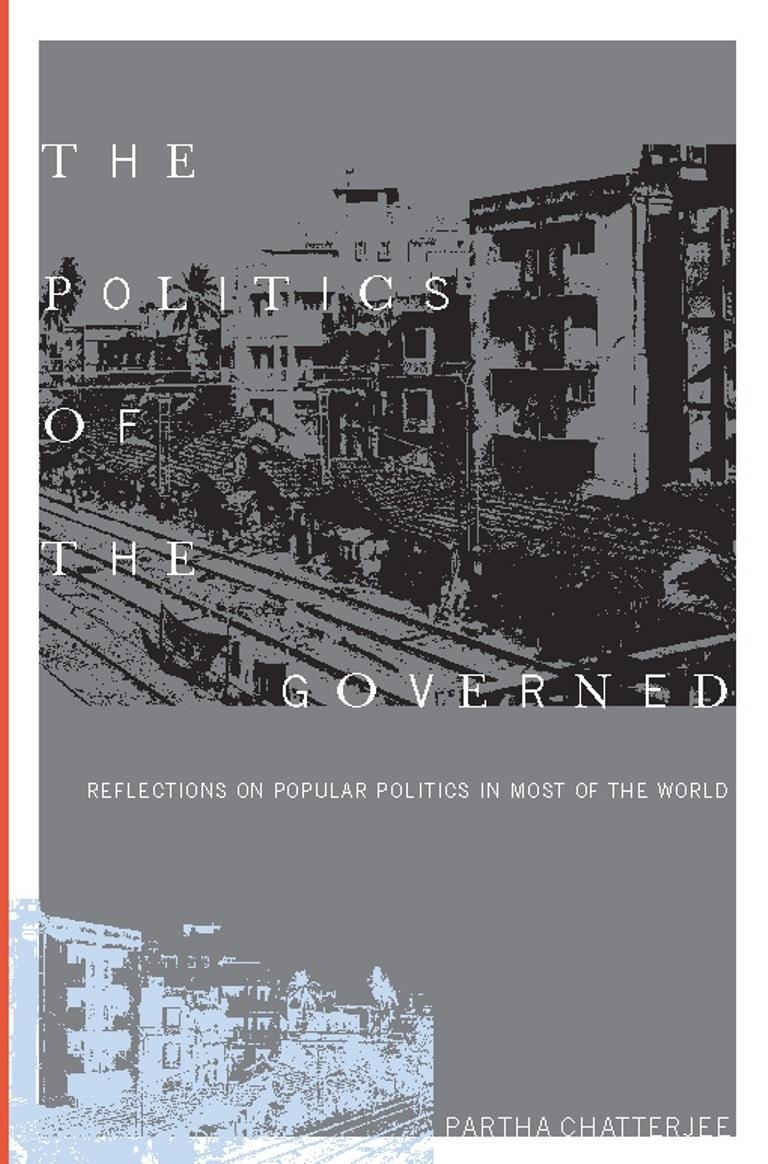
Often dismissed as the rumblings of "the street," popular politics is where political modernity is being formed today, according to Partha Chatterjee. The rise of mass politics all over the world in the twentieth century led to the development of new techniques of governing population groups. On the one hand, the idea of popular sovereignty has gained wide acceptance. On the other hand, the proliferation of security and welfare technologies has created modern governmental bodies that administer populations, but do not provide citizens with an arena for democratic deliberation. Under these conditions, democracy is no longer government of, by, and for the people. Rather, it has become a world of power whose startling dimensions and unwritten rules of engagement Chatterjee provocatively lays bare.
This book argues that the rise of ethnic or identity politics—particularly in the postcolonial world—is a consequence of new techniques of governmental administration. Using contemporary examples from India, the book examines the different forms taken by the politics of the governed. Many of these operate outside of the traditionally defined arena of civil society and the formal legal institutions of the state. This book considers the global conditions within which such local forms of popular politics have appeared and shows us how both community and global society have been transformed. Chatterjee's analysis explores the strategic as well as the ethical dimensions of the new democratic politics of rights, claims, and entitlements of population groups and permits a new understanding of the dynamics of world politics both before and after the events of September 11, 2001.
The Politics of the Governed consists of three essays, originally given as the Leonard Hastings Schoff Lectures at Columbia University in November 2001, and four additional essays that complement and extend the analyses presented there. By combining these essays between the covers of a single volume, Chatterjee has given us a major and urgent work that provides a full perspective on the possibilities and limits of democracy in the postcolonial world.
Before Memmo my notes were scattered across PDFs. Now a workspace pulls everything into one place — I see exactly what's still left to study.
Memmo's summaries are gold before exams. I don't have to re-read 800 pages two weeks before — just the important parts.
The AI chat has saved me the night before an exam more than once. I just keep asking until I get it — no waiting on a study group to reply.
The quizzes hit exactly what I need to know. Memmo tracks what I get stuck on — so I only practice what's worth it.
Flashcards with spaced repetition are magic. Memmo knows when I'm about to forget something and brings it back.
The AI podcasts are my favorite. I listen on my way to school and get a recap without sitting at a computer.

Handbok i kvalitativa metoder
281 kr

Hållbar utveckling: en introduktion för ingenjörer och andra problemlösare
334 kr

Brymans Samhällsvetenskapliga metoder
390 kr

Projektledning
491 kr

Den orättvisa hälsan: om socioekonomiska skillnader i hälsa och livslängd
326 kr

Vetenskapsteori för nybörjare
196 kr

Organizational Leadership
429 kr

På väg mot läraryrket
172 kr

Det sociala livet i skolan: Socialpsykologiska perspektiv
253 kr

Betygsättningens didaktik
151 kr

Personality
402 kr

Studying Leadership
404 kr

Managing Innovation
477 kr

Introduktion till samhällsvetenskaplig metod
347 kr

The Psychology of Sex and Gender
698 kr

Evidens och kunskap för socialt arbete
207 kr

Introduction to Leadership
605 kr