
Before Memmo my notes were scattered across PDFs. Now a workspace pulls everything into one place — I see exactly what's still left to study.
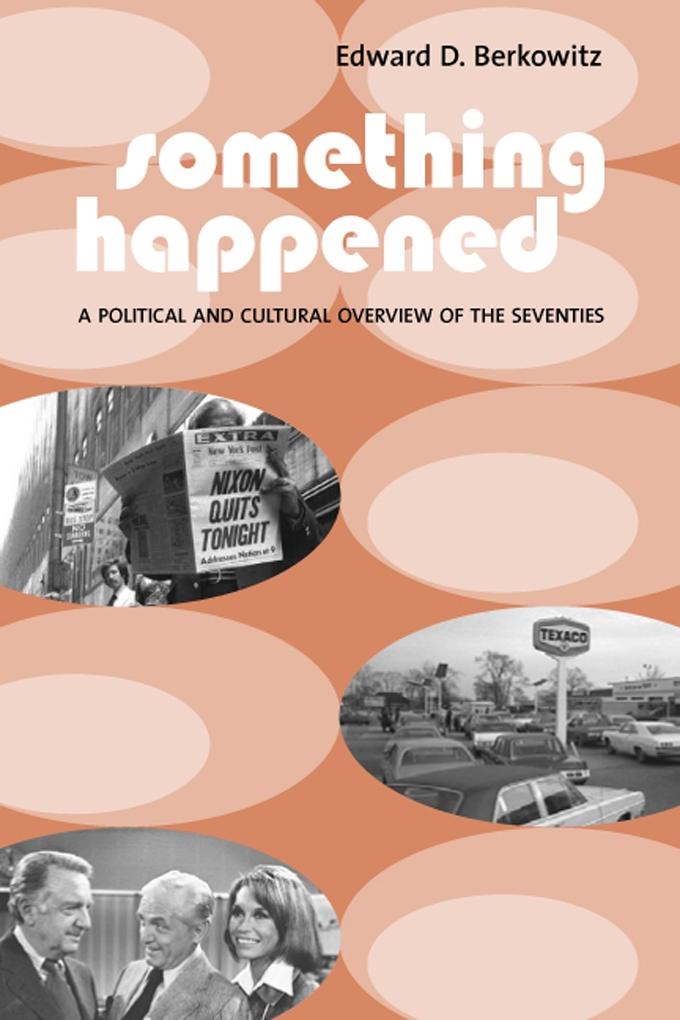
In both the literal and metaphorical senses, it seemed as if 1970s America was running out of gas. The decade not only witnessed long lines at gas stations but a citizenry that had grown weary and disillusioned. High unemployment, runaway inflation, and the energy crisis, caused in part by U.S. dependence on Arab oil, characterized an increasingly bleak economic situation.
As Edward D. Berkowitz demonstrates, the end of the postwar economic boom, Watergate, and defeat in Vietnam led to an unraveling of the national consensus. During the decade, ideas about the United States, how it should be governed, and how its economy should be managed changed dramatically. Berkowitz argues that the postwar faith in sweeping social programs and a global U.S. mission was replaced by a more skeptical attitude about government's ability to positively affect society.
From Woody Allen to Watergate, from the decline of the steel industry to the rise of Bill Gates, and from Saturday Night Fever to the Sunday morning fervor of evangelical preachers, Berkowitz captures the history, tone, and spirit of the seventies. He explores the decade's major political events and movements, including the rise and fall of détente, congressional reform, changes in healthcare policies, and the hostage crisis in Iran. The seventies also gave birth to several social movements and the "rights revolution," in which women, gays and lesbians, and people with disabilities all successfully fought for greater legal and social recognition. At the same time, reaction to these social movements as well as the issue of abortion introduced a new facet into American political life-the rise of powerful, politically conservative religious organizations and activists.
Berkowitz also considers important shifts in American popular culture, recounting the creative renaissance in American film as well as the birth of the Hollywood blockbuster. He discusses how television programs such as All in the Family and Charlie's Angels offered Americans both a reflection of and an escape from the problems gripping the country.
Before Memmo my notes were scattered across PDFs. Now a workspace pulls everything into one place — I see exactly what's still left to study.
Memmo's summaries are gold before exams. I don't have to re-read 800 pages two weeks before — just the important parts.
The AI chat has saved me the night before an exam more than once. I just keep asking until I get it — no waiting on a study group to reply.
The quizzes hit exactly what I need to know. Memmo tracks what I get stuck on — so I only practice what's worth it.
Flashcards with spaced repetition are magic. Memmo knows when I'm about to forget something and brings it back.
The AI podcasts are my favorite. I listen on my way to school and get a recap without sitting at a computer.

Handbok i kvalitativa metoder
281 kr

Hållbar utveckling: en introduktion för ingenjörer och andra problemlösare
334 kr

Brymans Samhällsvetenskapliga metoder
390 kr

Projektledning
491 kr

Den orättvisa hälsan: om socioekonomiska skillnader i hälsa och livslängd
326 kr

Vetenskapsteori för nybörjare
196 kr

Organizational Leadership
429 kr

På väg mot läraryrket
172 kr

Det sociala livet i skolan: Socialpsykologiska perspektiv
253 kr

Betygsättningens didaktik
151 kr

Personality
402 kr

Studying Leadership
404 kr

Managing Innovation
477 kr

Introduktion till samhällsvetenskaplig metod
347 kr

The Psychology of Sex and Gender
698 kr

Evidens och kunskap för socialt arbete
207 kr

Introduction to Leadership
605 kr