
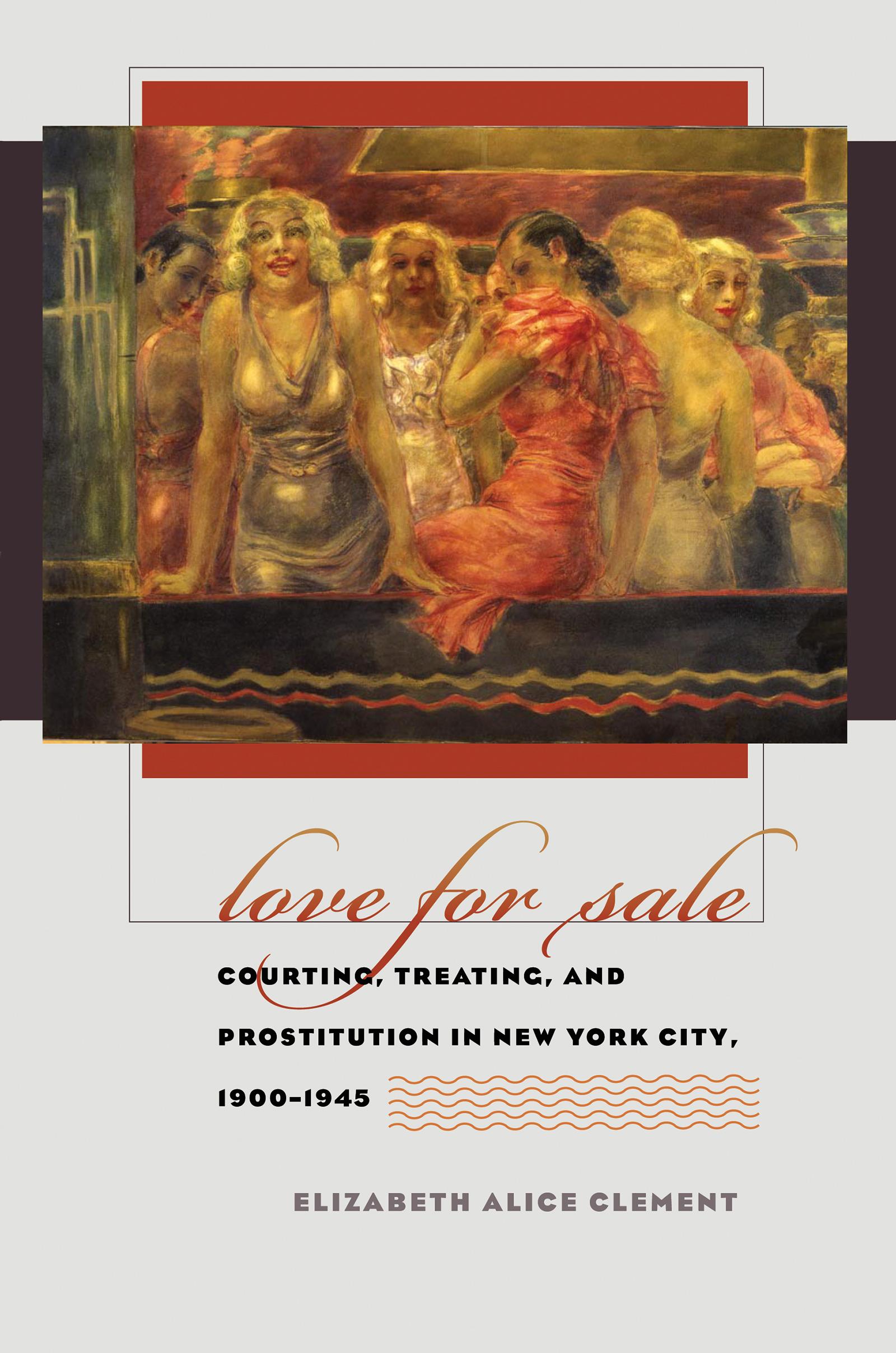
The intense urbanization and industrialization of America’s largest city from the turn of the twentieth century to World War II was accompanied by profound shifts in sexual morality, sexual practices, and gender roles. Comparing prostitution and courtship with a new working-class practice of heterosexual barter called “treating,” Elizabeth Alice Clement examines changes in sexual morality and sexual and economic practices.
Women “treated” when they exchanged sexual favors for dinner and an evening’s entertainment or, more tangibly, for stockings, shoes, and other material goods. These “charity girls” created for themselves a moral space between prostitution and courtship that preserved both sexual barter and respectability. Although treating, as a clearly articulated language and identity, began to disappear after the 1920s and 1930s, Clement argues that it still had significant, lasting effects on modern sexual norms. She demonstrates how treating shaped courtship and dating practices, the prevalence and meaning of premarital sex, and America’s developing commercial sex industry. Even further, her study illuminates the ways in which sexuality and morality interact and contribute to our understanding of the broader social categories of race, gender, and class.
Women “treated” when they exchanged sexual favors for dinner and an evening’s entertainment or, more tangibly, for stockings, shoes, and other material goods. These “charity girls” created for themselves a moral space between prostitution and courtship that preserved both sexual barter and respectability. Although treating, as a clearly articulated language and identity, began to disappear after the 1920s and 1930s, Clement argues that it still had significant, lasting effects on modern sexual norms. She demonstrates how treating shaped courtship and dating practices, the prevalence and meaning of premarital sex, and America’s developing commercial sex industry. Even further, her study illuminates the ways in which sexuality and morality interact and contribute to our understanding of the broader social categories of race, gender, and class.
Zahle einfach mit Karte, Klarna, Apple Pay oder Google Pay. Nicht zufrieden? Du hast immer ein 14-tägiges Widerrufsrecht. Lies mehr in unseren AGB. Hast du Fragen, schreib uns eine E-Mail an hello@memmo.org.
Memmo macht das Lernen einfacher – wo auch immer du bist. Bei uns findest du deine Kursbücher und smarte Lerntools an einem Ort: Zusammenfassungen, Quizzes, Podcasts und Lernkarten. Und Ted, dein Lernbuddy, beantwortet alles, was du wissen möchtest. Über 50.000 Studierende lernen bereits hier – gemacht, damit du schneller lernst und weniger Stress hast.
Das könnte dir auch gefallen
Buch kaufen0