
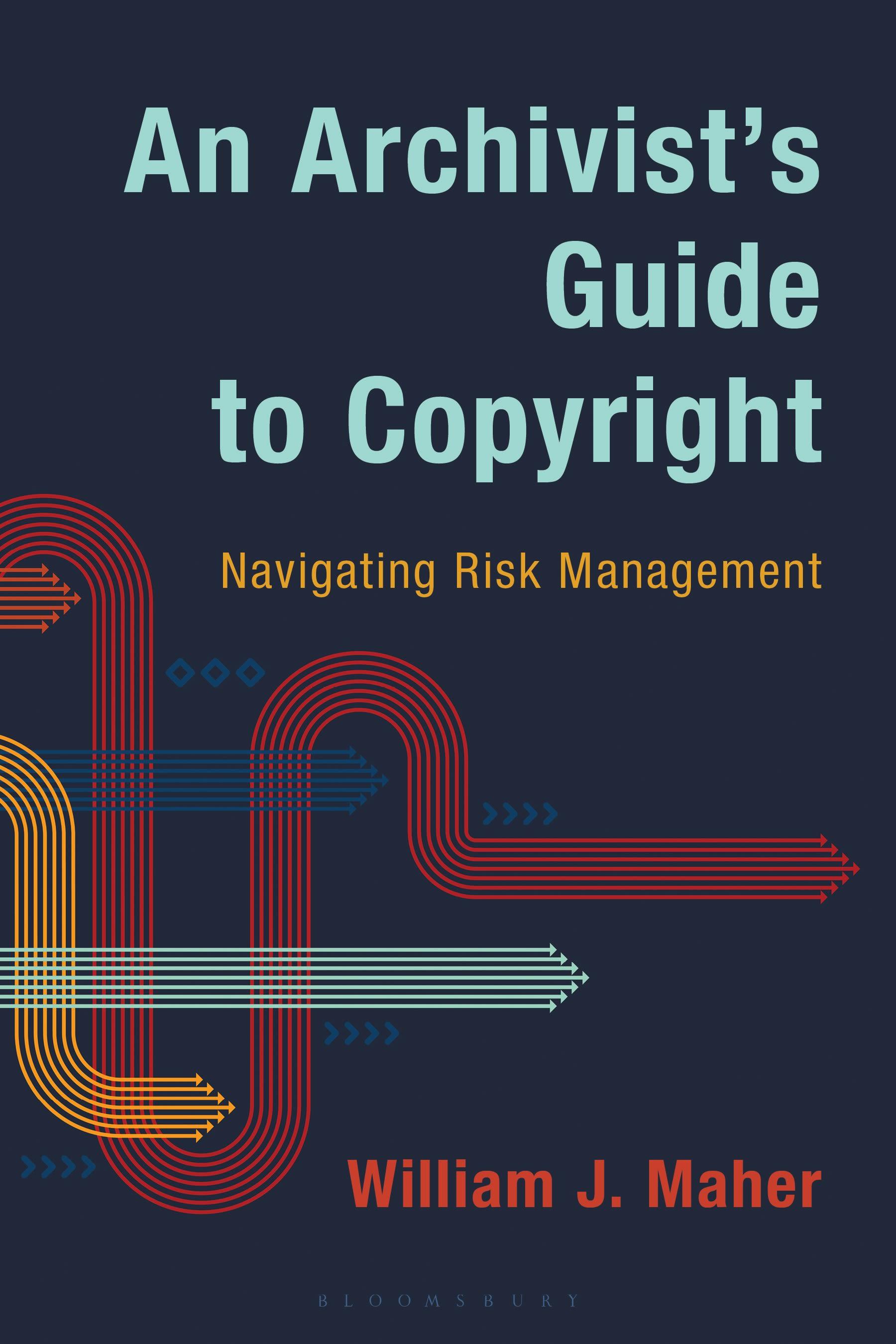
Copyright. The very word can make an archivist's eyes glaze over. But this book is here to help.
Fear of copyright can sometimes make everything an archivist does-preservation, reference, digitization-feel like a prelude to an unintended lawsuit.
In this book, readers learn core parts of the U.S. copyright law, how to apply basic tools to address archives-specific issues, and learn effective use of existing exceptions and limitations. The goal is to provide archivists with the ability to navigate copyright to achieve the ultimate archival mission: to preserve the broadest array of heritage material and enable as wide a use as possible.
This book:
· Provides a foundation for how to read the copyright law, review legal literature, and navigate authoritative websites and news sources;
· Promotes a clear understanding of the separate rights of authors, owners, and users and how these rights relate to institutional and general cultural archives;
· Clarifies the relevance of the historical landmarks in copyright legislation and case law;
· Outlines the basics of related laws and rights regimes (e.g., privacy, publicity, moral, and cultural property rights) to understand when and how copyright does and does not relate to them;
· Surveys recent legislation and court cases, especially those relating to fair use, sound-recordings, and alternative dispute resolution; and
· Guides archivists in a multi-factor analysis to support the decisions needed to manage copyright issues and risks.
Fear of copyright can sometimes make everything an archivist does-preservation, reference, digitization-feel like a prelude to an unintended lawsuit.
In this book, readers learn core parts of the U.S. copyright law, how to apply basic tools to address archives-specific issues, and learn effective use of existing exceptions and limitations. The goal is to provide archivists with the ability to navigate copyright to achieve the ultimate archival mission: to preserve the broadest array of heritage material and enable as wide a use as possible.
This book:
· Provides a foundation for how to read the copyright law, review legal literature, and navigate authoritative websites and news sources;
· Promotes a clear understanding of the separate rights of authors, owners, and users and how these rights relate to institutional and general cultural archives;
· Clarifies the relevance of the historical landmarks in copyright legislation and case law;
· Outlines the basics of related laws and rights regimes (e.g., privacy, publicity, moral, and cultural property rights) to understand when and how copyright does and does not relate to them;
· Surveys recent legislation and court cases, especially those relating to fair use, sound-recordings, and alternative dispute resolution; and
· Guides archivists in a multi-factor analysis to support the decisions needed to manage copyright issues and risks.
Zahle einfach mit Karte, Klarna, Apple Pay oder Google Pay. Nicht zufrieden? Du hast immer ein 14-tägiges Widerrufsrecht. Lies mehr in unseren AGB. Hast du Fragen, schreib uns eine E-Mail an hello@memmo.org.
Memmo macht das Lernen einfacher – wo auch immer du bist. Bei uns findest du deine Kursbücher und smarte Lerntools an einem Ort: Zusammenfassungen, Quizzes, Podcasts und Lernkarten. Und Ted, dein Lernbuddy, beantwortet alles, was du wissen möchtest. Über 50.000 Studierende lernen bereits hier – gemacht, damit du schneller lernst und weniger Stress hast.