
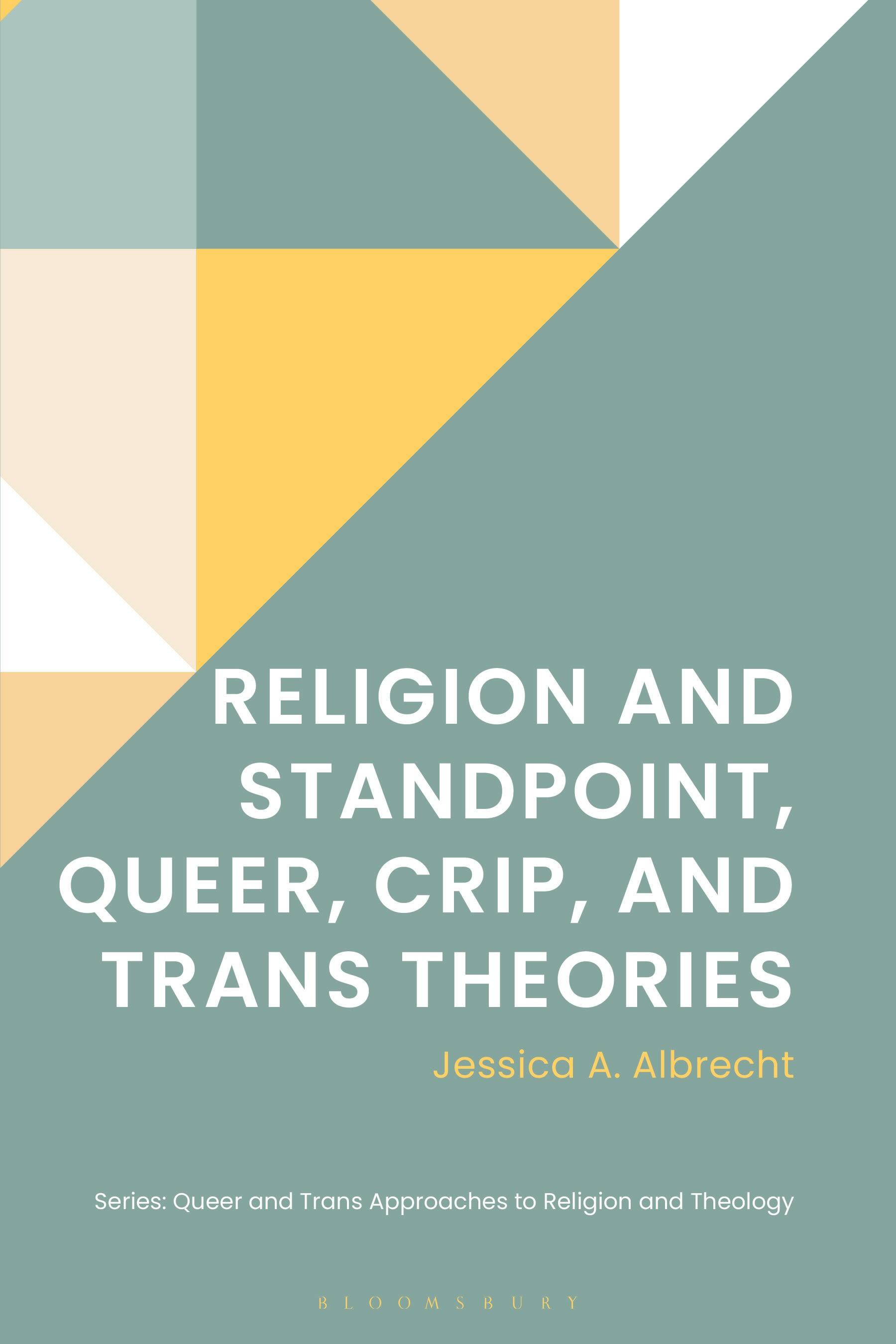
Bringing together material religion and discourse theory, this cross-disciplinary book argues that theories of embodiment and religion co-produce one another.
Responding to the scholarly turn towards embodiment and phenomenology beginning in queer studies and branching out into the humanities more broadly, Jessica A. Albrecht brings religion to the table. This book contends that, if the turn to materiality emphasizes what religion does in bodies and spaces, or how bodies make religion, it is equally important to ask whose bodies are made legible, and under what conditions they come to matter. By shining a light on this reciprocal relationship between religion and embodiment, Albrecht reveals the processes through which meanings, “bodies,” and “religion” itself are made. Across seven chapters spanning intersectionality, queer and cuír theory, and crip studies, this book traces counter-genealogies which reveal how bodies become unintelligible within the regimes of religion, race, gender, and ability. Albrecht offers tools for examining how religious experiences are shaped by queerness, disability, and power, providing a fresh and inclusive perspective on how bodies and practices are central constituents of conceptions of religion. The resulting framework for religious studies pushes beyond normative views or religious-secular divisions, prompting readers to critically re-consider both “religion” and the “body.”
Responding to the scholarly turn towards embodiment and phenomenology beginning in queer studies and branching out into the humanities more broadly, Jessica A. Albrecht brings religion to the table. This book contends that, if the turn to materiality emphasizes what religion does in bodies and spaces, or how bodies make religion, it is equally important to ask whose bodies are made legible, and under what conditions they come to matter. By shining a light on this reciprocal relationship between religion and embodiment, Albrecht reveals the processes through which meanings, “bodies,” and “religion” itself are made. Across seven chapters spanning intersectionality, queer and cuír theory, and crip studies, this book traces counter-genealogies which reveal how bodies become unintelligible within the regimes of religion, race, gender, and ability. Albrecht offers tools for examining how religious experiences are shaped by queerness, disability, and power, providing a fresh and inclusive perspective on how bodies and practices are central constituents of conceptions of religion. The resulting framework for religious studies pushes beyond normative views or religious-secular divisions, prompting readers to critically re-consider both “religion” and the “body.”
Seiten: 152
Kategorie: Kultur-, Genus- & Postkoloniala studier
e-ISBN: 9798765159347
Versandgewicht: 1.2 kg
Versand in: 1-2 Tage
Zahle einfach mit Karte, Klarna, Apple Pay oder Google Pay. Nicht zufrieden? Du hast immer ein 14-tägiges Widerrufsrecht. Lies mehr in unseren AGB. Hast du Fragen, schreib uns eine E-Mail an hello@memmo.org.
Memmo macht das Lernen einfacher – wo auch immer du bist. Bei uns findest du deine Kursbücher und smarte Lerntools an einem Ort: Zusammenfassungen, Quizzes, Podcasts und Lernkarten. Und Ted, dein Lernbuddy, beantwortet alles, was du wissen möchtest. Über 50.000 Studierende lernen bereits hier – gemacht, damit du schneller lernst und weniger Stress hast.