
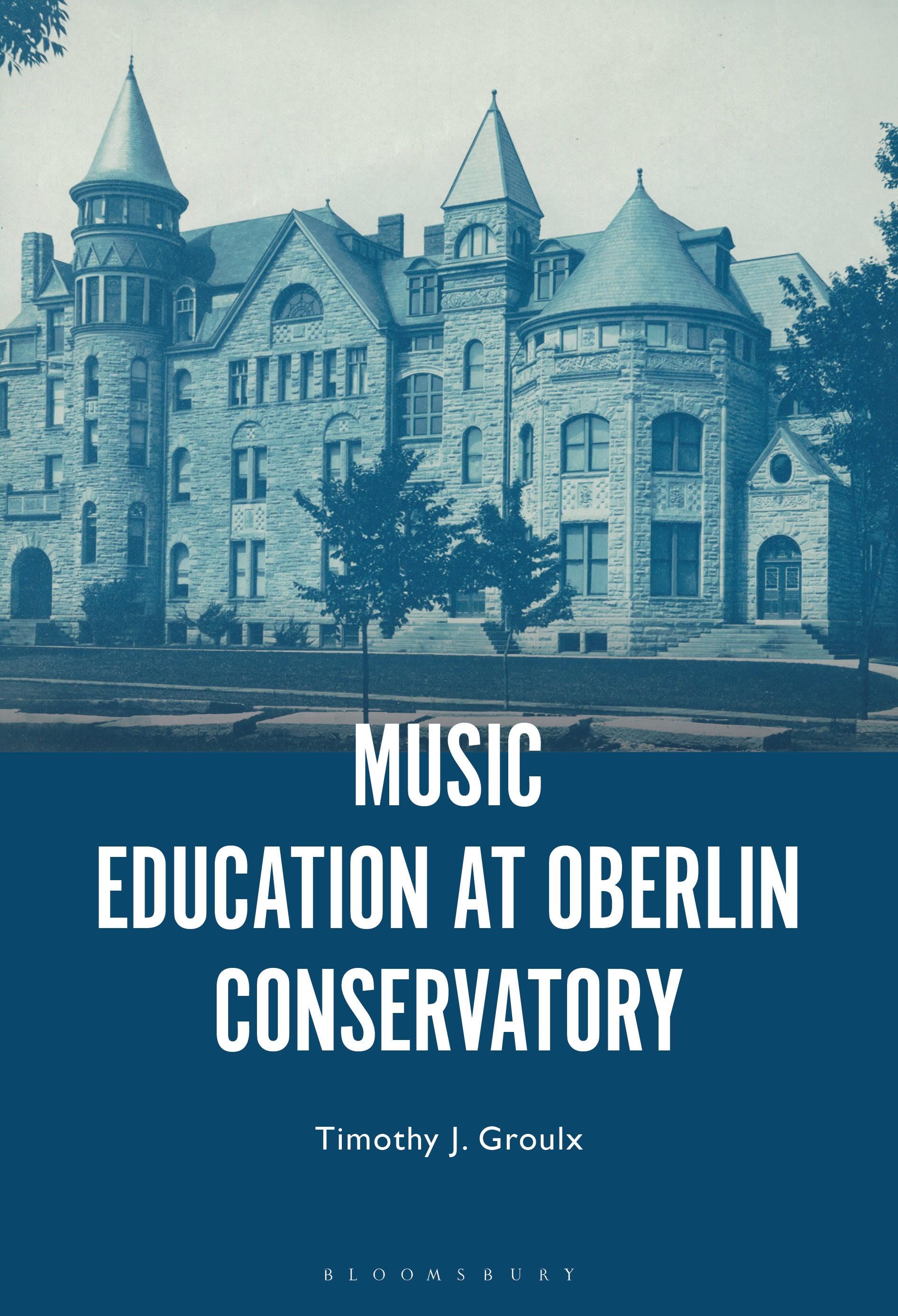
This work serves as an exemplary case study on the evolution of music education in the US from 1833-2017 through the history of the Oberlin Conservatory.
While nominally the history of music education at Oberlin, this book also illustrates changing views and values related to music, evolution of musical taste, and its place in society. The history of teacher education writ large, particularly in terms of qualifications and teacher certification requirements, is also a core part of this in-depth narrative.
The Oberlin Conservatory is allegedly the first institution in the United States to offer a Bachelor of Music Education degree, beginning in 1922. Music forms a part of Oberlin almost from the institution's inception in 1833, through choral singing as a part of worship services. Following the conservatory from its nascent days as a musical institution, where choral singing was a part of worship services, to the influence of Mendelssohn's Leipzig Conservatory to the development of a bachelor's degree in music education, through the institution's golden age and subsequent evolution through social, political, and educational changes, and finally onto the program's decline in enrollment and institutional support.
This unique study of music education is institutionally specific but with broader implications for the value and importance of music education in contemporary higher education curricula as well as society at large.
While nominally the history of music education at Oberlin, this book also illustrates changing views and values related to music, evolution of musical taste, and its place in society. The history of teacher education writ large, particularly in terms of qualifications and teacher certification requirements, is also a core part of this in-depth narrative.
The Oberlin Conservatory is allegedly the first institution in the United States to offer a Bachelor of Music Education degree, beginning in 1922. Music forms a part of Oberlin almost from the institution's inception in 1833, through choral singing as a part of worship services. Following the conservatory from its nascent days as a musical institution, where choral singing was a part of worship services, to the influence of Mendelssohn's Leipzig Conservatory to the development of a bachelor's degree in music education, through the institution's golden age and subsequent evolution through social, political, and educational changes, and finally onto the program's decline in enrollment and institutional support.
This unique study of music education is institutionally specific but with broader implications for the value and importance of music education in contemporary higher education curricula as well as society at large.
Zahle einfach mit Karte, Klarna, Apple Pay oder Google Pay. Nicht zufrieden? Du hast immer ein 14-tägiges Widerrufsrecht. Lies mehr in unseren AGB. Hast du Fragen, schreib uns eine E-Mail an hello@memmo.org.
Memmo macht das Lernen einfacher – wo auch immer du bist. Bei uns findest du deine Kursbücher und smarte Lerntools an einem Ort: Zusammenfassungen, Quizzes, Podcasts und Lernkarten. Und Ted, dein Lernbuddy, beantwortet alles, was du wissen möchtest. Über 50.000 Studierende lernen bereits hier – gemacht, damit du schneller lernst und weniger Stress hast.