
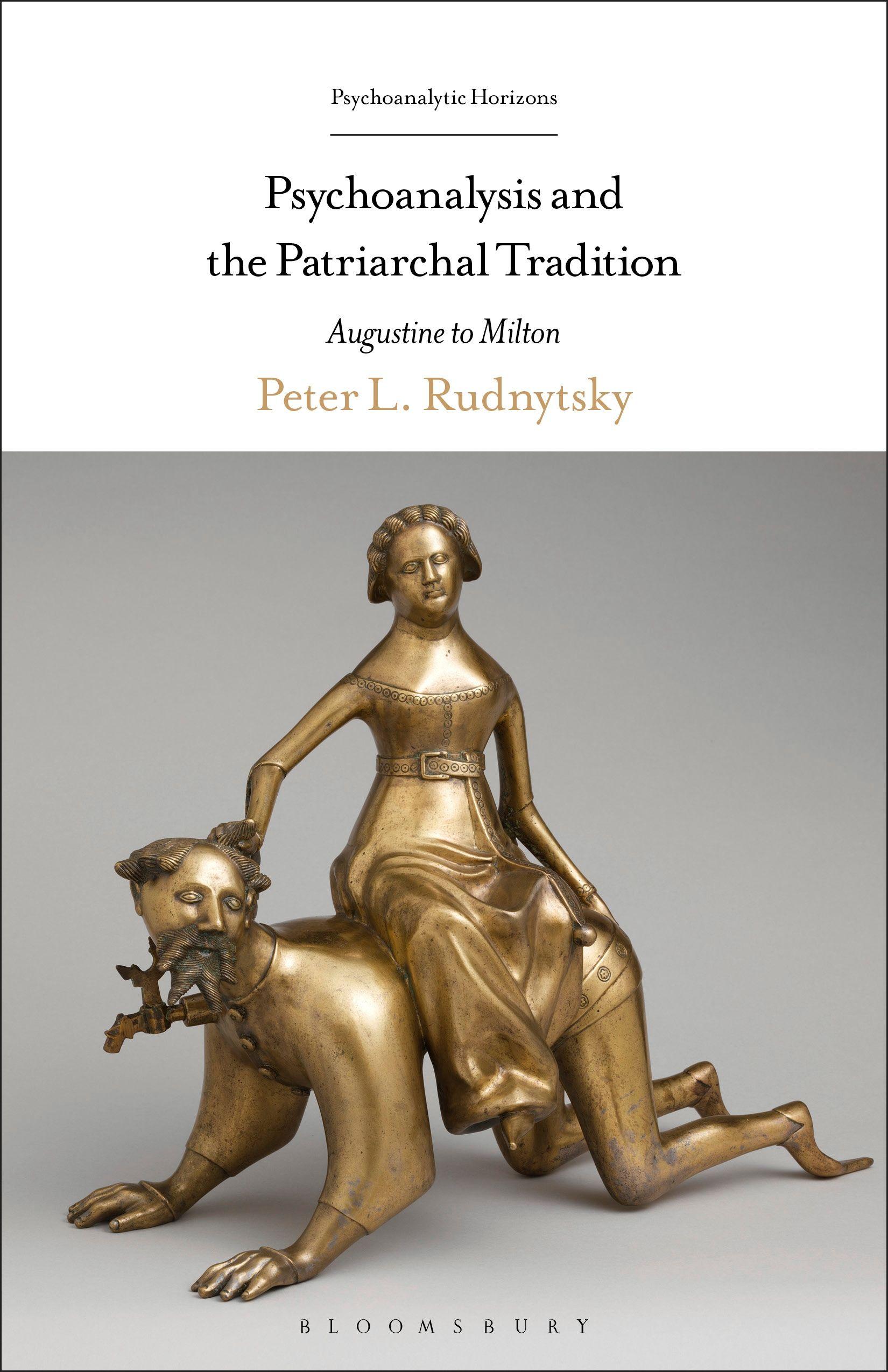
A work of feminist psychoanalytic literary criticism that offers original readings of early canonical works of the Western tradition.
In cogently argued and brilliant readings of texts ranging from St. Augustine's Confessions to Milton's Paradise Lost, Paradise Regained and Samson Agonistes, Psychoanalysis and the Patriarchal Tradition shows the ongoing cultural value of psychoanalytic approaches-flexibly and critically applied-to the interpretation of major literary works. Peter L. Rudnytsky makes a persuasive and striking case for tracing significant connections between the Judeo-Christian story of the Fall and the Greek myth of Oedipus: Proposing that the Oedipus complex can be viewed as the “latent content” of the Fall, Rudnytsky at once respects the explanatory power of these master-myths while he interrogates their claims to universality.
Drawing above all on Freud, Klein, Winnicott, and Lacan, Rudnytsky integrates a range of psychoanalytic perspectives with deconstruction, new historicism, and psychobiography to highlight issues of gender and sexuality not only in Augustine and Milton but also in Gottfried's Tristan, Sir Gawain and the Green Knight, More's History of King Richard III, Shakespeare's Othello and King Lear, as well the poetry of Marvell and other 17th-century writers who exhibit the “dissociation of sensibility” Rudnytsky links to the execution of King Charles I.
Through synthesis of psychoanalysis, feminism, and literary criticism, Psychoanalysis and the Patriarchal Tradition sheds new light on old masterpieces even as it reveals the contours of an entire tradition.
In cogently argued and brilliant readings of texts ranging from St. Augustine's Confessions to Milton's Paradise Lost, Paradise Regained and Samson Agonistes, Psychoanalysis and the Patriarchal Tradition shows the ongoing cultural value of psychoanalytic approaches-flexibly and critically applied-to the interpretation of major literary works. Peter L. Rudnytsky makes a persuasive and striking case for tracing significant connections between the Judeo-Christian story of the Fall and the Greek myth of Oedipus: Proposing that the Oedipus complex can be viewed as the “latent content” of the Fall, Rudnytsky at once respects the explanatory power of these master-myths while he interrogates their claims to universality.
Drawing above all on Freud, Klein, Winnicott, and Lacan, Rudnytsky integrates a range of psychoanalytic perspectives with deconstruction, new historicism, and psychobiography to highlight issues of gender and sexuality not only in Augustine and Milton but also in Gottfried's Tristan, Sir Gawain and the Green Knight, More's History of King Richard III, Shakespeare's Othello and King Lear, as well the poetry of Marvell and other 17th-century writers who exhibit the “dissociation of sensibility” Rudnytsky links to the execution of King Charles I.
Through synthesis of psychoanalysis, feminism, and literary criticism, Psychoanalysis and the Patriarchal Tradition sheds new light on old masterpieces even as it reveals the contours of an entire tradition.
Zahle einfach mit Karte, Klarna, Apple Pay oder Google Pay. Nicht zufrieden? Du hast immer ein 14-tägiges Widerrufsrecht. Lies mehr in unseren AGB. Hast du Fragen, schreib uns eine E-Mail an hello@memmo.org.
Memmo macht das Lernen einfacher – wo auch immer du bist. Bei uns findest du deine Kursbücher und smarte Lerntools an einem Ort: Zusammenfassungen, Quizzes, Podcasts und Lernkarten. Und Ted, dein Lernbuddy, beantwortet alles, was du wissen möchtest. Über 50.000 Studierende lernen bereits hier – gemacht, damit du schneller lernst und weniger Stress hast.