
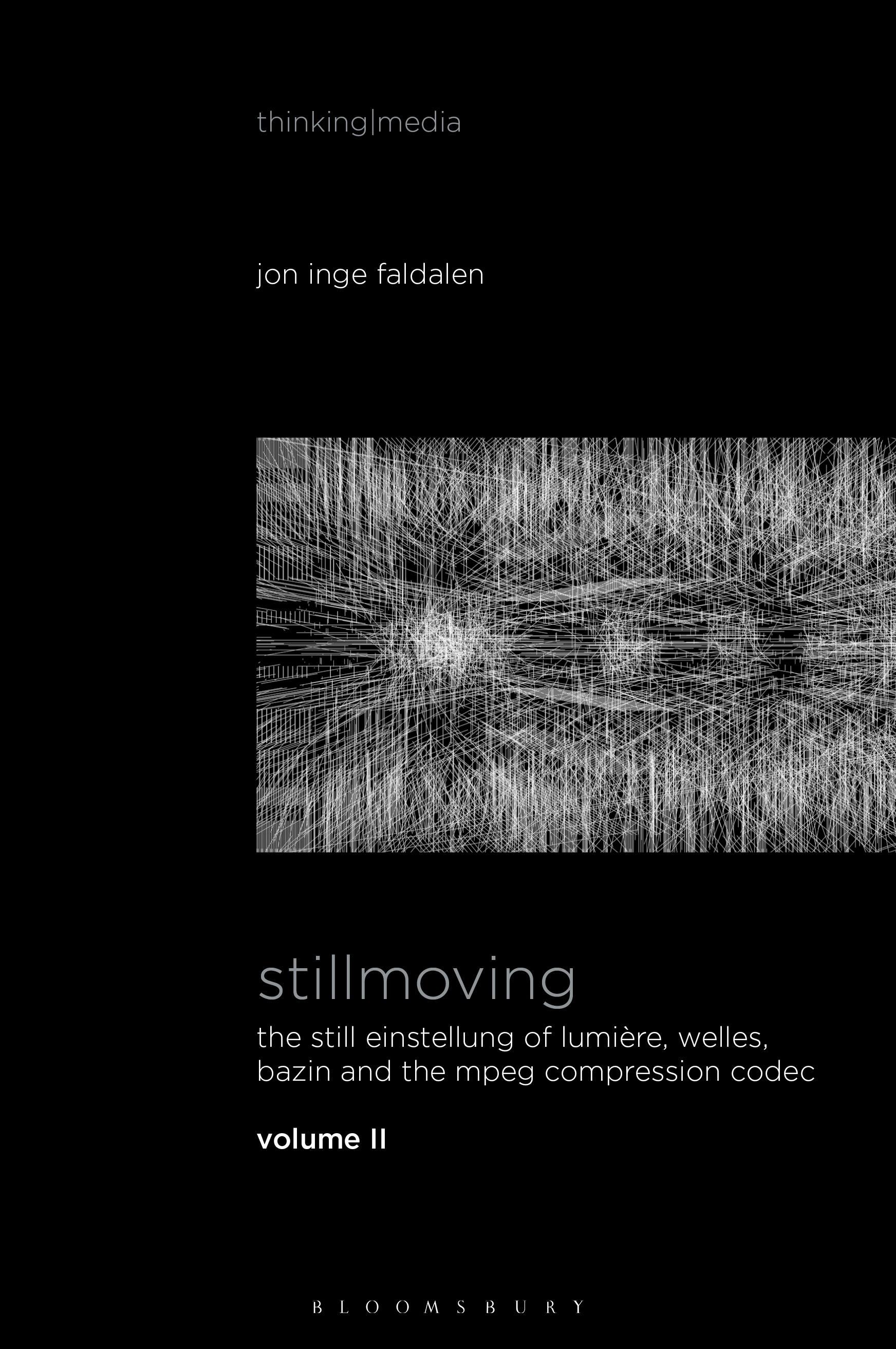
Stillmoving II studies a foundational figure of style: a static long take, discussed here as a still Einstellung. An analytical, theoretical and conceptual contribution to cinema and media studies in general and slow cinema and still moving scholarship in particular, the book asks what kind of image a still Einstellung generates.
Through figure of style analysis of the still Einstellung of Louis Lumière and Quai de l'Archevêché (Lumière operator, 1896), André Bazin's conceptualization of “the immobility of the sequence shot” in the kitchen scene in The Magnificent Ambersons (Orson Welles, 1942), and the MPEG compression codec, Stillmoving II suggests that a still Einstellung causes stillmoving imagenesis, a both/neither first kind of image generation in a thirding or firsting of stillmoving/still/ moving imagenesis. As truly something else, while – like moving imagenesis – moving the moving as moving, a still Einstellung calms the unmoving as continuing, or: it stills the still as still. This is part of a disarming of the eye and camera.
Through figure of style analysis of the still Einstellung of Louis Lumière and Quai de l'Archevêché (Lumière operator, 1896), André Bazin's conceptualization of “the immobility of the sequence shot” in the kitchen scene in The Magnificent Ambersons (Orson Welles, 1942), and the MPEG compression codec, Stillmoving II suggests that a still Einstellung causes stillmoving imagenesis, a both/neither first kind of image generation in a thirding or firsting of stillmoving/still/ moving imagenesis. As truly something else, while – like moving imagenesis – moving the moving as moving, a still Einstellung calms the unmoving as continuing, or: it stills the still as still. This is part of a disarming of the eye and camera.
Zahle einfach mit Karte, Klarna, Apple Pay oder Google Pay. Nicht zufrieden? Du hast immer ein 14-tägiges Widerrufsrecht. Lies mehr in unseren AGB. Hast du Fragen, schreib uns eine E-Mail an hello@memmo.org.
Memmo macht das Lernen einfacher – wo auch immer du bist. Bei uns findest du deine Kursbücher und smarte Lerntools an einem Ort: Zusammenfassungen, Quizzes, Podcasts und Lernkarten. Und Ted, dein Lernbuddy, beantwortet alles, was du wissen möchtest. Über 50.000 Studierende lernen bereits hier – gemacht, damit du schneller lernst und weniger Stress hast.