
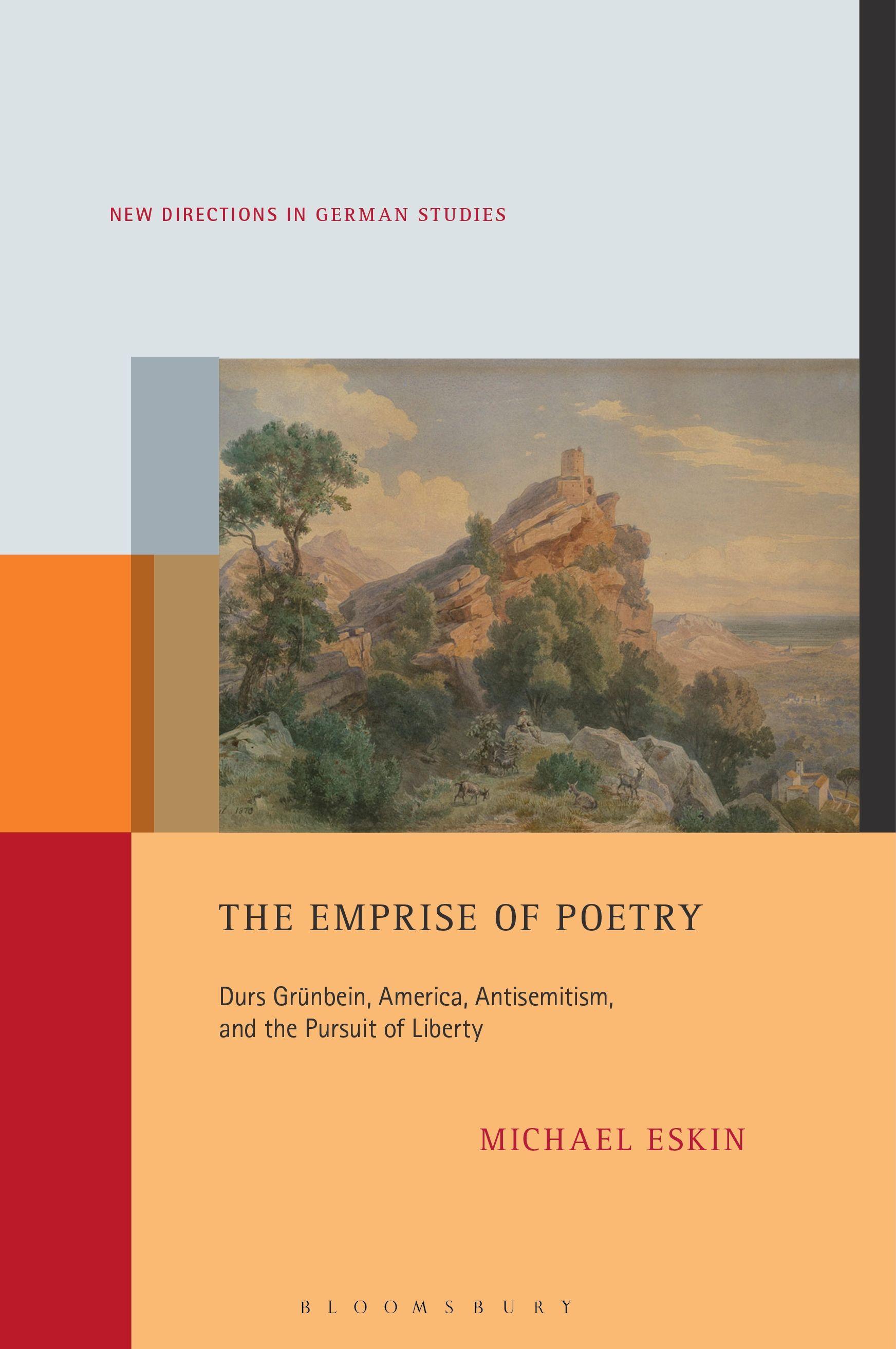
The Emprise of Poetry analyzes the insidious entwinement of anti-Americanism and antisemitism in modern and contemporary German culture through the writings of one of its most acclaimed literary figures: Dresden native Durs Grünbein (1962-).
Michael Eskin offers an unprecedented view of the American-cum-Jewish discontents at the heart of modern and present-day German culture through the exemplary lens of the work of Durs Grünbein, the most widely translated and globally honored living German poet, and the only one to have been hailed as the Berlin Republic's “most qualified contemporary candidate for the office of German national poet.”
Yet as Eskin outlines, Grünbein's work contains a paradoxical and tension-filled twofold self-construction: as an idiosyncratically 'American' poet and Ezra Pound's vociferously philosemitic heir, who merely happens to be writing in German, as it were, conjoined with an avidly anti-American German poet who writes emphatically, and not always savorily, as a German and a self-proclaimed heir to the legacies of Celan and Kafka – most notably, on matters American and Jewish. Against the foil of these tensions, Eskin traces and documents postwar German high culture's persisting inability to purge itself of ideological toxins that leach into the mainstream from centuries-old prejudices and antagonisms revolving around Germany's love-hate bond with America as well as its ostensibly enduring suspicion and antipathy toward Jews.
Eskin's deep dive into the 'American' Grünbein's apparent philosemitism coupled with the German Grünbein's antisemitically-inflected anti-Americanism reveals the fault lines underlying the complex and contradictory legacies and contexts of postwar German culture.
Michael Eskin offers an unprecedented view of the American-cum-Jewish discontents at the heart of modern and present-day German culture through the exemplary lens of the work of Durs Grünbein, the most widely translated and globally honored living German poet, and the only one to have been hailed as the Berlin Republic's “most qualified contemporary candidate for the office of German national poet.”
Yet as Eskin outlines, Grünbein's work contains a paradoxical and tension-filled twofold self-construction: as an idiosyncratically 'American' poet and Ezra Pound's vociferously philosemitic heir, who merely happens to be writing in German, as it were, conjoined with an avidly anti-American German poet who writes emphatically, and not always savorily, as a German and a self-proclaimed heir to the legacies of Celan and Kafka – most notably, on matters American and Jewish. Against the foil of these tensions, Eskin traces and documents postwar German high culture's persisting inability to purge itself of ideological toxins that leach into the mainstream from centuries-old prejudices and antagonisms revolving around Germany's love-hate bond with America as well as its ostensibly enduring suspicion and antipathy toward Jews.
Eskin's deep dive into the 'American' Grünbein's apparent philosemitism coupled with the German Grünbein's antisemitically-inflected anti-Americanism reveals the fault lines underlying the complex and contradictory legacies and contexts of postwar German culture.
Seiten: 360
Kategorie: Litteraturvetenskap & Teori
e-ISBN: 9798765125038
Versandgewicht: 1.2 kg
Versand in: 1-2 Tage
Zahle einfach mit Karte, Klarna, Apple Pay oder Google Pay. Nicht zufrieden? Du hast immer ein 14-tägiges Widerrufsrecht. Lies mehr in unseren AGB. Hast du Fragen, schreib uns eine E-Mail an hello@memmo.org.
Memmo macht das Lernen einfacher – wo auch immer du bist. Bei uns findest du deine Kursbücher und smarte Lerntools an einem Ort: Zusammenfassungen, Quizzes, Podcasts und Lernkarten. Und Ted, dein Lernbuddy, beantwortet alles, was du wissen möchtest. Über 50.000 Studierende lernen bereits hier – gemacht, damit du schneller lernst und weniger Stress hast.