
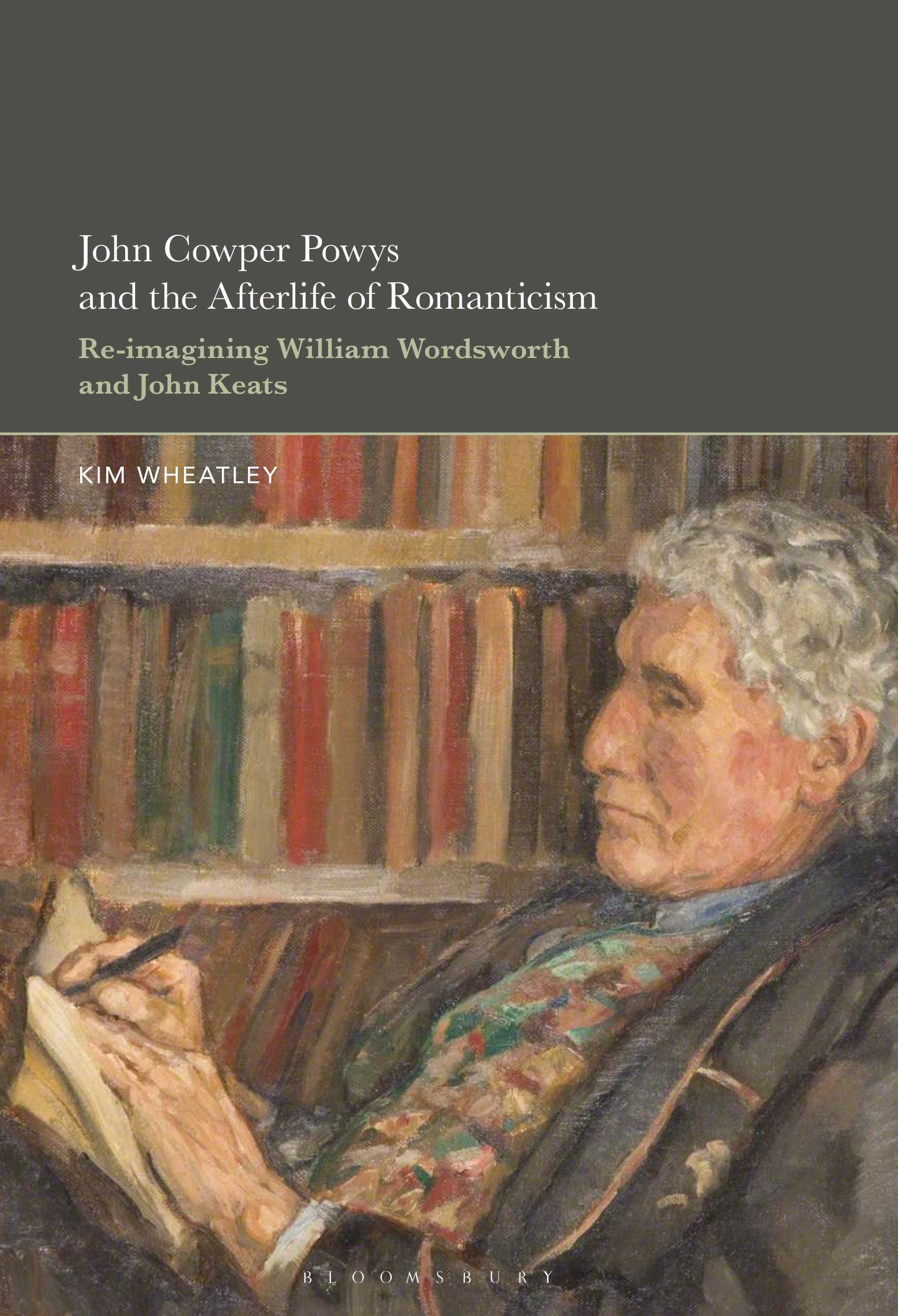
This study bridges the chronological divide between the Romantic era and the first six decades of the 20th century, interpreting John Cowper Powys (1872–1963) as a major, under-recognized contributor to the cultural transmission of Romanticism.
Kim Wheatley's John Cowper Powys and the Afterlife of Romanticism uncovers the surprising extent to which this multi-faceted Modernist-era author reworked key concerns of the Romantic poets. Wheatley shows how Powys's prose rewritings of Romantic poetry contribute to the story of the posthumous life of Romanticism, especially its environmental legacy. In particular, the book expands our understanding of the early 20th-century reception of William Wordsworth and John Keats.
Wheatley argues that Powys anticipates and presciently interrogates recent revisionary critical approaches to the Romantics, primarily materialist eco-critical approaches, and therefore invites a fresh environmentalist criticism open to the transcendental and the supernatural. Chapters range across Powys's extensive oeuvre, investigating his treatment of Wordsworth and Keats in his works of fiction, autobiographical writings, popular philosophical books, and essays of literary appreciation, including his Autobiography (1934), his four major Wessex novels – Wolf Solent (1929), A Glastonbury Romance (1932), Weymouth Sands (1934), and Maiden Castle (1936) – and his later Welsh historical novels Owen Glendower (1941) and Porius (1951). Wheatley demonstrates how Powys uniquely combines sense-based nature-worship, the leveling of animate and inanimate, and care for disabled human beings, along with mystical and magical themes, into an all-encompassing ecological vision more capacious than any imagined by the Romantics themselves.
Kim Wheatley's John Cowper Powys and the Afterlife of Romanticism uncovers the surprising extent to which this multi-faceted Modernist-era author reworked key concerns of the Romantic poets. Wheatley shows how Powys's prose rewritings of Romantic poetry contribute to the story of the posthumous life of Romanticism, especially its environmental legacy. In particular, the book expands our understanding of the early 20th-century reception of William Wordsworth and John Keats.
Wheatley argues that Powys anticipates and presciently interrogates recent revisionary critical approaches to the Romantics, primarily materialist eco-critical approaches, and therefore invites a fresh environmentalist criticism open to the transcendental and the supernatural. Chapters range across Powys's extensive oeuvre, investigating his treatment of Wordsworth and Keats in his works of fiction, autobiographical writings, popular philosophical books, and essays of literary appreciation, including his Autobiography (1934), his four major Wessex novels – Wolf Solent (1929), A Glastonbury Romance (1932), Weymouth Sands (1934), and Maiden Castle (1936) – and his later Welsh historical novels Owen Glendower (1941) and Porius (1951). Wheatley demonstrates how Powys uniquely combines sense-based nature-worship, the leveling of animate and inanimate, and care for disabled human beings, along with mystical and magical themes, into an all-encompassing ecological vision more capacious than any imagined by the Romantics themselves.
Seiten: 256
Kategorie: Litteraturvetenskap & Teori
e-ISBN: 9798765119457
Versandgewicht: 1.2 kg
Versand in: 1-2 Tage
Zahle einfach mit Karte, Klarna, Apple Pay oder Google Pay. Nicht zufrieden? Du hast immer ein 14-tägiges Widerrufsrecht. Lies mehr in unseren AGB. Hast du Fragen, schreib uns eine E-Mail an hello@memmo.org.
Memmo macht das Lernen einfacher – wo auch immer du bist. Bei uns findest du deine Kursbücher und smarte Lerntools an einem Ort: Zusammenfassungen, Quizzes, Podcasts und Lernkarten. Und Ted, dein Lernbuddy, beantwortet alles, was du wissen möchtest. Über 50.000 Studierende lernen bereits hier – gemacht, damit du schneller lernst und weniger Stress hast.