
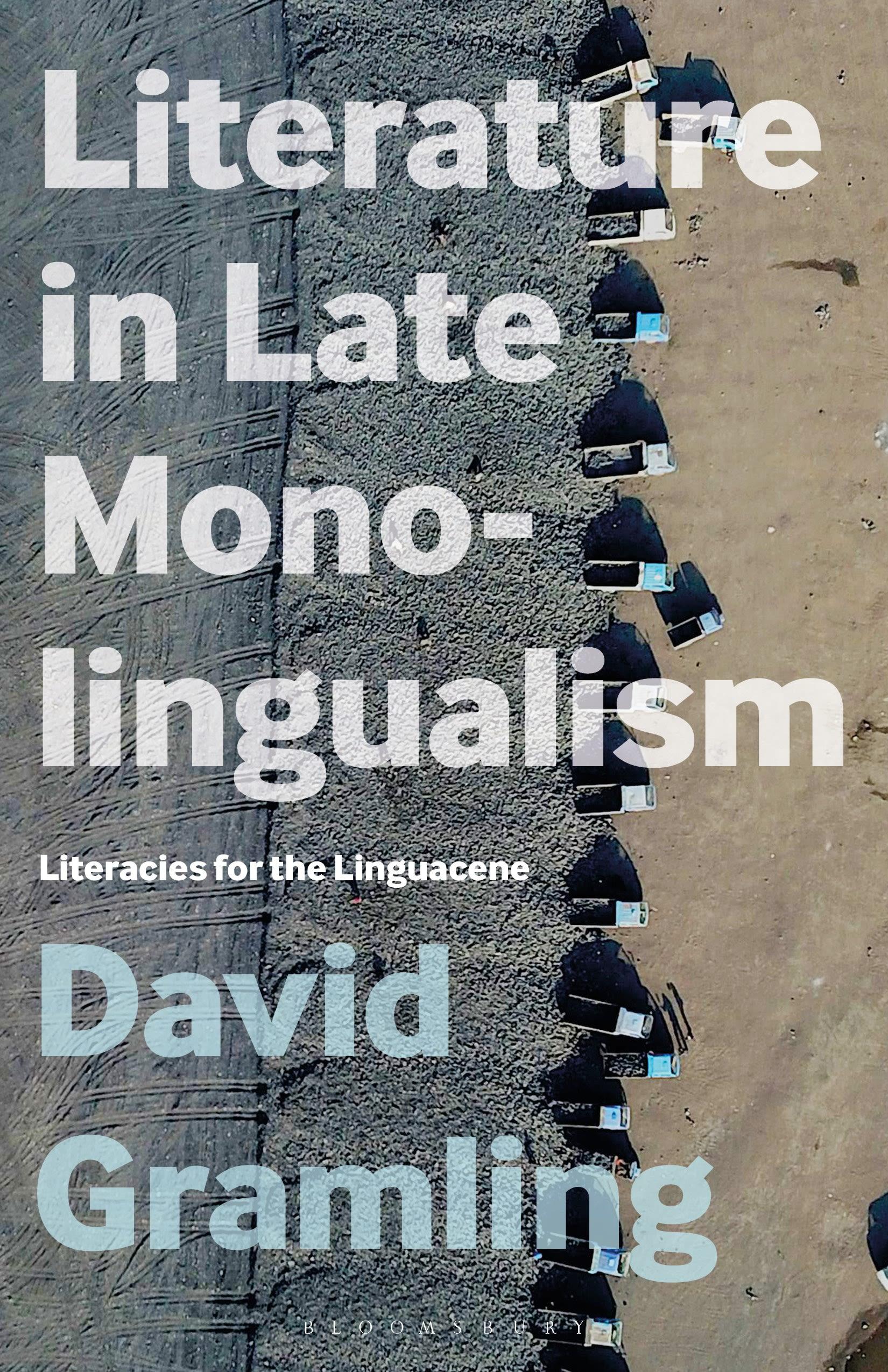
Monolingualism is bad; literature is good - right?
For many of us monolingualism is associated with closed-mindedness, political nationalism, and a general hostility to diverse knowledges and experiences of the world. In contrast, literature continues to stand allegedly unbeholden, as a symbolic beacon for expansive human expression and insight - making meaning astride Earth's thousands of human languages.
But what if this division of virtue and vice isn't quite right, leading us to overlook the uninterrupted historical and aesthetic collusion between political monolingualism and literary novels today? What if novels made in a European mold tend to be much more indebted to monolingual structures, ideologies, and styles than their publishers, and even their critics, care to acknowledge?
Instead of whistling past such a discomfort, Literature in Late Monolingualism recognizes it squarely - detailing the important ways in which many authors of contemporary novels do so too. As it turns out, these authors and their novels tend to be far less skittish than their marketers are about the vast implications of monolingualism in literature, literary critique, and civic life. Rather than rebuking monolingualism as a social vice or a personal shortcoming, authors from China Miéville to Dorthe Nors to Karin Tidbeck to Neal Stephenson investigate it dauntlessly, aiming to show us in vivid terms how monolingualism is still often calling the shots in our globalized aesthetic and political cultures today.
For many of us monolingualism is associated with closed-mindedness, political nationalism, and a general hostility to diverse knowledges and experiences of the world. In contrast, literature continues to stand allegedly unbeholden, as a symbolic beacon for expansive human expression and insight - making meaning astride Earth's thousands of human languages.
But what if this division of virtue and vice isn't quite right, leading us to overlook the uninterrupted historical and aesthetic collusion between political monolingualism and literary novels today? What if novels made in a European mold tend to be much more indebted to monolingual structures, ideologies, and styles than their publishers, and even their critics, care to acknowledge?
Instead of whistling past such a discomfort, Literature in Late Monolingualism recognizes it squarely - detailing the important ways in which many authors of contemporary novels do so too. As it turns out, these authors and their novels tend to be far less skittish than their marketers are about the vast implications of monolingualism in literature, literary critique, and civic life. Rather than rebuking monolingualism as a social vice or a personal shortcoming, authors from China Miéville to Dorthe Nors to Karin Tidbeck to Neal Stephenson investigate it dauntlessly, aiming to show us in vivid terms how monolingualism is still often calling the shots in our globalized aesthetic and political cultures today.
Seiten: 240
Kategorie: Litteraturvetenskap & Teori
e-ISBN: 9798765113936
Versandgewicht: 1.2 kg
Versand in: 1-2 Tage
Zahle einfach mit Karte, Klarna, Apple Pay oder Google Pay. Nicht zufrieden? Du hast immer ein 14-tägiges Widerrufsrecht. Lies mehr in unseren AGB. Hast du Fragen, schreib uns eine E-Mail an hello@memmo.org.
Memmo macht das Lernen einfacher – wo auch immer du bist. Bei uns findest du deine Kursbücher und smarte Lerntools an einem Ort: Zusammenfassungen, Quizzes, Podcasts und Lernkarten. Und Ted, dein Lernbuddy, beantwortet alles, was du wissen möchtest. Über 50.000 Studierende lernen bereits hier – gemacht, damit du schneller lernst und weniger Stress hast.