
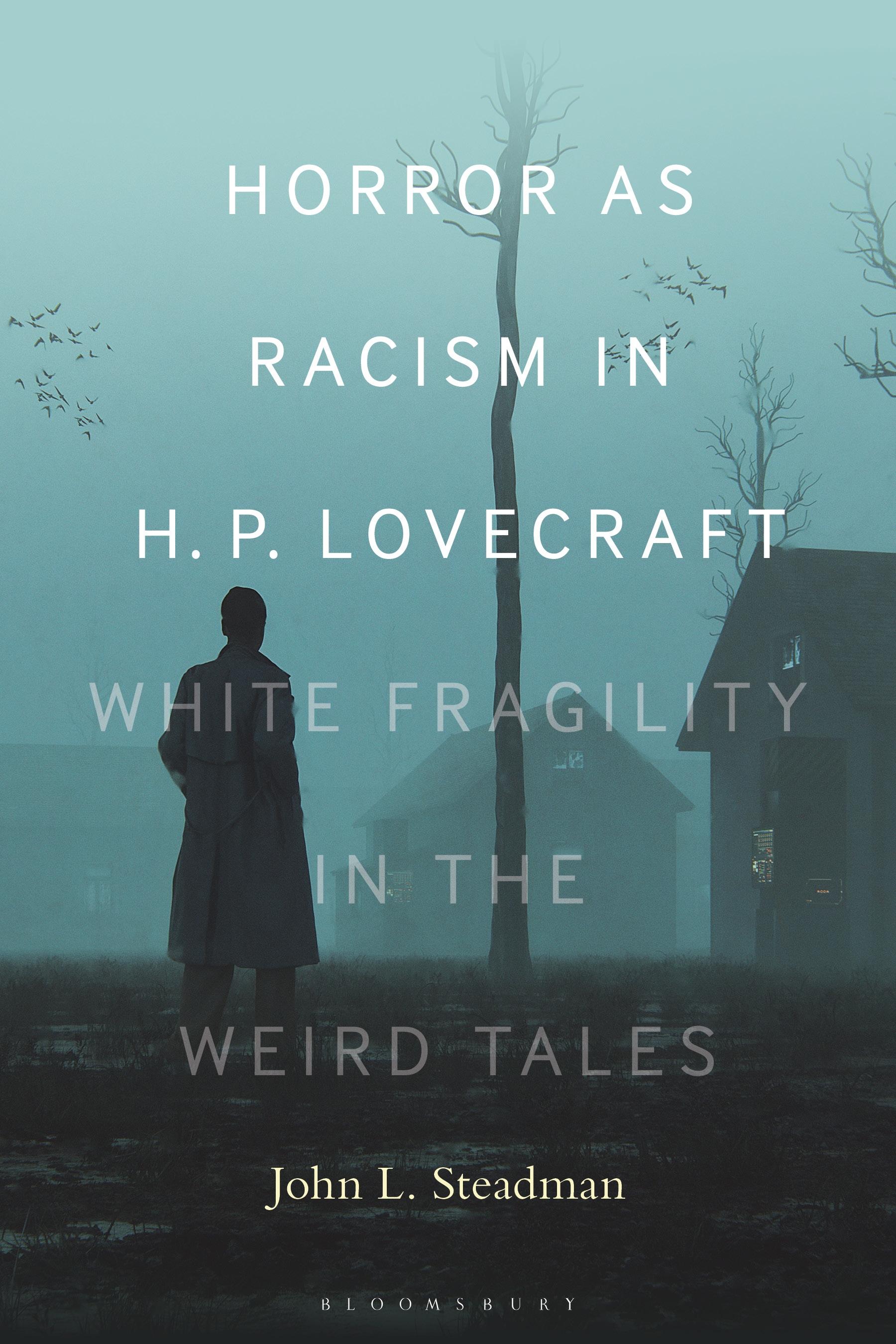
Providing a new perspective on Lovecraft's life and work, Horror as Racism in H.P. Lovecraft focuses on the overlap between the writer's personal beliefs and the racist images and narratives in his speculative fiction.
Building on recent debates about Lovecraft and drawing on the concept of "white fragility," John Steadman argues that the writer's fiction reflects his feelings of resentment and anger towards non-white persons and was used to advocate for his racist, xenophobic political beliefs – that western civilization was in decline and slavery was justifiable among "superior" civilizations. In making these claims, Lovecraft's tales pit humans against extra-terrestrial aliens, developing a terrifying, futuristic vision of the Earth as a plantation planet.
The familiar image of Lovecraft as a reclusive, creative genius and mentor to young writer-friends is dismantled through close readings of his fiction and nonfiction – including correspondence, essays, and poetry – and examination of his early biography. This image is replaced by that of a cruel, callous, and, at times, psychotic man, a violently vitriolic racist and white supremacist who hated most of the non-white races.
While some will dismiss the author outright and others will read his fiction but ignore the racism, Horror as Racism in H.P. Lovecraft takes a middle ground: acknowledging Lovecraft's personal history and heinous intentions, it helps readers navigate the author's disturbing biography while also getting a better sense of the stories, which remain significant within American science fiction.
Building on recent debates about Lovecraft and drawing on the concept of "white fragility," John Steadman argues that the writer's fiction reflects his feelings of resentment and anger towards non-white persons and was used to advocate for his racist, xenophobic political beliefs – that western civilization was in decline and slavery was justifiable among "superior" civilizations. In making these claims, Lovecraft's tales pit humans against extra-terrestrial aliens, developing a terrifying, futuristic vision of the Earth as a plantation planet.
The familiar image of Lovecraft as a reclusive, creative genius and mentor to young writer-friends is dismantled through close readings of his fiction and nonfiction – including correspondence, essays, and poetry – and examination of his early biography. This image is replaced by that of a cruel, callous, and, at times, psychotic man, a violently vitriolic racist and white supremacist who hated most of the non-white races.
While some will dismiss the author outright and others will read his fiction but ignore the racism, Horror as Racism in H.P. Lovecraft takes a middle ground: acknowledging Lovecraft's personal history and heinous intentions, it helps readers navigate the author's disturbing biography while also getting a better sense of the stories, which remain significant within American science fiction.
Zahle einfach mit Karte, Klarna, Apple Pay oder Google Pay. Nicht zufrieden? Du hast immer ein 14-tägiges Widerrufsrecht. Lies mehr in unseren AGB. Hast du Fragen, schreib uns eine E-Mail an hello@memmo.org.
Memmo macht das Lernen einfacher – wo auch immer du bist. Bei uns findest du deine Kursbücher und smarte Lerntools an einem Ort: Zusammenfassungen, Quizzes, Podcasts und Lernkarten. Und Ted, dein Lernbuddy, beantwortet alles, was du wissen möchtest. Über 50.000 Studierende lernen bereits hier – gemacht, damit du schneller lernst und weniger Stress hast.