
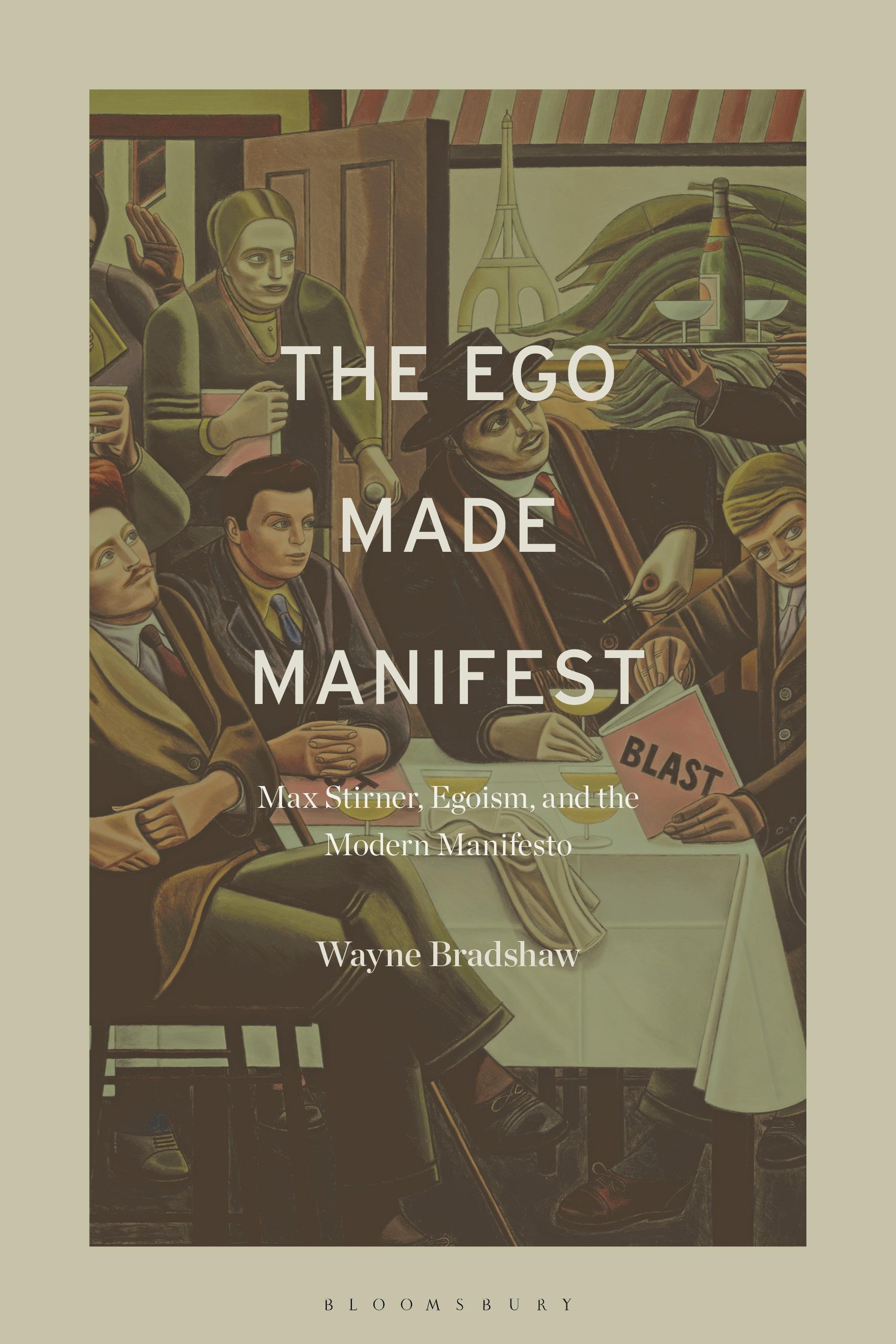
From Karl Marx to Wyndham Lewis, this book examines Max Stirner's influence on the modern manifesto.
Max Stirner has long proven to be an elusive figure at the fringes of 19th-century German idealism. He has been portrayed as the father of the philosophical dead end that was egoistic anarchism: a withered branch of an ineffectual movement, remembered largely because of its suggestion that crime was a valid form of revolutionary action. From this perspective, egoists subscribed to extreme forms of anarchism and defended acts of theft, assault, and even murder; egoism only held lasting appeal to rebels, nihilists, and criminals; and Stirner's ideas could – and should – be consigned to the dustbin of history accordingly.
The Ego Made Manifest argues that many of the accepted truisms about Stirner and his reception are false and that his contribution to modernist and avant-garde manifesto-writing traditions has been overlooked. Beginning with his influence on Marx's Communist Manifesto, Wayne Bradshaw reinserts Stirner into the history of manifestos that not only rebelled against tradition but sought to take ownership of history, culture, and people's minds. This study documents the trajectory of Stirner's reception from mid-19th-century Germany to his rediscovery by German and American readers almost 50 years later, and from his popularity among manifesto writers in fin de siècle Paris to the birth of Italian Futurism. Finally, it considers how American and British interest in egoism helped inspire Vorticism's satirical approach to revolt, and how, in an age of extremism, Stirner's ideas continue to haunt the modern mind.
Max Stirner has long proven to be an elusive figure at the fringes of 19th-century German idealism. He has been portrayed as the father of the philosophical dead end that was egoistic anarchism: a withered branch of an ineffectual movement, remembered largely because of its suggestion that crime was a valid form of revolutionary action. From this perspective, egoists subscribed to extreme forms of anarchism and defended acts of theft, assault, and even murder; egoism only held lasting appeal to rebels, nihilists, and criminals; and Stirner's ideas could – and should – be consigned to the dustbin of history accordingly.
The Ego Made Manifest argues that many of the accepted truisms about Stirner and his reception are false and that his contribution to modernist and avant-garde manifesto-writing traditions has been overlooked. Beginning with his influence on Marx's Communist Manifesto, Wayne Bradshaw reinserts Stirner into the history of manifestos that not only rebelled against tradition but sought to take ownership of history, culture, and people's minds. This study documents the trajectory of Stirner's reception from mid-19th-century Germany to his rediscovery by German and American readers almost 50 years later, and from his popularity among manifesto writers in fin de siècle Paris to the birth of Italian Futurism. Finally, it considers how American and British interest in egoism helped inspire Vorticism's satirical approach to revolt, and how, in an age of extremism, Stirner's ideas continue to haunt the modern mind.
Zahle einfach mit Karte, Klarna, Apple Pay oder Google Pay. Nicht zufrieden? Du hast immer ein 14-tägiges Widerrufsrecht. Lies mehr in unseren AGB. Hast du Fragen, schreib uns eine E-Mail an hello@memmo.org.
Memmo macht das Lernen einfacher – wo auch immer du bist. Bei uns findest du deine Kursbücher und smarte Lerntools an einem Ort: Zusammenfassungen, Quizzes, Podcasts und Lernkarten. Und Ted, dein Lernbuddy, beantwortet alles, was du wissen möchtest. Über 50.000 Studierende lernen bereits hier – gemacht, damit du schneller lernst und weniger Stress hast.